


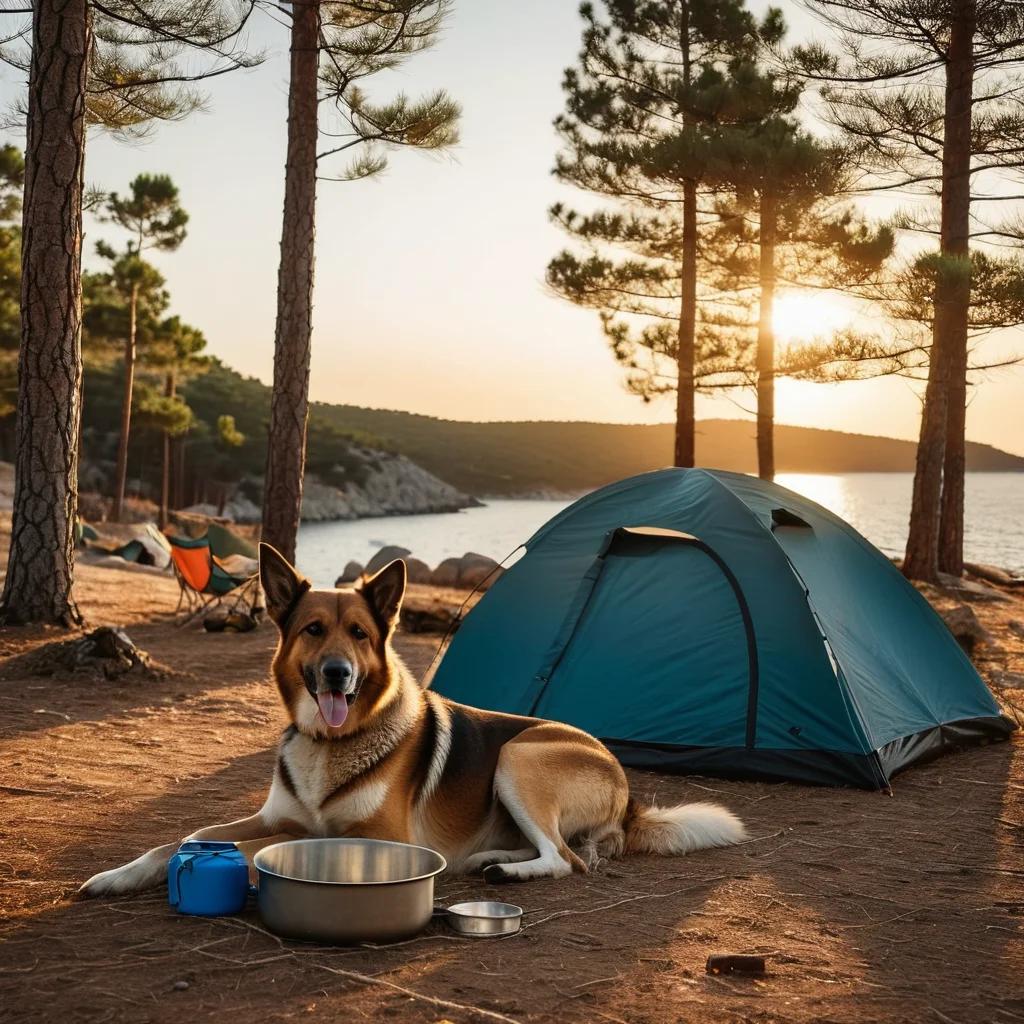

For an owner planning a vacation with their dog, camping is often easier than hunting for a hotel. The list of venue rules is short, the space is large and your pet doesn't have to wait in a closed room all day. On the other hand, all of the responsibility shifts to you: shade, water, ground temperature, distance from other campers and nighttime safety now depend on no one's plan but yours. This guide covers camping with a dog in Türkiye, including the differences between regions, and it doesn't use any unverified facility names, addresses, phone numbers or opening hours.
Questions to Ask When Choosing a Campsite
Hearing that a site accepts pets isn't enough information. Accepting pets doesn't mean your pet will be comfortable there. Before booking, ask clearly about these points: in which areas leashes are required, whether pets are allowed around the shared kitchen and showers, how much space there is between tents during busy periods, and how quiet hours are enforced at night.
The ground is the detail most owners overlook. Gravel, packed dirt, sand and grass affect the same dog in different ways. The paws of a dog not used to long walks wear down fast on sharp gravel, while dark, packed dirt gets much hotter than you'd expect around midday. A site's shade isn't fixed either: a tent spot that is shaded in the morning may get direct sun in the afternoon. If you can, ask which way the trees face and how the shade moves during the day.
What Changes from Region to Region
Camping conditions in Türkiye vary a lot from region to region, and the same gear doesn't work everywhere.
The Aegean and Mediterranean coast
Coves where pine forests run down to the sea are good for shade and cool air. The real issue here is heat combined with humidity: even when your dog stays in the shade, it gets harder to cool down by panting. In summer, move walks to early morning and late evening, and set aside the middle of the day entirely for rest. By the sea, keep fresh water visible and easy to reach for dogs that tend to drink salt water.
The Black Sea and highland plateaus
On the highland plateaus, heat stops being the problem and sudden weather changes and humidity take its place. Weather that is clear during the day can turn cold fast in the evening; short-haired and senior pets need an insulated mat and an extra blanket. Dense vegetation is a tick-heavy environment, so don't skip the daily check.
Marmara forests and lakeshores
Wooded areas close to the city get crowded on weekends. Crowds are the real challenge for a dog that isn't social or that gets tense in new places. Going on a weekday or asking for a quieter part of the site often completely changes your dog's experience.
Central Anatolia and the steppe
The temperature difference between day and night is the defining feature here. There is naturally little shade, so a tarp or canopy is almost essential gear. Since water consumption rises in dry air, plan how much water you carry accordingly.
Gear List
- Water and a bowl: separate, sufficient water just for your pet, on top of what you need yourself.
- Insulated mat: keeps your dog off both cold ground and sun-heated soil.
- Shade canopy: don't rely on a tree; shade moves during the day.
- Long tie-out line: gives room to move without letting your dog loose.
- Spare collar and ID tag: the risk of escape is always higher in an unfamiliar place.
- Reflective collar or light: keeps your dog visible around the site at night.
- Waste bags: waste left in nature harms both the environment and other campers.
- Vaccination record and microchip information: keep them with you on the trip.
Heat, Parasites and Water Safety
Most problems at camp fall into three categories. The first is heat: heavy panting, excessive drooling, reluctance and an unsteady walk are early warnings. If you see this, move your dog into the shade, cool it with a damp cloth and don't push it; if the signs continue, see a veterinarian without delay.
The second is external parasites. Meadows, brush and highland plateaus are risky for ticks. Every evening, check behind the ears, the neck, the armpits, the groin and between the toes by hand. The choice and timing of preventive treatment depend on your pet's age, weight and health history; make this decision together with your vet.
The third is water. Even a dog that loves to swim can't judge currents, depth or where to get out. At lakes and reservoirs, the exit slope can be steep. A tendency to drink still, algae-covered water is a separate risk. Keep water entry under control, and dry the ears afterward.
Night Routine and Camp Etiquette
Night is the tensest part of the day for a pet in an unfamiliar place. New sounds, other campers and the smells of wild animals can keep it awake. If your dog is going into the tent, give it its own mat and a familiar blanket; if not, keep it in a secured spot sheltered from the wind. Letting it roam free is risky for both your pet and wildlife.
Camp etiquette is short and clear: don't let your dog into other people's spaces, don't let it approach people without permission and don't treat nonstop barking as normal. Some other campers may not want to interact with your pet, and that choice should be respected. Don't let your dog chase wild animals; it's dangerous both for your dog and for the species in the area.
Is Every Dog Suited to Camping?
The idea of camping appeals to owners; it doesn't always appeal to the dog. For a dog that gets tense in new places, overreacts to unfamiliar sounds or becomes hard to control when it sees another dog, a crowded site isn't a vacation but one long stress session. When deciding, use your dog's reactions in daily life as your guide: what does it do when it meets a stranger on a walk, how does it react to traffic noise, can it sleep somewhere other than home?
Age and health are a separate matter. For puppies, sites with crowds and contact with wildlife are too early until the vaccination schedule is complete. In senior pets, joint pain gets worse on hard ground and on cold nights. For dogs with heart, respiratory or skin problems, heat and humidity together can be hard. If there is a chronic condition, talking the plan through with your vet before you leave is easier than dealing with problems once you're back.
Don't Skip the Travel Part
The hardest part of camping is often not the camping but the road to get there. On long car trips, take a break every two hours; offer water at each stop and go for a short potty walk. Don't give a big meal right before you leave; for dogs that get carsick, that alone makes the problem worse. Don't carry your dog in the trunk or an open truck bed; a proper travel setup is needed for both safety and comfort.
If you need to park and run a quick errand, don't leave your dog inside. Even a car parked in the shade reaches a dangerous temperature quickly, and leaving the window cracked doesn't change that. When you arrive, make your first task walking around the site together: getting to know the boundaries, the water point and the tent spot helps your dog stay much calmer through the night.
The Check to Do When You Get Home
Don't rush when you get back home. In good light, part the coat layer by layer and check for ticks, cuts, redness and embedded thorns. Look separately at the paw pads, between the nails and inside the ears. Tiredness is normal on the first day; however, lasting weakness, loss of appetite, limping, vomiting, diarrhea or changes in breathing shouldn't be put down to camping fatigue. If the signs continue, talk to your vet and tell them where you stayed, what water your dog went into and what kind of vegetation you walked through. This information makes the assessment easier.
Keeping your first camping trip short is a good start. One night at a nearby site shows, with low risk, how your dog reacts to the new routine. Building your next plan around what you observe makes for a more predictable vacation for both of you.









