


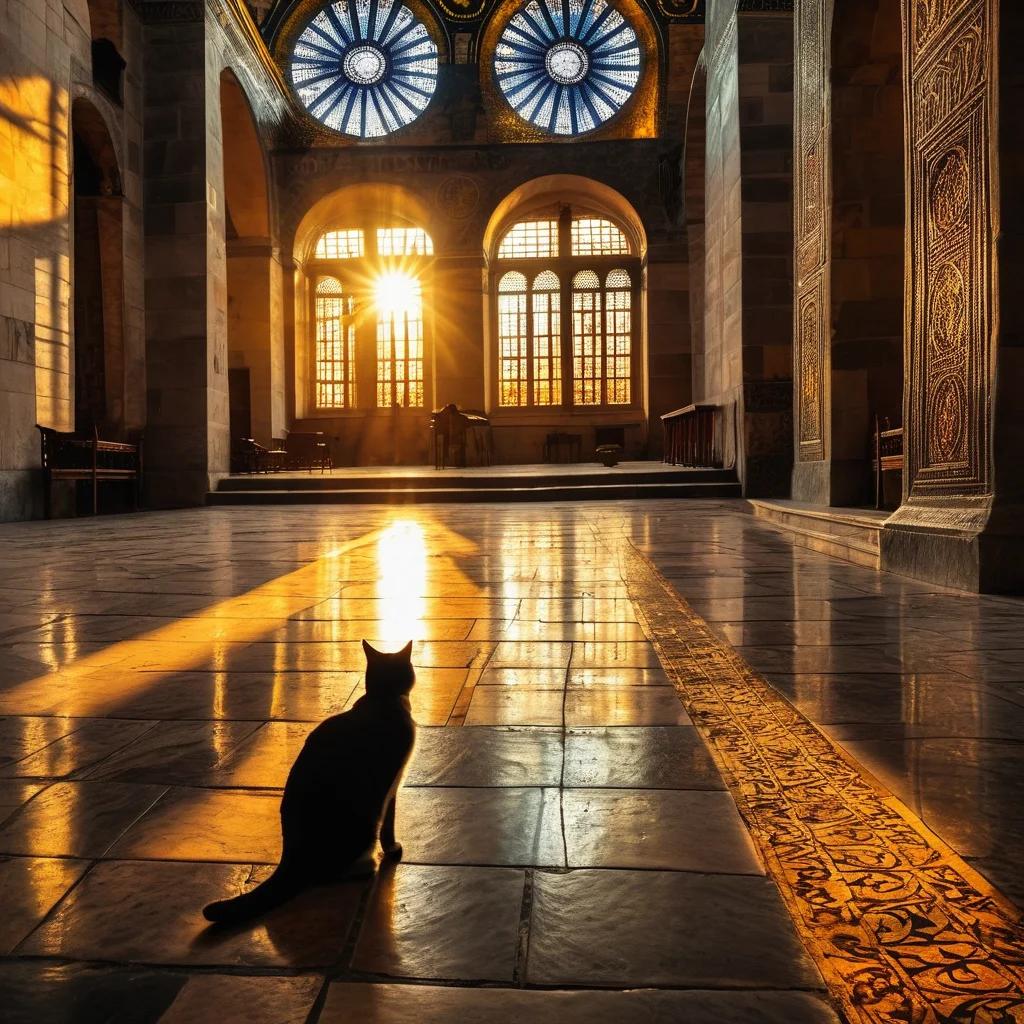

Ottoman love of cats (the Hagia Sophia cats), Bayezid II's animal hospital and the growth of modern adoption culture in Türkiye. Istanbul's cats (Gli, a cultural symbol) and the Van cat. Türkiye's pet culture shows continuity across centuries. In this post we take a detailed look at pet history in Türkiye.
1. Islam and Respect for Animals
- Animal protection in the Quran and the Sunnah.
- The Hadith: "Whoever leaves an animal without water is punished with hell."
- The Prophet Muhammad's love of cats (the story of Muezza).
- Feeding stray animals is seen as a good deed.
- Animal protection through the waqf (charitable foundation) system.
- A big influence on Turkish tradition.
- Continuity across centuries.
2. The Ottoman Animal Hospital (1495)
- Bayezid II founded an animal hospital in Edirne.
- Among the earliest veterinary institutions in the world.
- Animal treatment was free.
- Funded by a waqf.
- The imaret (public soup kitchen) service extended to animals.
- 300+ years before modern Europe.
- An original contribution of Turkish civilization.
3. The Ottoman Bird Hospital
- Birdhouses on Istanbul's Süleymaniye Mosque.
- Architectural bird shelters (bird pavilions).
- Feeding by the municipality and waqfs.
- "Bird palace" style architecture.
- Respect for animals without owners.
- Caged birds were forbidden (freedom).
- Some were preserved after the founding of the Republic.
4. The Hagia Sophia Cats
- Cats present through the Byzantine, Ottoman and modern eras.
- 1,500+ years of continuity.
- Gli (1988-2020), a famous cat.
- Bill Clinton's visit and his meeting Gli.
- The debate over converting it into a mosque.
- A modern cat population still lives there.
- A cultural symbol.
5. Istanbul's Cats
- The city's cat population is estimated at 100,000-200,000+.
- Neighborhood-based care.
- Welcomed by mosques, shops and apartment buildings.
- An award-winning 2016 documentary about the city's cats, with international recognition.
- A tourist symbol.
- Coordination between local government, nonprofits and residents.
- A practice unique in the modern world.
6. The Van Cat
- A native breed of Türkiye.
- White coat and odd-colored eyes (blue and yellow).
- Loves water (a swimming cat).
- 3,000+ years in Anatolia.
- The Lake Van area.
- Under state protection.
- The Van Cat House research center.
- Purebred breeding and conservation.
7. A History of Street Dogs
- Ottoman Istanbul as a "city of street dogs."
- The 1910 Hayırsız Ada massacre (60,000 dogs).
- Protective legal regulations in the modern era.
- Neighborhood watchdogs.
- The municipal shelter system.
- The growth of TNR and adoption.
- The debate over the 2024 legal changes.
8. The Shepherd Dog Tradition
- The Kangal Shepherd Dog (Kangal), the official Turkish dog.
- Akbaş, Karabaş, Aksaray Malaklı.
- 2,000+ years of guarding flocks.
- Anatolian semi-nomadic life.
- Defending against wolves, bears and wild dogs.
- Exported to the modern world (USA, Europe).
- Turkish cultural heritage.
- The Kangal is a symbol of Sivas and of Turkish identity.
9. After the Founding of the Republic
- Modern veterinary education began in Ankara in 1933.
- Municipal animal care units.
- Pet ownership culture grew from the 1980s on.
- Pet shops became common after 1990.
- Spay/neuter campaigns from 2000 on.
- Law No. 5199 and Law No. 7332.
- Nonprofits and associations are active.
- The growth of a modern ownership culture.
10. The Modern Pet Owner in Türkiye
- Urbanization and apartment living have increased pet ownership.
- The younger generation's love of pets.
- An ownership culture different from Europe's.
- NO pet tax (an EU practice).
- Pet ownership as a personal responsibility.
- Stray animals as a shared community responsibility.
- An original Turkish model.
- The future: cooperation between adoption, nonprofits and municipalities.
Pet history in Türkiye follows a formula: Islamic respect for animals + Ottoman hospitals + the Hagia Sophia cats + the protective Kangal + modern nonprofits. Continuity across centuries. An original contribution to the modern world. A culture of protecting animals on the street that is unlike anywhere else in the world. The bond between Turkish identity and pets runs deep. In the DoldurKabı app, you can find municipal shelters, nonprofits and historical information on a map.









