
The moment you walk into the exam room, everything in your head disappears. The question you meant to ask at home, how long your cat has been eating less, how many times your dog threw up last week... All of it is information you need to remember in those fifteen or twenty minutes. And when your pet is tense too, your focus slips.
The more organized the information your vet gets, the more productive the exam is. This doesn't take a lot of preparation. The list below takes about half an hour the evening before the appointment.
Documents and records
Vaccination record or passport
The vaccination record clearly shows which vaccine was given and when. It matters most if you have switched clinics, recently adopted your pet or are seeing this vet for the first time. Make a habit of bringing it every time; if it gets lost, piecing the history back together is hard.
Previous test results and reports
If you have blood test results, an X-ray report or a discharge summary from another clinic, bring them along. If they aren't on paper, gather them in a folder on your phone. Even if the vet orders a new test, being able to compare it with the previous one is valuable.
Records on your phone
If you keep vaccines, medications and weight history in an app, opening it during the exam makes things easier. In the DoldurKabı app, you can keep vaccine, medication and weight records in the profile you create for your pet; you can see how it works on the health tracking page. Which tool you use doesn't matter; what matters is that the records are kept together in one place.
Medications and supplements
If your pet takes a regular medication, drops or supplement, bring the boxes or take a photo of the front of each one. Saying "I give a white pill" tells the vet very little. The name of the medication, how you give it and when you last gave it are directly useful during the exam.
- Prescription medications and how they're given
- Parasite drops or tablets, and the date of the last dose
- Products like vitamins or joint supplements
- Anything you started or stopped on your own, mention that too
That last point matters. Sometimes a supplement given at home with good intentions, or another pet's medication, turns out to be related to the problem. Saying it openly instead of keeping it to yourself makes the vet's job easier.
Prepare a short note
The evening before the appointment, jot down notes about the problem on paper or on your phone. It doesn't need to be long; a bulleted list is enough.
- When did it start? If a date is hard to give, a time range like "since early last week" works too.
- How often does it happen? Once a day, or a few times a week?
- Have appetite, water intake and bathroom habits changed? These three come up in almost every exam.
- Has their behavior changed? Such as hiding more, losing interest in play or not wanting to climb stairs
- Has anything changed at home? New food, a move, a new pet, a different cleaning product
At the end of the note, add the questions you want to ask. When the vet asks "any other questions?" at the end of the exam, this list saves you.
Videos and photos
Some problems don't show up in the exam room. A dog that coughs all the time at home may not cough once at the clinic, and a cat that limps may look perfectly normal on the table. So shoot a short video the moment you see the problem.
- Coughing, sneezing, the way your pet breathes
- Limping or a change in how they walk
- Trembling, sudden collapse or seizure-like moments
- A photo of vomit or stool, unpleasant as it may be
A few seconds of footage tells more than a paragraph of description. While filming, don't try to touch or move your pet; record them as they naturally are.
A sample may be needed: ask ahead
For digestive or urinary problems, the vet may ask for a stool or urine sample. Asking about this when you book the appointment makes things easier. If the clinic wants a sample, also ask how to collect it, what container to use and how soon you need to bring it in.
Similarly, if blood work is planned, your pet may need to come in fasting. Don't guess on your own; ask the clinic. For pets with a condition like diabetes that requires regular meals, always clarify fasting with your vet.
If you're going to a new clinic for the first time
If you have moved, recently adopted your pet or switched clinics for some other reason, the vet will learn your pet's history from you. It's a good idea to write down answers to the questions you'll be asked at this first visit.
- Your pet's approximate age and how long you have known them
- Whether they're neutered, and where and when the surgery was done
- Microchip number
- Past illnesses, surgeries and known allergies
- If you adopted from a shelter or another family, the health information they gave you
Don't hesitate to ask your previous clinic for the records. Most clinics share this information with the pet owner, and it makes the new vet's job easier.
For senior pets or pets with chronic illness
Pets with a long-term condition such as kidney disease, heart disease, thyroid problems or diabetes have more frequent checkups. At these visits, what really helps the vet is a regular record of what happened at home between appointments.
You can keep a simple table: the date, how their appetite was, roughly how much water they drank, bathroom habits and weight if you have it. Writing one line a day takes a few seconds, but at the exam you can back up a sentence like "they have been drinking more water for the past two weeks." Small habits make the results more reliable when weighing, such as using the same scale every time, or weighing yourself holding your cat and then subtracting your own weight.
What to bring for your pet
- A sturdy carrier, or a leash and a harness
- An absorbent pad inside the carrier and a small blanket that smells like home
- A few treats, to leave them with a good memory after the exam
- A small water bowl in case the wait runs long
- Sealable bags and wet wipes
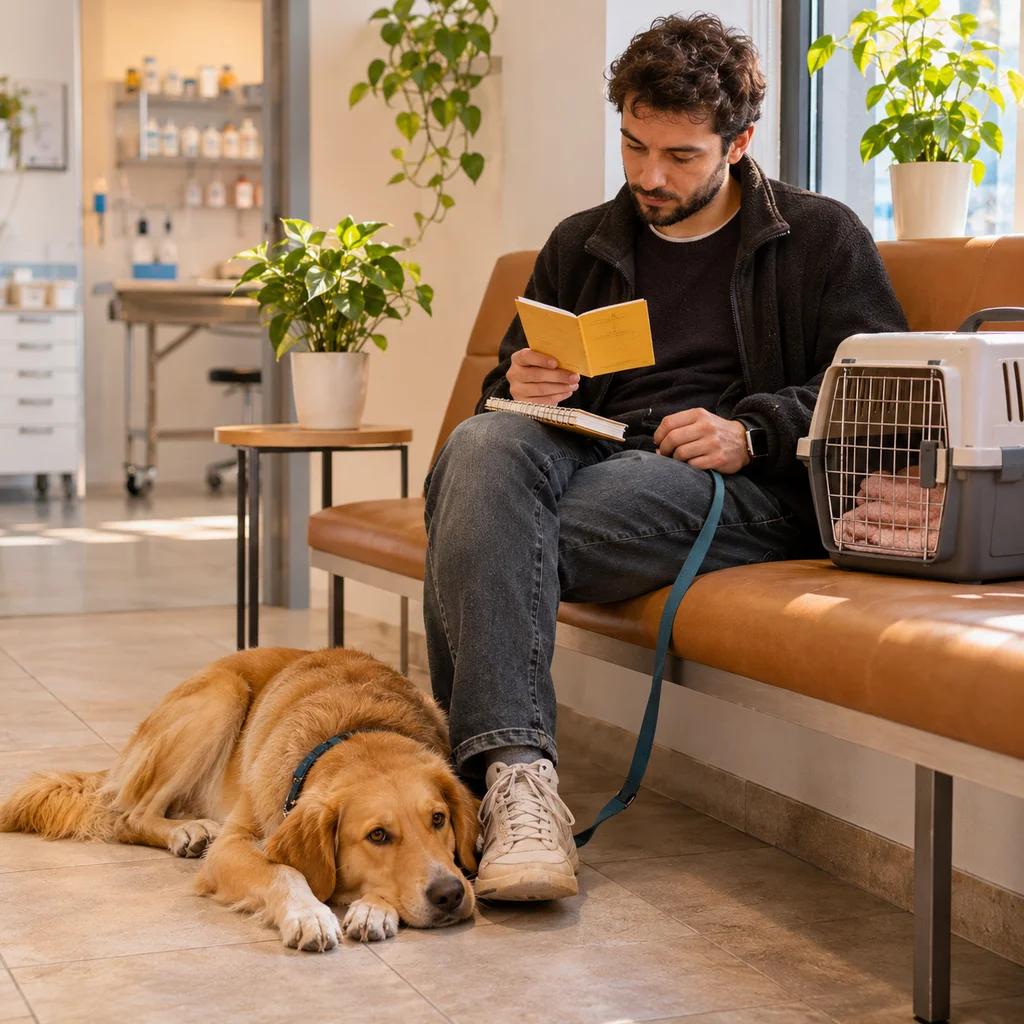
In the waiting room, putting your cat's carrier on the chair next to you instead of on the floor, away from dogs' noses, helps them relax. Keep your dog beside you on a short leash, away from the other animals. If you don't have a car, planning the appointment day with a pet taxi is another option.
Before you leave the exam
When the exam is over, your head may be spinning. Before you leave, get these things clear:
- The name of the prescribed medication, how to give it and for how long
- The date of the next checkup or vaccine
- Which symptoms mean you should call again
- When and how the test results will be shared
Take notes during the exam, or ask the vet whether they can give you this in writing. Entering the same information into your pet's record when you get home saves you time at the next appointment. If you don't have a regular clinic yet, you can browse the vet list by area.
Frequently Asked Questions
I lost my pet's vaccination record. What should I do?
Call the clinics where the vaccines were given. Most clinics keep their records and can send you the past vaccinations. If your pet is microchipped, getting to the records may be easier.
Should I bring a family member to the exam?
A second person helps, especially on visits that tend to be difficult. One person can calm the pet while the other takes notes on what the vet says.
Will filming a video bother the vet?
No, quite the opposite: most vets want to see footage shot at home. Put the videos somewhere easy to find on your phone ahead of time so you don't lose time during the exam.