


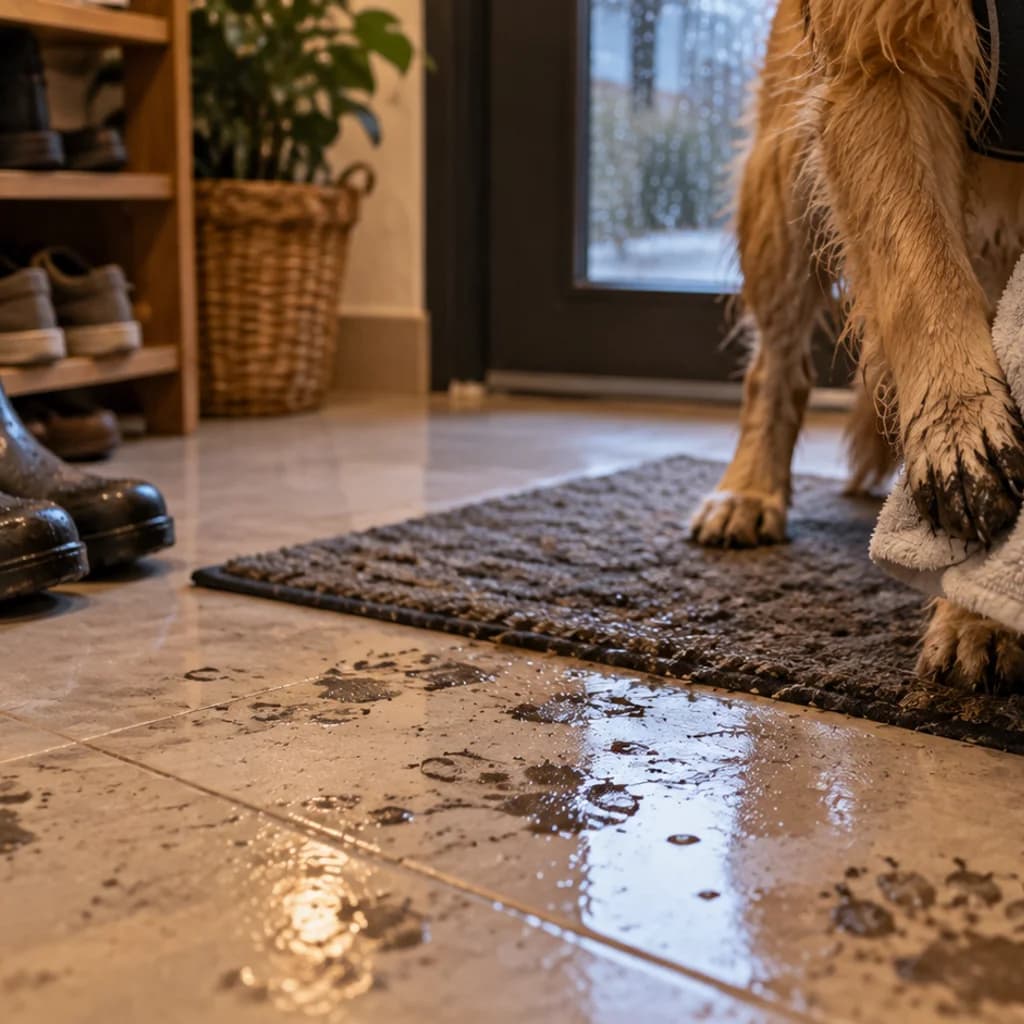

A dog coming back from a walk on a rainy day does not bring home only mud; it also brings moisture trapped between the toes, salt residue and small foreign objects. Even cats that never go outside can come back wet from the balcony or the windowsill. Repeated throughout fall and winter, this cycle sets the stage for skin problems when it is neglected.
The good news is that you do not need a long grooming session. A simple setup at the front door and a five-minute routine stop most problems before they start.
Below, we cover paws first, then the coat, then your home setup. The order matters: bringing a wet animal inside first and then trying to clean it is both harder and messier.
Paw cleaning: stick to the order
Keep your pet at the entrance before coming through the door. A bucket of lukewarm water, a towel and an old mat kept ready nearby do the job.
- First rinse off the heavy mud with lukewarm water. Do not use hot water; it dries out the skin.
- Spread the toes one by one and check between them. Gravel, glass shards, thorns and caked mud usually end up here.
- Dry the base of the nails and the spaces between the paw pads separately. That is where moisture lingers most.
- Dry by letting the towel soak up the water, not by pressing down hard. Rubbing makes irritated skin worse.
- In winter, if there is de-icer residue from the sidewalk, always rinse it off; if your pet licks it, it can cause digestive trouble.
Mud that dries between the toes hardens into clumps over time. Because the clump presses against the pad while walking, the animal changes its stride and sometimes starts favoring one paw. It is easy to separate with your fingers while it is wet; pulling at it once it has dried strains the skin. That is why cleaning while the mud is still wet is quicker and lowers the chance of irritation.
If the fur between the paws is long, keeping it short makes cleaning easier. If trimming it is hard for you, you can have it done at a grooming session. If you see redness or swelling on the skin, or your pet keeps licking the same paw, do not try to fix it with cleaning; talk to your vet.
Drying the coat the right way
A wet coat is not a problem in itself; staying wet for a long time is. When the layer close to the skin cannot breathe, moisture gets trapped and creates an environment that is not good for the skin. So the real goal when drying is not the top coat but the skin underneath.
Towel and order
First soak up the excess water with a microfiber or absorbent towel. Work in this order: back, chest, belly and base of the tail. The belly and armpits are easy to miss, so check them separately. For long-haired breeds, a towel alone is not enough.
A thick cotton towel just moves water around on the surface; microfiber pulls out more of it. If your pet wears a collar or harness, take it off before drying. The narrow strip under the strap never touches the towel and can stay damp for hours; the same goes for the spot where the ID tag cord sits.
If you use a blow dryer
Choose low heat and low speed, do not hold the dryer in one place, and do not bring it close to the skin. Put your hand under the fur and check the temperature against your own skin. Do not force an animal that is bothered by the noise; fear turns into even more resistance next time.
Start drying at the back and work down toward the legs. If you go the other way, water running off the wet fur soaks the spot you just dried and the job takes longer.
Cats generally do not accept a blow dryer. For them, toweling off and letting them dry on their own in a warm, draft-free room is the easier way. Do not put a wet cat on top of a radiator or directly in front of a heater.
Brushing the coat before drying also helps. Mats that form while the coat is wet turn into knots that are hard to undo once dry, and the skin underneath gets no air. The right comb and brush depend on coat type; you can look up the care needs specific to your pet's breed in the Pet Encyclopedia.
Fungal infection and dermatitis risk
Skin that stays damp all the time becomes fertile ground for irritation and infection. Common complaints in the rainy season are irritation between the toes, redness at the base of the tail and ear trouble.
Keep these signs on your watch list:
- Persistently licking, scratching or chewing the same area.
- Redness, warmth, moisture or odor on the skin.
- Round bare patches caused by hair loss.
- Dirt or odor in the ear flap, or holding the head tilted to one side.
- Cracks or bleeding on the paw pads, or limping while walking.
None of these signs can be diagnosed at home. Fungal infections, allergies, parasites and bacterial irritation can look alike; telling them apart takes an exam and, if needed, a simple test. Do not apply a cream, powder or a mixture recommended online at home; these can change the picture and make diagnosis harder. If things get worse outside regular hours, you can look at emergency vet options.
Breeds with floppy ears and dogs with a dense undercoat need more attention during this season. For ear cleaning, use the method your veterinarian recommends instead of applying liquids on your own. After rain or a bath, wipe the moisture from the visible part of the ear flap with a dry cloth; do not put a cotton swab into the canal, as it pushes moisture deeper.
Your home setup
For care to stick, your entryway needs to be adjusted for the season. The goal is not looks but making the routine easier.
- Put an absorbent mat at the door and a hook above it for a towel.
- Gather your cleaning supplies in a single box; searching for them every time breaks the routine.
- Wash wet towels the same day; a towel left damp smells and does not work when you use it again.
- Change beds and blankets often so they do not stay wet. If the spot where your pet sleeps is damp, your drying efforts go to waste.
- If your pet wears a raincoat or jacket, dry the inside too; clothing that is dry outside but damp in the lining does no good.
In homes with cats, the location of the litter box also matters in this season. A cat may not want to use a box in a cool, damp corner near the balcony. If there is a sudden change in litter habits, first look at the environment, and if it continues, talk to your vet.
Keeping regular care and health notes during the rainy season makes it easier to spot a recurring problem. Seeing which symptom appeared in which week helps at the exam; you can keep these records in one place in the health tracking section.
Pets that do not go outside
For cats and indoor dogs, the effect of rain comes a different way: through the humidity in the home. When humidity rises in a closed, unventilated apartment, skin and respiratory complaints can increase. Airing out the home a few times a day for a short while, not hanging laundry to dry in the room where your pet sleeps, and keeping the bathroom door closed are simple precautions.
Less activity is another change this season brings. When walk times get shorter, the effects can show up in weight and behavior; you can balance this with indoor play.
Fall and winter are actually a good time for a new pet to settle in. Because people spend more time at home, the adjustment period goes smoothly. You can look at pets looking for a home in our adoption listings.
Frequently Asked Questions
Do I need to wash my dog's paws after every walk?
If there was mud or salted ground, yes, rinsing is a good idea. After a dry, clean walk, wiping with a damp cloth is enough. Using shampoo every time can dry out the skin.
Can a wet coat just dry on its own?
With a short coat in a warm room, it is usually not a problem. With a long, dense undercoat, the layer close to the skin can stay damp for hours; in that case you need to step in with a towel.
I noticed some redness. Can I wait and watch?
A small patch of redness may go away within a day. If it is spreading, if there is odor or moisture, or if your pet keeps bothering the area, talk to your vet without waiting.
Is a raincoat helpful?
It keeps the back and belly dry, so it shortens drying time. Choose a style that does not restrict movement or squeeze the neck and armpits, and do not force it if your pet shows discomfort.









