



When the rain lasts three days, the mood at home shifts. The dog waits by the door, the cat races down the hallway at midnight, and both sleep all day and have an energy burst in the evening. Usually this isn't misbehavior; it's that nothing has replaced the energy normally spent on walks and the scents they take in outside.
Mental play fills exactly that gap. Sniffing, searching and problem solving tire pets out faster than physical running. A well-designed fifteen-minute scent game can often stand in for a short walk.
None of the ideas below require special products. You can start with paper, cups, towels and boxes you already have at home.
Why does mental play tire pets out?
For dogs, smelling isn't a passive activity. Separating out a scent, following its trail and finding the source is intense mental work. For cats, the hunting cycle plays a similar role: searching, stalking, catching and the feeling of satisfaction that follows.
When that cycle isn't completed, the animal doesn't get tired, it just gets wound up. That is why a cat who plays with a laser pointer for a long time ends up restless: there is nothing to catch, so the cycle never closes. Always ending the game with a toy they can catch or with a treat makes a difference for this reason.
In short, the goal isn't to make your pet run, but to make them think and reach a result.
There is a bonus too: a pet that gets a mental workout does less damage at home. Chewing the couch, clawing the curtains and racing around at night are often signs of extra energy looking for an outlet. When pets get stimulation, these behaviors tend to fade on their own.
Scent games
An easy way to start is to take part of the daily food out of the bowl and spread it around the house.
- Cup game: Put a treat under one of three cups and wait for your pet to find it. To make it easier at first, don't cover the cups completely.
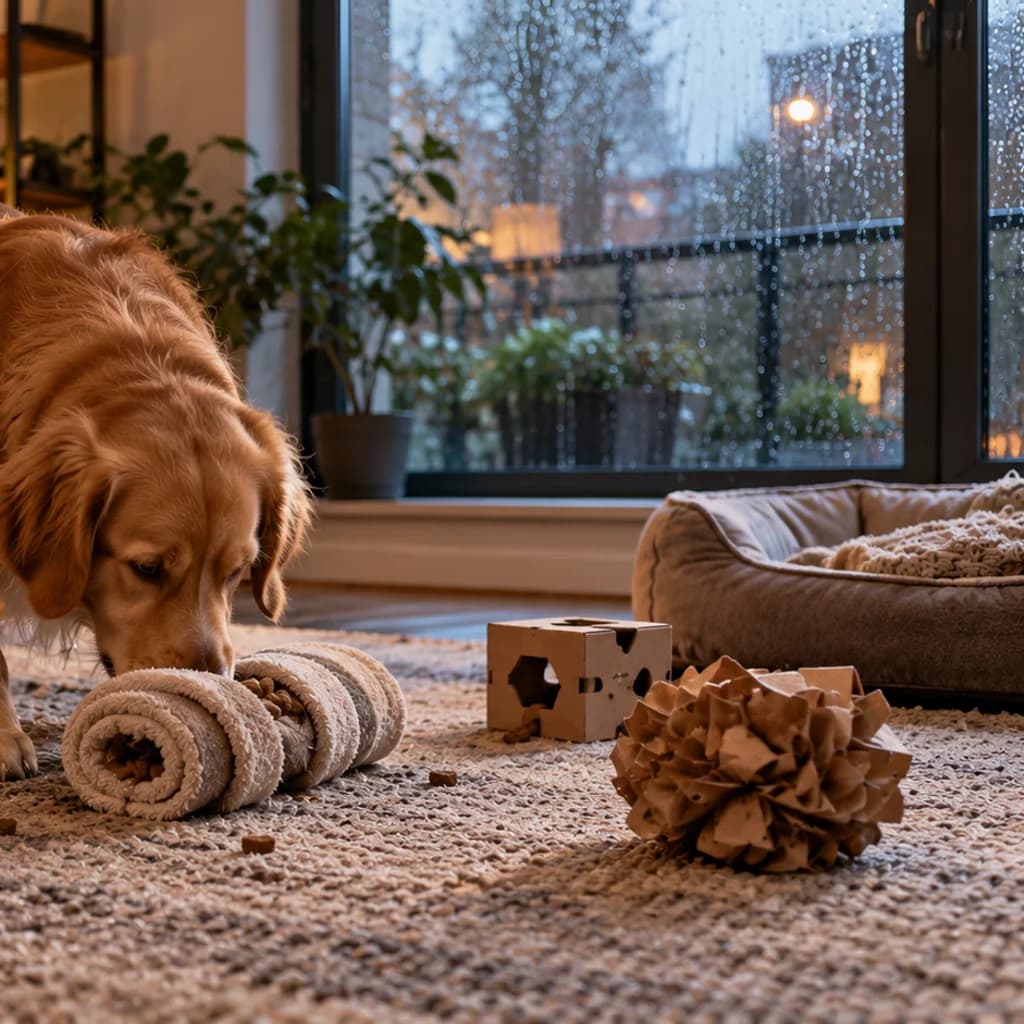
- Towel rolls: Wrap small treats inside a towel and roll it up. As your pet learns to unroll it, make the knot harder.
- Scent trail: Leave treats at intervals along the hallway, with a big reward at the end. Keep your dog in another room while you set it up.
- Box pool: Fill a box with crumpled paper and hide a few treats among it. It works well for cats too.
- Name game: Teach your pet different names for two toys, then ask them to bring the one you want. It takes time to learn, and that's exactly why it tires them out.
Setting up the game where your pet can't see changes the outcome. A treat hidden in front of their eyes turns the game into memory, not searching. Also be careful not to put the treat in the same place every time; once they memorize it, they stop using their nose.
Raise the difficulty gradually. When a pet fails several times in a row, they lose interest; they need to win in the first tries.
Food puzzles
Eating from a bowl takes a few minutes. Getting the same food out of a puzzle stretches to fifteen minutes, and your pet is working the whole time.
Simple options you can make at home:
- A plastic bottle or cardboard tube with holes cut in it; food spills out as your pet rolls it.
- Food spread across an egg carton; it encourages cats to use their paws.
- Moistened food served frozen; it supports slower eating.
- Dry food scattered between the folds of a small towel or mat.
When using puzzles, don't increase the daily amount of food; subtract the treats from the game from the total portion. Otherwise weight goes up quickly during a period when pets move less. If you have concerns about weight, a food change or digestion, talk to your vet.
When choosing materials, watch out for small pieces that could be swallowed. Don't leave a pet that chews things apart alone with a puzzle; cardboard and plastic toys should be used under supervision.
Ideas just for cats
For cats, the play cycle should be short and repeated. Three or four five-minute sessions a day work better than a single twenty-minute one.
Use a wand toy to mimic hunting: approach slowly, hide, dart away, and don't forget to let them catch it in the end. Hiding places like paper bags, cardboard boxes and tunnels start the game on their own.
Vertical space is mental stimulation too. A shelf by the window that opens up the view can change a gloomy day quite a bit for a cat. Make sure the window is safe; an insect screen alone doesn't keep a cat safe.
Energy and play needs vary noticeably by breed. Reading about your cat's or dog's tendencies in the Pet Encyclopedia makes it easier to set up play at the right level.
Training practice is a game too
Gloomy days are a good time to refresh commands your pet already knows. Repetitions like sit, stay and heel give your pet a mental workout and also make them safer outside. The recall command in particular is a skill that pays off in the dark or in crowds.
Keep sessions short: five minutes, a few successful repetitions, then stop. A session that ends before your pet gets bored helps them start more eagerly the next day. Rewarding the right behavior moves faster than punishment and loud corrections.
If you want to add a new skill, start with simple things: sniffing your hand, touching a target, turning to look when you say their name. These aren't for show; they make daily life easier because they organize your communication. You can browse practical and guide content through Pet Hub.
A daily plan for gloomy days
A simple routine spread through the day works better than trying ideas at random:
- Morning: breakfast from a puzzle instead of a bowl, followed by a short training review.
- Midday: a ten-minute scent game or work on a new command.
- Afternoon: if you can get outside even briefly, a slow walk that lets them sniff.
- Evening: a wand toy or fetch, always ending by letting them catch it.
- Night: a calm chewing activity and a dark, quiet place to rest.
If several people live in the home, it helps to agree on who does which session. Otherwise everything piles up at the same time or the day goes by with nothing. Likewise, keeping track of who gives how many treats prevents portions from creeping up without anyone noticing.
This plan doesn't have to be the same every day. Rotating toys keeps the same toy interesting: put a few away in a box and swap them once a week.
If a pet never seems to burn off energy, is restless all night or suddenly changes behavior, rule out health issues first. Pain and discomfort can cause behaviors that are easy to mistake for a lack of play. Take notes on what you observe and share them with your vet.
Frequently Asked Questions
How much mental play a day is enough?
In most homes, a total of twenty to thirty minutes spread through the day makes a clear difference. Routine matters more than length; short, repeated sessions every day work better than one long session.
What should I do if my pet shows no interest in the game?
Usually the game is too hard or the reward isn't tempting enough. Make it one step easier, change the reward and move the game to a time when they're hungry. If they're still not interested and this comes with a general lack of enthusiasm, talk to your vet.
Is it a problem to give treats instead of regular food?
It's fine as long as you subtract them from the daily portion. Extra treats shouldn't go beyond a small share of total calories; don't neglect weight tracking.
Can my cat and dog play the same game together?
It's safer to play with them separately. A game with food in the same room can cause tension. If both play comfortably, keep some distance between them and put the treats in separate spots.









