


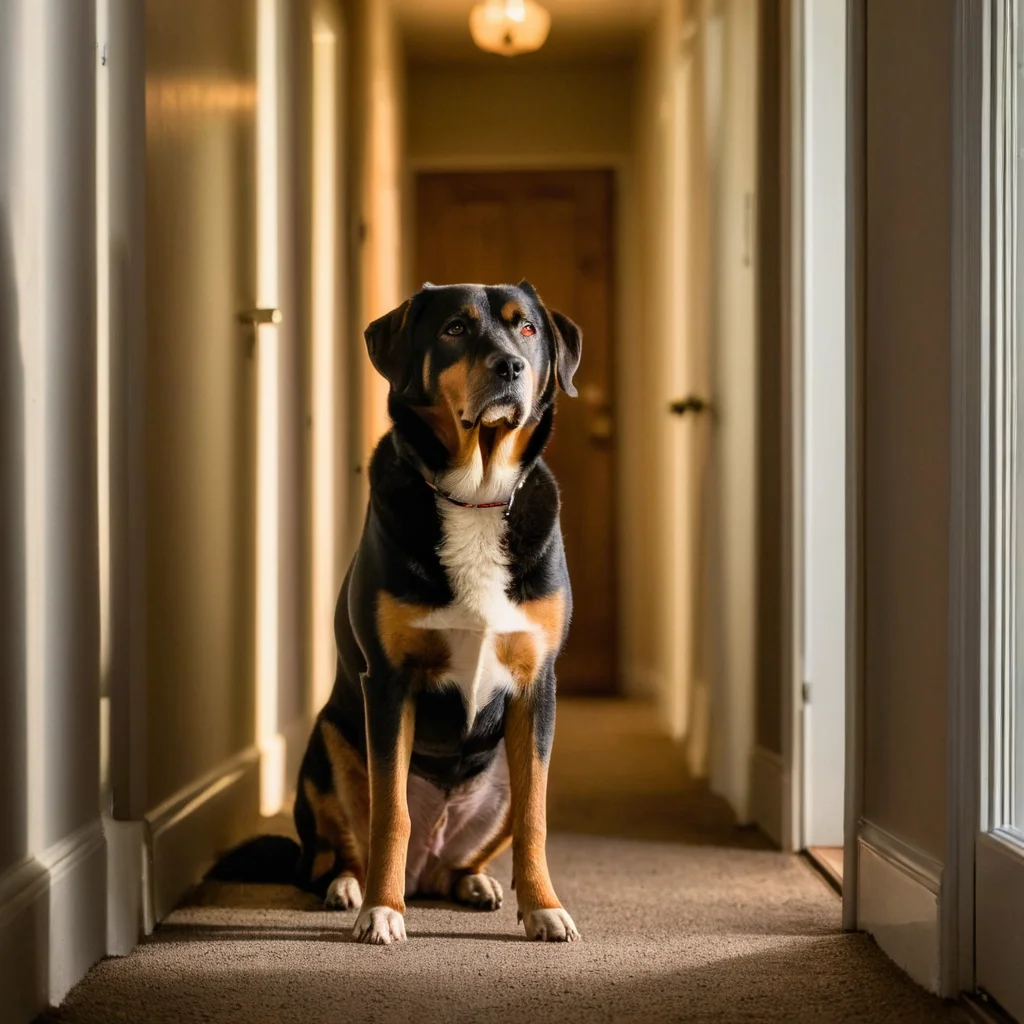

Disorientation in senior pets and "sundowning": restlessness and confusion become more noticeable in the evening. Just as in human dementia, it's common in pet cognitive dysfunction. Getting lost in familiar surroundings, getting stuck behind furniture, not recognizing family members. Early diagnosis, adapting the home and treatment help protect quality of life. In this article, we take a detailed look at how to manage disorientation.
1. What Is Sundowning?
- Known from human dementia: restlessness in the twilight hours.
- It's also seen in pet cognitive dysfunction.
- It usually becomes noticeable between 5 p.m. and 10 p.m.
- Causes: disrupted circadian rhythm, less stimulation for the brain, difficulty seeing.
2. Signs of Disorientation
- "Gets lost" in a familiar room.
- Gets stuck in corners or behind furniture.
- Approaches the door from the wrong side.
- Can't find the food/water bowl.
- Doesn't recognize family members.
- Can't find the bed/sleeping area.
- Gets lost outside.
- Doesn't respond to familiar commands.
3. Signs of Sundowning
- Restlessness and wandering in the evening.
- Pacing (walking nonstop).
- Excessive meowing/barking.
- Increased anxiety.
- Aggressive behavior (rare).
- Gets worse as the night goes on.
4. Diagnosis and Ruling Out Other Causes
- Vet exam and neurological tests.
- Vision/hearing screening.
- Complete blood count, thyroid and kidney tests.
- Blood pressure.
- Ruling out medication side effects.
- Behavior scale (CADES).
- In some cases an MRI (to rule out a brain tumor).
5. The Role of Vision/Hearing Loss
- Vision and hearing loss in senior pets can mimic disorientation.
- Each cause is treated separately:
- Cataracts → surgery.
- PRA → compensatory adaptation.
- Deafness → visual commands.
- Done together with ruling out cognitive dysfunction.
6. Medical Treatment
- Selegiline: Standard for CDS, helps with sundowning.
- SAMe (Denamarin): Cognitive support.
- Trazodone: Evening restlessness (if needed).
- Gabapentin: Anxiety and pain.
- Melatonin: Regulates the circadian rhythm.
7. Adapting the Environment
- Keep the familiar layout: Don't rearrange the furniture.
- Night lights: Several small lights (one in every room).
- Non-slip rugs: Protect aging joints and help with unsteadiness.
- Soften corners: Prevent bumping and getting stuck.
- Keep the food/water bowl in a fixed spot.
- A familiar bed in the same place.
- Lower door thresholds: Steps are hard for senior pets.
8. Sticking to a Routine
- Fixed mealtimes.
- Fixed walk times (dogs).
- A fixed sleeping area.
- Set times for social interaction.
- Routine = finding the way and feeling secure.
- Irregular changes make disorientation worse.
9. Practical Evening Solutions
- Plenty of mental exercise in the evening (puzzle feeder).
- An evening walk (dogs).
- An early dinner (calm digestion).
- Calm interaction with the family.
- Dim lighting (not sudden darkness at night).
- Calm music.
- A therapy (weighted) blanket at night.
10. Family Education and Patience
- Your senior pet isn't being "naughty" on purpose: the brain is declining.
- Yelling and punishment are a NO.
- Gentle redirection.
- Teach kids to be gentle with a senior pet.
- Take turns caring as a family (so the owner doesn't burn out).
- Accept that love is at the heart of caring for a senior pet.
Disorientation and sundowning in senior pets are signs of cognitive dysfunction, and the formula medical treatment, adapting the environment, sticking to a routine and family patience protects quality of life. It's not just "accept that they're getting old": treatment is available. Early intervention slows the progression. In the DoldurKabı app, you'll find vet clinics with senior pet experience on a map.









