


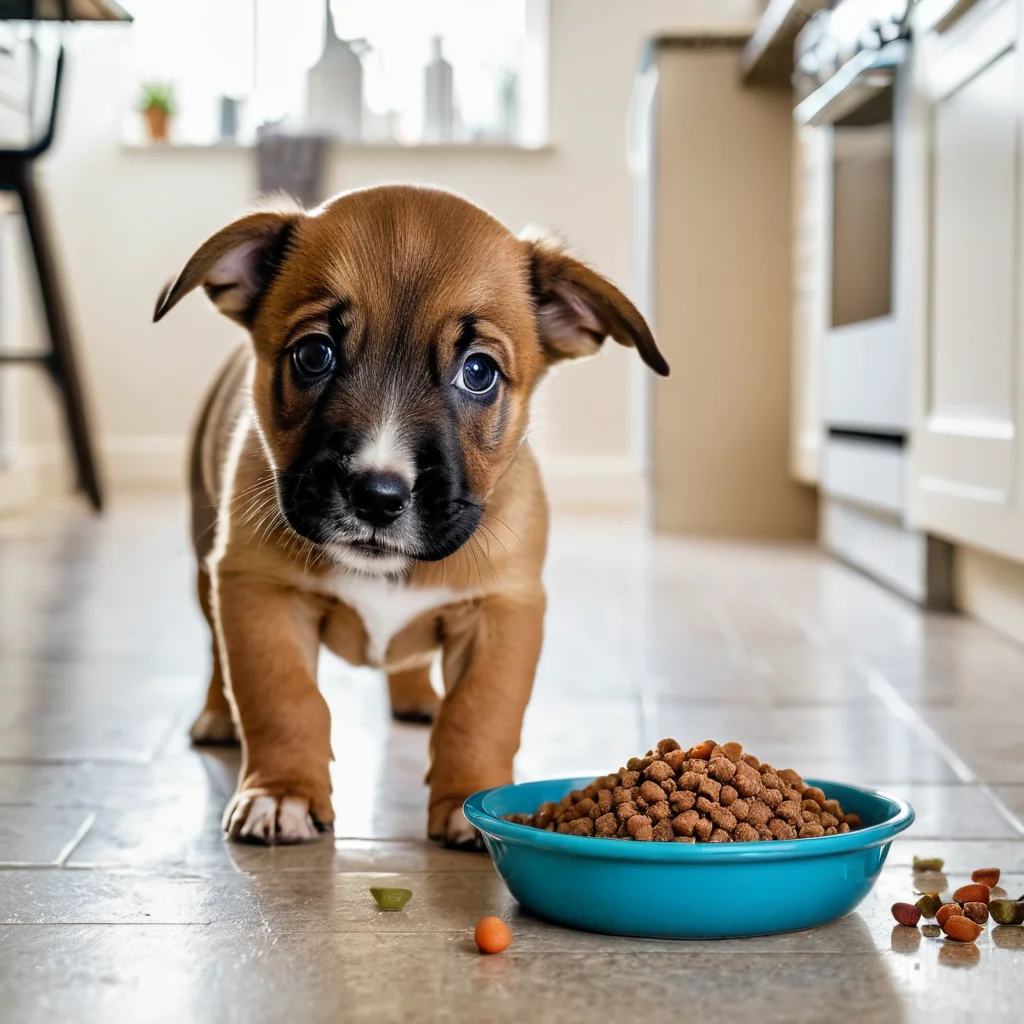

The most critical feeding period for a kitten or puppy is between 3 and 8 weeks. The move from mother's milk to solid food during this time shapes the young pet's lifelong health. A sudden switch leads to diarrhea, weight loss and digestive problems, while the right timing and the right mix raise healthy, strong puppies and kittens. When there's no mother (the mother has died or the litter was abandoned), professional support is essential, and cow's milk must NEVER be given (it can be fatal). In this article, we take a detailed look at a week-by-week transition plan, choosing the type of food, managing diarrhea, and what to do when the mother is gone.
1. Mother's Milk: Why Is It Irreplaceable?
In the first 3 weeks, mother's milk gives the young pet:
- Colostrum (the first 24-48 hours): It contains antibodies that lay the foundation of the immune system. If it's missed, the animal will have an immune deficiency.
- An optimal nutrient profile: The right ratio of fat, protein and minerals for the species.
- Probiotic bacteria: The start of the gut flora.
- Warmth and fluid balance: Body temperature and hydration together.
- The mother-baby bond: Feeding time supports social and emotional development.
2. Weaning Timing
It depends on the species and how the young pet is developing:
- Puppies: Introduce a milk-and-food mash at weeks 3-4. They should be fully weaned by 6-8 weeks.
- Kittens: Introduce solid food at weeks 3-4. Fully weaned by 8-10 weeks.
Weaning too early (before 4 weeks) leads to weak immunity and behavior problems. Weaning too late (after 12 weeks) means the quality of the mother's milk has dropped and growth is inadequate.
3. Week-by-Week Transition Plan
Weeks 3-4:
- Mother's milk is the main food.
- Soften puppy or kitten food with warm water or a puppy/kitten milk formula (to a pudding-like consistency).
- Serve it spread flat on a plate (so they can eat it).
- First sessions: 3-4 times a day, small portions.
- The mash can be mixed with the mother's milk.
Weeks 5-6:
- 50% mother's milk, 50% solid food.
- A firmer food consistency (semi-solid).
- 4-5 small meals a day.
Weeks 7-8:
- Food is eaten dry (softened dry food for puppies, dry kibble for kittens).
- Reduce mother's milk; it's only for comfort (cats).
- 3-4 meals a day.
Week 8+:
- Fully solid food (puppy/kitten food).
- Mother's milk has stopped.
- 3 meals a day (until 4 months of age).
4. Choosing Food: Puppy / Kitten Formulas
Puppy and kitten food is different from ADULT food:
- Higher protein: 22-32% for puppies, 30-40% for kittens.
- Higher fat: Their energy needs are twice an adult's.
- Calcium and phosphorus balance: For bone development.
- DHA and ARA: For brain and eye development.
- Kibble size: Suited to small teeth.
Brands (puppy and kitten foods): Royal Canin Puppy/Kitten, Hill's Science Plan Puppy/Kitten, Purina Pro Plan Junior, Acana Puppy. Your vet's recommendation is the right guide.
5. Puppy and Kitten Milk Formula (When There's No Mother)
If the mother has died or abandoned the litter, never give cow's milk. Cow's milk:
- Is very high in lactose, which causes diarrhea.
- Has too little protein, which causes growth problems.
- Has a different fat profile, which causes absorption problems.
Instead, use a commercial puppy or kitten milk formula (KMR for kittens, Esbilac for puppies). These are available at pet shops and pharmacies in Türkiye. Prepare it at the concentration that fits the age you're feeding.
In an emergency, a temporary homemade formula (if you can't get commercial formula in time): a recipe of goat's milk, egg yolk and a little corn syrup. This is only a 24-hour stopgap; switch to a commercial formula right away.
6. How Often to Feed (When There's No Mother)
- 0-2 weeks: Every 2 hours, around the clock (including at night).
- 2-4 weeks: Every 4 hours.
- 4-6 weeks: Every 6 hours, plus introducing solid food.
- 6+ weeks: Milk decreases, solid food increases.
Feeding technique:
- Position: belly down (the human baby position is WRONG, since it risks choking and fluid in the lungs).
- Let the bottle flow drop by drop without squeezing hard.
- Check that they are sucking and swallowing.
- After feeding, massage their back for 2-3 minutes (the way the mother licks them, to release gas and trigger the toilet reflex).
7. Managing Diarrhea
Diarrhea is common during the transition. Causes and what to do:
- How fast the food changes: Transition more slowly (small increases over 3-4 days).
- Milk formula concentration: If it's too thick, it causes diarrhea; you can dilute it a little with water.
- Overfeeding: Stomach capacity is limited, so feed small amounts often.
- Cold food: The temperature should be between 35 and 38°C.
- Probiotics: A probiotic supplement for puppies and kittens (FortiFlora or similar).
If diarrhea lasts 24 hours, or the young pet shows weakness and signs of dehydration, see an emergency vet.
8. Hygiene and Temperature
Without a mother, puppies and kittens are very sensitive to temperature:
- 0-2 weeks: Low body temperature; keep the surroundings at 30-32°C.
- 2-4 weeks: 27-29°C.
- 4-6 weeks: 24-27°C.
- 6+ weeks: Normal room temperature (21-24°C).
Hygiene:
- Sterilize the bottle and nipple before every use.
- Keep the bedding area dry and clean, and clean it daily.
- Only handle them after washing your hands.
9. Tracking Weight
Weekly weight gain in a healthy young pet:
- Puppies: 5-10 g/kg per day in the first week, then faster.
- Kittens: 50-100 g per week.
If their weight stalls or drops, urgent action is needed: they may not be getting enough food, they may be sick, or there may be an absorption problem.
10. The Socialization Window
Weaning and social development go hand in hand:
- The socialization window from 3 to 12 weeks: Meeting new people, sounds and places is critical.
- What happens during this window shapes adult behavior.
- A young pet raised too protectively becomes a shy, fearful adult.
- Varied settings and calm contact lead to a confident, social adult.
Moving feeding and socialization forward side by side is the foundation of a healthy, balanced and calm adult animal. If there's no mother, this responsibility falls entirely on the owner: a species-specific formula, the right food, a warm environment and social interaction at the right time all need to come together. With the right support, the absence of mother's milk can be largely made up for.









