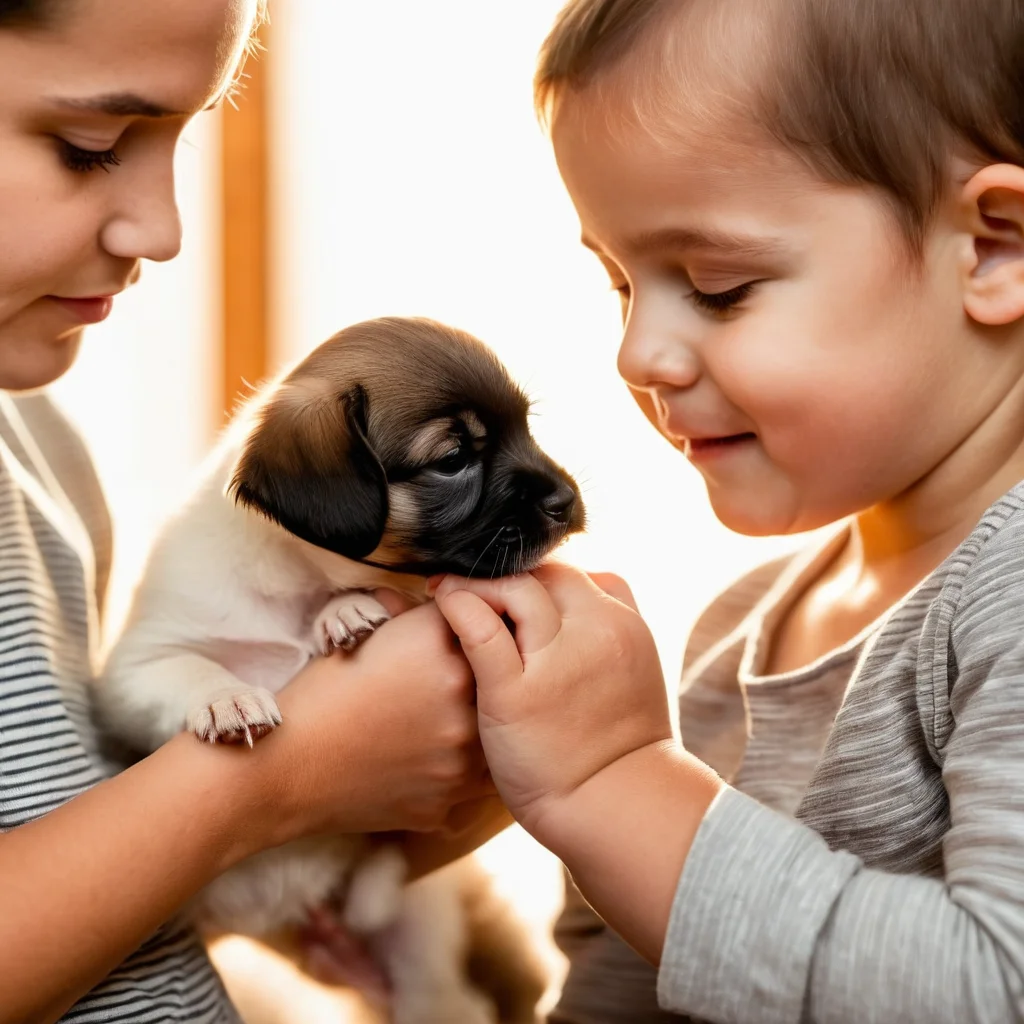

A puppy or kitten in a home with kids is a big thrill, but also a big responsibility. When the child and the young pet are both in a learning stage, the wrong kind of interaction can be traumatic for both of them. The right training builds mutual respect and lays the foundation for a wonderful friendship that lasts for years. In this post, we take a detailed look at how kids and young pets get along, by age group.
1. Child's Age Group vs. Interaction with the Young Pet
- Ages 0-2: The child isn't independent. The young pet and the baby should be together only under supervision. Risk of the young pet biting and the baby squeezing too hard.
- Ages 3-5: The child's understanding is developing. Training in boundaries and respect begins.
- Ages 6-9: Sharing responsibilities begins (food, water).
- Ages 10+: Active participation in care, responsibility for training.
2. Training in Mutual Respect
- The child doesn't touch the young pet while it rests: sleep time and mealtime are off-limits.
- The young pet is left alone while it eats: this prevents food guarding.
- The young pet's head, tail and paws are sensitive: don't force touching in these areas.
- Nobody yells at the young pet, and the child doesn't yell either: calm interaction.
- The young pet isn't picked up by force: let it come to you.
3. Rules to Teach Your Child
- The "frozen tree" pose: if the young pet lunges, stand still.
- Don't bother the young pet when it goes to its food or water bowl.
- Yelling + running around gets the young pet overexcited.
- Commands like "No" and "Down" mean something to the young pet.
- If the young pet starts biting, end the game, even if it began as play.
- The young pet is held "for support," not "to control" it.
4. Behaviors to Teach the Young Pet
- The "Down" command: stops jumping on the child.
- "Lie down" + "Stay": while the child approaches.
- Soft mouthing: never toward the child.
- Socialization with kids from an early age + rewards.
5. The First 14 Days: Getting to Know Each Other
- When the young pet arrives home, the child sits in a calm spot, and the young pet comes as close as it wants.
- Touching is limited on the first day.
- When the child feeds the young pet, it's under the owner's supervision.
- Interaction in 5-10 minute sessions + rewards + breaks.
- A hiding spot for when the young pet gets scared.
- Natural bonding by the end of 2 weeks.
6. Special Notes on Kittens and Kids
- Cats are more timid than dogs.
- A hiding spot is a must (a cat shelf, under the bed).
- The child doesn't chase the kitten; wait for the kitten to come.
- No touching the tail or belly.
- Getting used to nail trimming: prevents scratch injuries to the child.
7. Warning Signs (Young Pet)
- Low-pitched growling.
- Lips pulled back.
- Tense body.
- Raised hackles (dogs).
- Puffed-up tail (cats).
- These signs = an adult steps in, the child moves away, the young pet calms down.
8. Sharing Responsibilities (by Age)
Ages 3-5:
- Watching the young pet.
- Saying "Good job."
- Picking up the food bowl (simple help).
Ages 6-9:
- Filling food + water (with adult supervision).
- Brushing the young pet (for a short time).
- Joining training sessions (with adult guidance).
Ages 10+:
- Walks (accompanied by an adult).
- Feeding schedule.
- Running training sessions.
- Coming along to vet visits.
9. Educational Activities
- Training sessions with the young pet (the child gives commands, an adult supports).
- Filling a puzzle feeder that the young pet earns its food from.
- Calm grooming time.
- Reading books about animals.
- Drawing pictures of the pet and the child together.
- The child coming along to a vet visit (in a controlled way).
10. Preventing Trauma
- If the young pet bites the child, separate them right away.
- NO blame: it is a lack of training.
- A vet check (wound + rabies vaccine check).
- Consulting a behaviorist.
- Correction can take years.
Getting a young pet settled in a home with kids comes down to a formula of mutual training + boundaries + supervision + shared responsibilities, the foundation for a wonderful friendship that lasts for years. Adult discipline + patience + consistency are essential. In the DoldurKabı app, you can find puppy and kitten care resources + vet clinics experienced in behavior on a map.