


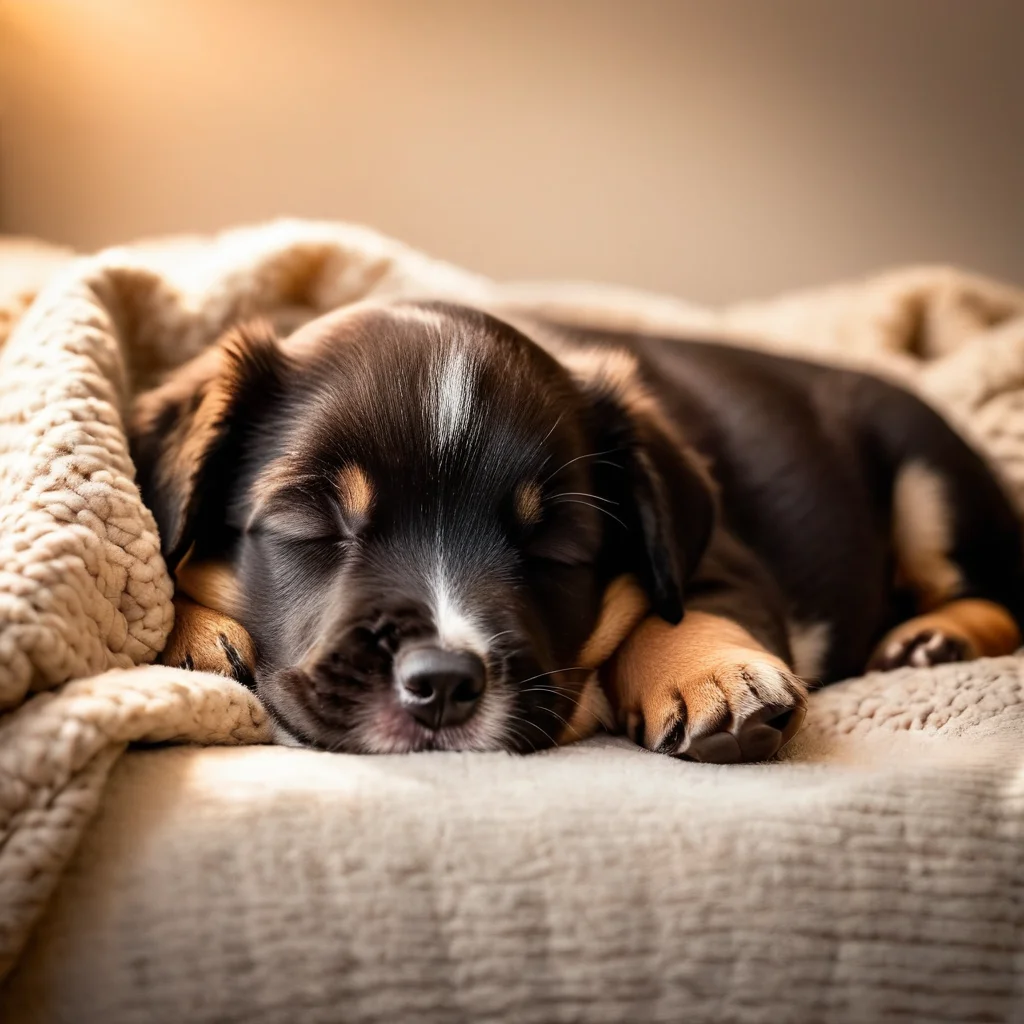

A puppy sleeps 18-20 hours a day, and this is critical for growth + brain development. A puppy that does not get enough sleep grows up cranky, nippy and unhealthy. The owner wants to play all the time, but the puppy has to rest. This post covers the details of setting up the right sleep area + a quiet rule + a nighttime routine. We take a detailed look at the full protocol for a puppy sleep routine.
1. How Long Puppies Sleep
- 2-4 weeks: 22 hours of sleep.
- 2-3 months: 18-20 hours.
- 3-6 months: 16-18 hours.
- 6-12 months: 14-16 hours.
- Adult: 12-14 hours.
- Large-breed puppies sleep a little more.
2. Why Puppies Need So Much Sleep
- Brain development (neural connections are strengthened during sleep).
- Muscle + bone development.
- The immune system.
- Consolidating learning (what was learned during the day).
- Storing energy.
- A tired puppy is cranky + nippy + learns poorly.
3. Setting Up the Sleep Area
- Location: A quiet corner, away from household traffic but not isolated on its own.
- Bed: Soft, washable, the right size for the puppy.
- Crate: A safe "den" feeling. With the right setup + gradual training.
- Temperature: 20-22°C is ideal. Not cold.
- Light: Dark at night or a soft night-light.
- Sound: White noise or quiet.
4. Nighttime Sleep Routine
- Dinner 2 hours before bedtime.
- A last potty break 30 minutes before bed.
- A soft bed ready.
- Gently take water away (starting 2 hours before).
- A calm environment, no loud noises.
- Teaching a "bed" command helps.
- A treat + calm praise to start sleep.
5. Handling Crying at Night
Puppies cry at night in the first weeks, from loneliness + needing to go potty:
- Potty needs: Quietly take the puppy from its bed, bring it to its potty spot, go back inside, with NO play.
- Loneliness: On the first night, the bed can be in the bedroom (the puppy feels its owner is close).
- A blanket + its mother's scent: A sense of shelter.
- A hot water bottle (wrapped in a towel): Mimics body warmth.
- A ticking clock: Like the sound of its mother's heartbeat.
- If the crying is constant, see a vet; there may be a health problem.
6. Daytime Sleep
- Puppies cycle through sleep + play every 1-2 hours.
- Too much play → tired + cranky.
- "Playing with eyes half closed" → danger. Do not force the puppy awake.
- Teach children "the puppy is sleeping, be quiet."
- When guests are over, the puppy should be able to retreat to its own space.
7. Signs of Sleepiness
- Yawning.
- Squinting eyes.
- Slowing movements.
- Retreating to a corner.
- Soft grumbling.
- These signs = put the puppy in its sleep area and let it rest.
8. A Puppy That Does Not Get Enough Sleep
- Cranky + irritable behavior.
- Excessive biting.
- Loss of appetite.
- Hyperactivity (tired + unable to sleep).
- Trouble learning.
- A weaker immune system.
- Behavior problems in the long run.
9. Teaching Household Members
- A family-wide rule: "quiet while the puppy sleeps."
- Teach children in particular.
- Waking the puppy because "it looks cute" is NOT ALLOWED.
- The sleep area is "sacred," so the puppy feels safe.
- Tell guests the rule ahead of time.
10. Sleep Problems in Adult Dogs
- An adult dog suddenly sleeping a lot → a health problem.
- Sleeping very little → pain, anxiety, cognitive issues.
- A senior dog's sleep-wake cycle can flip because of dementia.
- A young dog with too much energy → not enough exercise.
Puppy sleep is a vital need of 18-20 hours a day. The owner's discipline + a quiet sleep area + a nighttime routine is the formula for healthy puppy development. Worried that "it sleeps too much"? No. Worry if "it is not sleeping enough." In the DoldurKabı app, you can find vet clinics experienced in puppy care on a map.









