


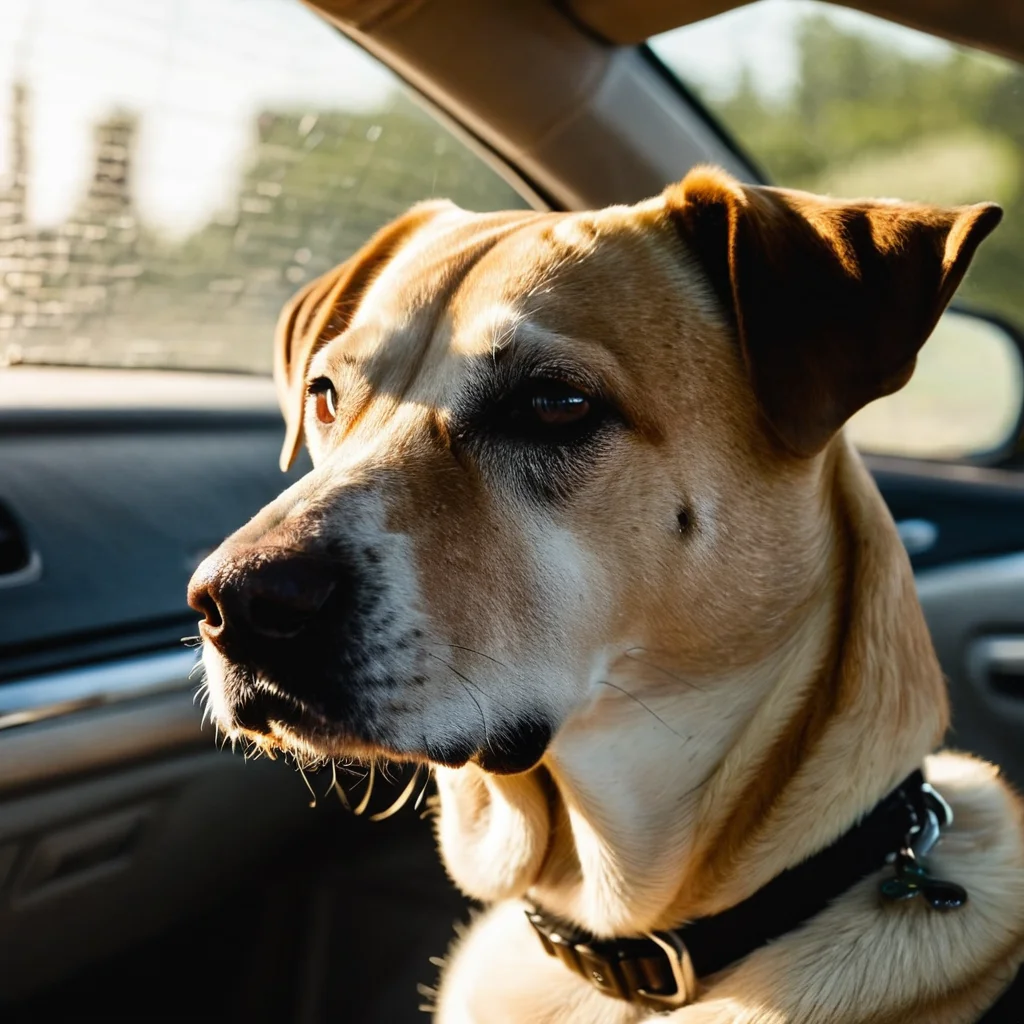

In midsummer, 25°C outside feels mild. But the inside of a car parked in the sun reaches 38°C in 10 minutes, 49°C in 30 minutes and 60°C in 1 hour. These temperatures quickly become deadly for dogs and cats. The "I left the window cracked, I'll be right back" approach ends in the deaths of hundreds of animals every year. In this post, we look at how the temperature rises inside a car, the chain of heatstroke symptoms, alternative solutions and legal responsibility.
1. Temperature Inside a Car: The Science and the Numbers
According to research by the American Veterinary Medical Association and Stanford University, no matter what the outside temperature is, the temperature inside a car rises by at least 10-15°C in the first 10 minutes:
- 20°C outside → 30°C inside after 10 min, 40°C after 30 min
- 25°C outside → 38°C inside after 10 min, 49°C after 30 min
- 30°C outside → 45°C inside after 10 min, 60°C after 30 min
- 35°C outside → 50°C inside after 10 min, 70°C after 30 min
This curve changes very little even with shade, a cracked window and a windshield sunshade. The difference is 1-3°C at most.
2. The Limits of a Dog's or Cat's Body Temperature Control
Dogs and cats don't sweat the way we do; they release only a tiny bit of moisture through their paws. Their main cooling mechanism is breathing (panting). When core body temperature reaches 39.5°C, the system starts to struggle; at 41°C, the organs are affected, and above 42°C, irreversible damage begins.
In a 40°C car, body temperature shoots up to 41°C in 15-20 minutes and to 42-43°C in 30 minutes. At this point, a chain of brain swelling, kidney failure and heart rhythm problems begins.
3. The Chain of Heatstroke Symptoms (by Time)
The symptoms below get worse on their own, and waiting with a "let them rest, it'll pass" attitude is a mistake:
- 0-10 min: Heavy, exhausted panting, tongue hanging out, moist eyes.
- 10-20 min: Drooling (sticky), red gums, rapid heartbeat, weakness.
- 20-30 min: Vomiting, diarrhea (sometimes bloody), loss of balance, unsteady walking.
- 30-45 min: Seizures, confusion, coma.
- 45-60 min: Multiple organ failure, cardiac arrest.
4. Emergency Response: If You're Too Late
- Get the dog or cat out of the car right away and move them into the shade.
- Wet the paws, belly, armpits and groin with lukewarm water. Ice or very cold water causes shock, so don't use it.
- While cooling, create a fan or airflow (if your car has air conditioning, bring your pet inside and turn the AC on).
- If they're drinking, give fresh water that isn't cold (very small sips at intervals, since too much causes vomiting).
- Even if the symptoms ease within 10-15 minutes, always go to the vet. Internal organ damage can show up hours later.
5. The "I Left the Window Cracked" Myth
Leaving the window open two centimeters or halfway lowers the temperature inside the car only slightly. In the Stanford study, the difference was 1-2°C. 60°C → 58°C is still deadly. A cracked window also means:
- An invitation to theft.
- The risk of your dog getting their head stuck in the gap.
- Your cat may escape.
- Rain gets in.
It is not a solution.
6. The "Just 5 Minutes" Myth
The "I'll run into the corner store, 5 minutes" plan usually stretches to 20 minutes. You get in line, your phone rings, your card has a problem. Meanwhile, the animal in the car may already have suffered irreversible damage. 5 minutes is not safe. 0 minutes is safe.
7. Alternative Solutions
If you're going out with your pet during the summer:
- Drive-through services: Bank, pharmacy, café → without getting out of the car.
- Take turns: If you're with your partner, one of you stays in the car with the AC on.
- Pet-friendly stores: Pet shops, some cafés, garden stores. You can go inside with your pet.
- Leave them at home: An air-conditioned room, water, food, toys. Dogs can manage for up to 3-4 hours, cats for 6-8 hours.
- Pet hotel/daycare: Professional care for a long day.
8. Managing the Car on Summer Trips
If you're taking a long road trip with your pet:
- Travel early in the morning or in the cool of the evening.
- Keep the AC on the whole time (around 22°C at least).
- Take a 15-minute break every 2 hours: shade, fresh water and a walk.
- Always keep a water bottle, a carrier and a towel within reach.
- Dog or cat travel crate: choose one with good ventilation.
- The trunk area is NOT suitable: risk of head injuries and no airflow.
9. The Legal Situation in Türkiye
Under the Animal Protection Law (Law No. 7332), which came into force in 2021, neglecting an animal in a hot car is considered "cruelty". If it's reported, the municipal police (zabıta) and the police can step in, the window can be broken and the owner can face an administrative fine of 5,000-30,000 Turkish lira.
If you see an animal left in a car on the street, you can call 153 (municipality), 155 (police) or 144 (animal protection). Only the authorities can decide to break the window. Breaking it yourself creates legal liability.
10. In Short: 3 Rules That Save Lives
- In the summer months, never leave your pet in the car for any reason. There's no such thing as "5 minutes."
- A cracked window is not a solution. The scientific evidence shows almost no difference.
- If there are emergency symptoms, go to the vet and don't say "it passed." Internal organ damage can flare up within hours.
A small change in your summer habits (choosing drive-throughs, leaving your pet at home, taking turns with your partner) saves the lives of hundreds of animals. And one small note: if you see a dog in a car outside, take action. The owner isn't there, and the animal is getting worse by the second.









