


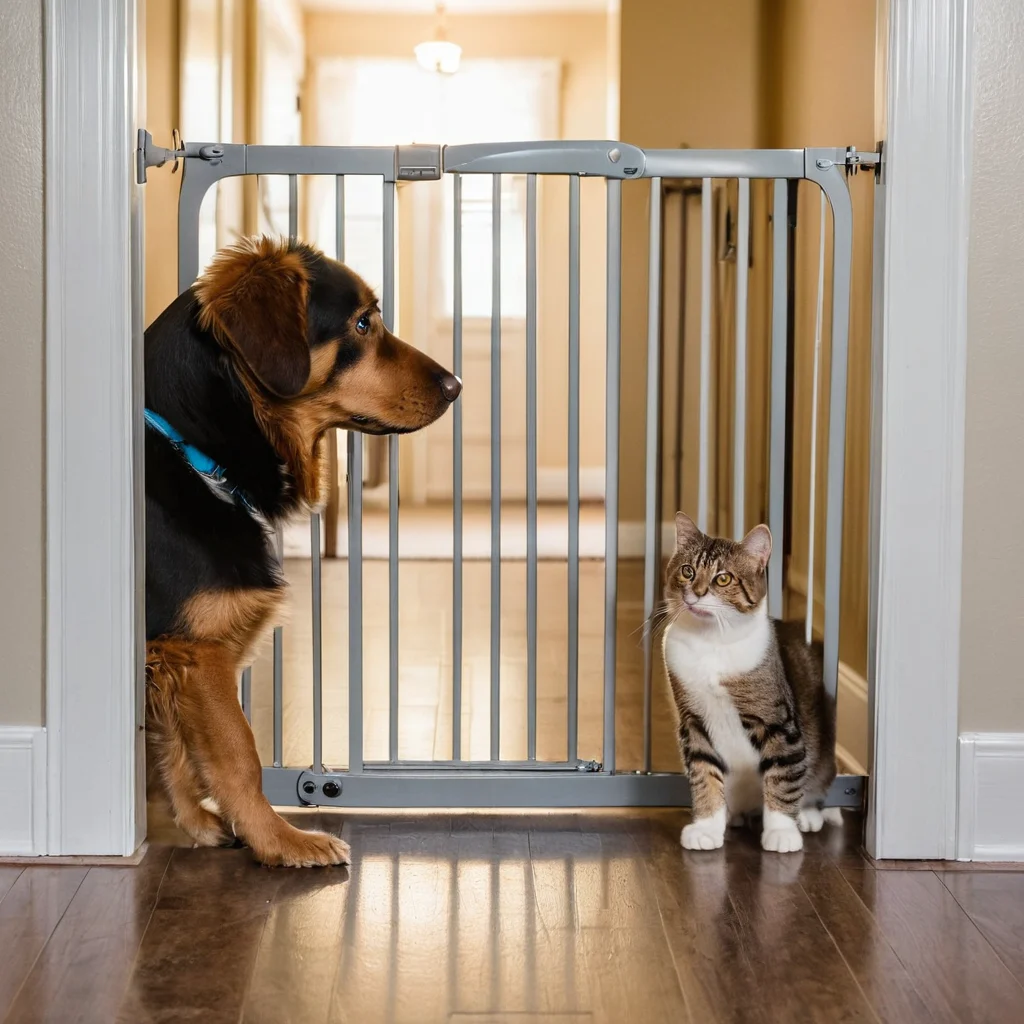

"Dogs and cats can't be friends" is a myth: with the right introduction, the two can live happily in the same home for years. A bad start, though, can end in lasting fear, aggression or even driving the cat out of the house. Dogs are usually social and see a new animal as a playmate. Cats are territorial, and a newcomer is invading their space. This mismatch needs careful handling. With a gradual 14-day protocol, the two animals get used to each other, and it often turns into a friendship. In this article, we walk through a 5-stage, science-based introduction plan, plus edge cases and how to handle an emergency.
1. Preparing Before the Introduction
Set up your home before the new dog arrives:
- A "safe room" for the cat: A separate room with the cat's own food, water, litter box, toys and bed. The door can be closed.
- A separate area for the dog: The living room or hallway, with the dog's bed and food here.
- High escape routes for the cat: When the cat feels threatened, it needs to get up high. Keep cat shelves and the tops of cabinets clear. Have 3-4 spots the dog cannot reach.
- Baby gate: To block passage between the two areas.
- Dog leash + long line: For control during the introduction.
2. Stage 1: Scent Swap (Days 1-3)
The two animals get to know each other without seeing each other, by scent only:
- Leave the dog's bed or towel in the cat's room.
- Leave the cat's bed or towel in the dog's area.
- Have each one eat while taking in the other's scent, to build the link "good thing + this smell".
- If the dog buries its nose in the cat's scent, say "good job" in a calm voice and give a treat.
- If the cat hisses or runs away, do not pressure it; it will check things out on its own.
After 2-3 days of scent swapping, both have gotten used to the fact that "there is another animal here".
3. Stage 2: Under-the-Door Paw Play (Days 4-5)
The door stays closed, with paw contact only under it:
- The dog and cat eat at the same time on either side of the door.
- Slide a toy under the door to the cat, and play with the dog too.
- If the cat's paw comes under the door, let the dog sniff it.
- Once the dog stops barking and the cat stops hissing, you can move to the next stage.
If one of them reacts very aggressively, go back a stage and add 2-3 more days of scent swapping.
4. Stage 3: Visual Introduction (Behind a Baby Gate, Days 6-9)
Now comes visual contact, with no physical contact:
- Separate the two areas with a baby gate.
- The cat watches the dog from a high shelf or from behind the baby gate.
- The dog stays in front of the baby gate, leashed and sitting calmly.
- Reward both of them while they look at each other.
- If the dog barks, give the command "Down, easy". Reward once it calms down.
- Keep these sessions to 5-10 minutes, 2-3 times a day.
Within 4-5 days, both usually conclude that "this animal is not a threat".
5. Stage 4: Same Room, Dog on Leash (Days 10-12)
The dog is leashed in a shared area of the home. The cat roams free:
- The dog sits on a leash, under a gentle command.
- The cat moves freely around the room. Escape routes stay open (the cat can get up high).
- The dog cannot physically approach the cat; the leash limits it.
- If the cat comes closer, the dog should stay still. If the dog gets overexcited, give the "down" command and a reward.
- Sessions last 10-15 minutes. If there is a negative reaction, separate them right away.
This stage takes 3-5 days: the cat inspects the dog, hisses if needed, then loses interest.
6. Stage 5: Free Interaction (Days 13-14+)
The final stage is free interaction under supervision:
- The dog is off leash, but the owner stays close.
- The cat still has open access to its escape routes.
- If the dog approaches the cat, watch how the cat reacts:
- Calm = keep going.
- Hissing = pull the dog back and do a bit more under-door/visual interaction.
- Attack (swatting with a paw) = tell the dog "No", pull it back and separate them.
- When no one is home, keep them in separate rooms; supervision should continue for 4-6 weeks.
Some pairs get along fully in 14 days, while others take 6-8 weeks. An older cat with a young dog is usually the hardest combination.
7. Mealtimes: Separate but at the Same Time
Food is a special tool at every stage of the introduction:
- The two animals eat at the same time, the dog on one side and the cat on the other (under the door or across the baby gate).
- The link "other animal here = food is coming" reinforces positive learning.
- As the stages progress, the distance shrinks, until they eat comfortably 1-2 meters apart.
They should never eat from the same bowl: the cat is territorial, and the dog may be dominant.
8. Edge Case: Older Cat + Puppy
For an older cat (8+ years), a puppy is usually "a lot": it keeps inviting the cat to play and comes close to sniff. An older cat is not social and wants a calm life:
- Move through the process more slowly (4-6 weeks).
- The cat's escape spaces must stay open at all times.
- When the puppy is in "rough play" mode, it should be kept from approaching the cat.
- The cat will mostly want you to "act like I'm not here", so accept that.
9. Edge Case: Dogs with a High Prey Drive
Some breeds (Husky, sighthounds, Terriers, Border Collie) have a high "prey drive", and to them a cat is "a small animal to chase". In this case:
- The introduction process can stretch to 6-8 weeks.
- Use a leash and a muzzle together, so there is no risk of physical harm.
- When the dog reflexively chases after seeing the cat, give the "down" command and a high-value reward.
- Never leave them "off leash" and "unsupervised"; prey drive can suddenly flare up even years later.
- Support from a veterinary behaviorist is usually needed.
10. Emergency: What to Do If a Fight Breaks Out
If the two animals get into a fight:
- Never step between them with your hands or body: cat claws or dog teeth can cause serious wounds.
- Break their focus with a loud noise (clapping, dropping keys, tossing a soft pillow).
- Put a blanket, cushion or door between them.
- Once they are apart, close each one in a separate room.
- Check for wounds: cat scratch wounds carry a risk of fungal infection. Have the vet check them.
- Go back 2-3 stages in the introduction process and start again.
One or two small incidents are normal; 3+ repeats are a sign that the two may not get along at home. At that point, a behaviorist and changes to the home setup are needed.
Introducing a dog and a cat is a marathon, not a sprint. With a gradual 14-day protocol, patience and consistency, in most cases the two live together as friends for years. Over time, a dog that serves as a cat's pillow, or a cat that shares its bed with a dog, are common sights. A rushed introduction causes lasting damage; the slow method always wins.









