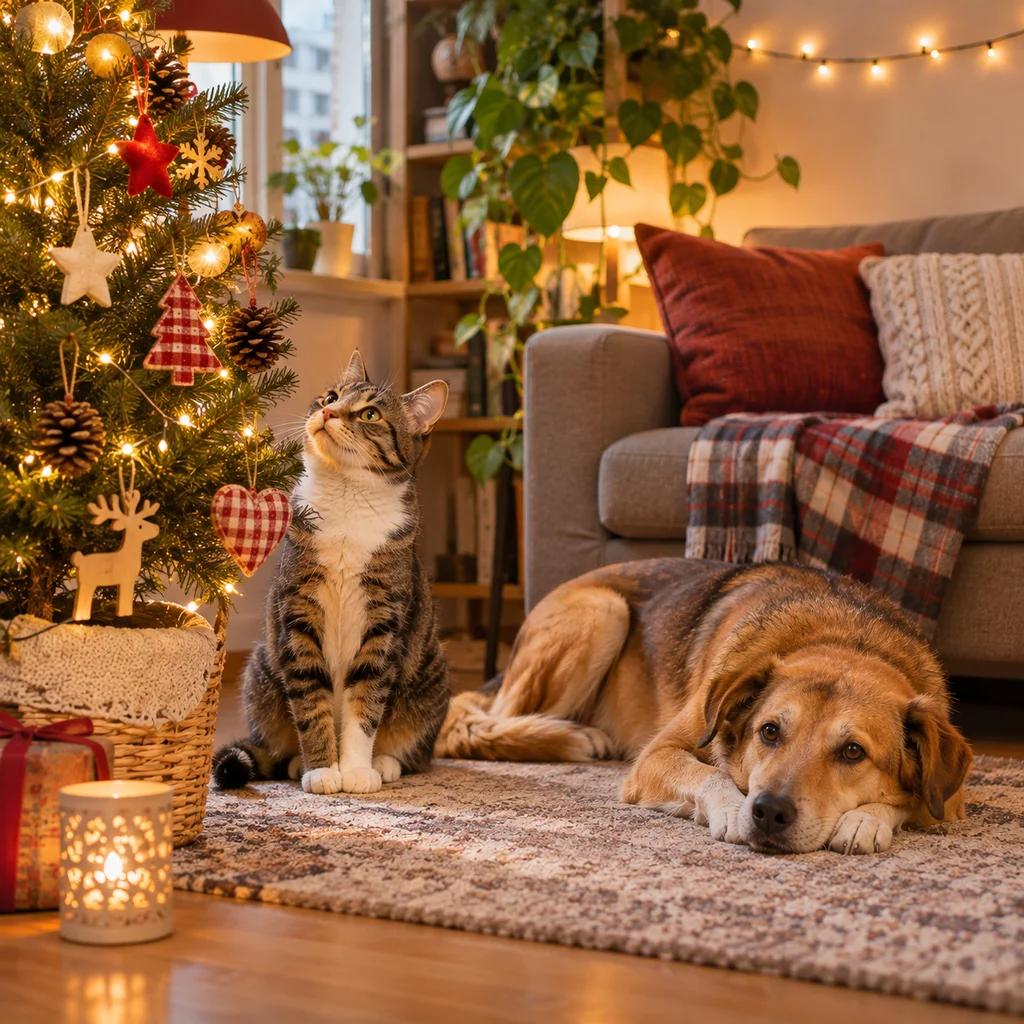

In mid-December a tree comes into the living room, and a whole lot of shiny, dangling, glowing things get hung on it. For you, this is getting ready for New Year's. For your cat, it's a new tree to climb, and for your dog, it's a pile of unfamiliar-smelling toys to chase whenever they fall to the floor.
This article isn't asking you to put your decorations away. The goal is to use them without trouble in the same home as your pet. Most precautions take one evening of arranging; the real work is knowing the risky pieces from the start.
Where and how should you set up the tree?
Real or artificial, a tree can tip over. Cats love to climb the trunk, and dogs love to poke their noses into the lower branches. Using a heavy stand and placing the tree in a corner against the wall is the first step. In homes with cats, tying the top of the tree to a hook on the wall with thin fishing line greatly reduces the chance of it falling.
Don't leave a jumping point like a couch, coffee table or bookshelf right next to the tree. A cat has a hard time jumping from the floor into the middle of the tree, but jumping from a coffee table is child's play for it. Spend some time around the tree during the first days; if you see a climbing attempt, use a calm voice to redirect its attention to another toy.
Extra care with a real pine tree
The needles of a real tree are sharp and can irritate the mouth and digestive tract if swallowed. Sweep up fallen needles every day. If an additive was mixed into the water in the stand to keep the tree fresh, don't let your pet drink that water. Covering the water reservoir with a lid or a piece of fabric takes care of this.
Tinsel, ribbons and thin strands
In homes with cats, the sneaky New Year's risk is tinsel and thin strand decorations. Cats adore long, moving things like string. Because the tiny barbs on their tongues point backward, they tend to swallow a thin strand that gets into their mouth instead of spitting it out. Swallowed string and strands can cause serious problems in the intestines.
- Skip tinsel garland, thin ribbon and raffia this year. You can use thick fabric ribbons or paper chains instead.
- Gather the ribbons from gift wrapping as soon as a present is opened, throw them away and close the trash can lid.
- If string or a strand is hanging from your pet's mouth, don't pull it yourself. This is a situation where you need to go to a veterinarian without waiting.
Glass and breakable ornaments
When glass balls fall and shatter, the pieces can cut paw pads. Hang breakable ornaments on the upper part of the tree and put felt, fabric or wooden ornaments on the lower branches. Since the metal tips of ornament hooks can injure a mouth, close each hook tightly around its loop.
Edible decorations are a separate issue. Ornaments made of cookies, candy or chocolate won't escape a dog's nose. Chocolate is toxic to dogs; keep sweet decorations in a closed cupboard, not on the tree.
Light cords and outlets
Kittens and teething puppies chew cords. Electric shock is a serious accident that can cause burns in the mouth and breathing problems. Keep these points in mind when putting up lights:
- Don't run cords across the floor; route them along the wall, inside a cord cover if possible.
- Put the extension cord under the tree inside a box or secure it behind furniture.
- Unplug the lights when you leave home and when you go to bed. A timer outlet makes this easier.
- If you see bite marks on a cord, stop using that set immediately.
For a pet that has a chewing habit, battery-powered lights can be a safer option, but the batteries themselves must not be swallowed. Choose models with a screw-secured battery compartment.
Candles, snow spray and scented products
A candle on the table is dangerous for a swishing tail or a curious nose reaching out. In a home with a cat, don't leave an open flame unattended. If you want the candle mood, battery-powered LED candles give the same look.
Artificial snow sprays for windows, scented room sprays and essential oil diffusers also need care. Some essential oils are risky, especially for cats. Avoid strong scents in the room where your pet spends time; if you're thinking of using them, ask your veterinarian first.
Gift flowers and winter plants
Some of the plants often given as gifts at New Year's can cause problems for pets. The red-leaved poinsettia can irritate the mouth and stomach. Mistletoe, holly and daffodil bulbs are also among the plants to keep away from pets.
Lilies are a separate topic for cats. Any part of the flower, even the pollen or the vase water, can pose a serious risk to cats. If you're bringing flowers to a home with a cat, don't choose lilies. If you received a bouquet with lilies, put it in a room your cat can't enter or take it out of the house. If your cat has chewed on a plant, contact a vet without waiting for symptoms; at night you can find an open clinic on the emergency vet page.
Gifts under the tree
Packages placed under the tree are like surprise boxes for a dog. Don't pile packages containing food, cosmetics, toys or batteries under the tree; keep them in a closed cupboard until gift night. Also gather up tape, foam and plastic bits right away as presents are opened.
If you're thinking of a small gift for your cat, a cardboard box without ribbon is usually a big hit. A new scratching post also draws some of the interest away from the tree. For play ideas suited to your cat's age and breed, you can take a look at the cat breeds page.
Door decorations, balcony and table
Decorations don't stay only on the tree. Wreaths hung on the door, glittery tablecloths spread over the table and lights strung along the balcony need the same attention. Pinecones, dried fruit and bits of wire on door wreaths attract dogs. Hang the wreath at a height your dog can't reach.
If the end of the tablecloth hangs down to the floor, a cat or puppy may tug at it, and the candle, plates or hot drinks on the table can topple over. Before a crowded evening, keep the edges of the tablecloth short. If you strung lights on the balcony, don't leave the balcony door open; a cat that wants to play with the lights may climb the railing.
Keep your pet away while you decorate
On the evening you take the decorations out of their boxes, the floor fills up with hooks, pins, broken pieces and packing materials. Keeping your pet in another room for those hour or two is easier than searching the rug for hooks later. When you're done, sweep the floor once, then open the door.
What should you do if your pet swallowed something?
Vomiting, loss of appetite, drooling, discomfort when the belly is touched, being unable to pass stool or lethargy, especially if an ornament or strand has gone missing, are signs that need to be checked right away. Don't try to induce vomiting on your own or give medications you have at home. If you can guess what was swallowed, bring a similar ornament or its packaging with you; it makes your veterinarian's job easier.
During New Year's week, many clinics may change their opening hours. Checking the open places near you once on the vet list before the holiday is far more comfortable than searching at midnight.
Frequently Asked Questions
My cat won't stop climbing the tree. What can I do?
Secure the tree, remove nearby jumping points and offer your cat a climbing spot of its own next to the tree. Scary methods like spraying water damage the trust between you; redirecting its attention with play gives more lasting results.
Is an artificial tree safer than a real one?
An artificial tree has no shedding needles or water reservoir to worry about, but the risk of tipping over and chewing is the same. Plastic branches can also be swallowed when chewed. Whichever you choose, securing it and how you arrange the ornaments make the difference.
My dog bit a glass ornament but seems fine. Can I wait?
If there's a cut or bleeding in the mouth, or any suspicion of a swallowed piece, consult your veterinarian without waiting. Looking fine on the outside doesn't mean there's no problem inside.
Are battery-powered LED lights completely safe?
They're safer when it comes to electric shock, but a swallowed button battery is a serious matter. Choose models with a screw-secured battery compartment and store spare batteries somewhere your pet can't reach.