


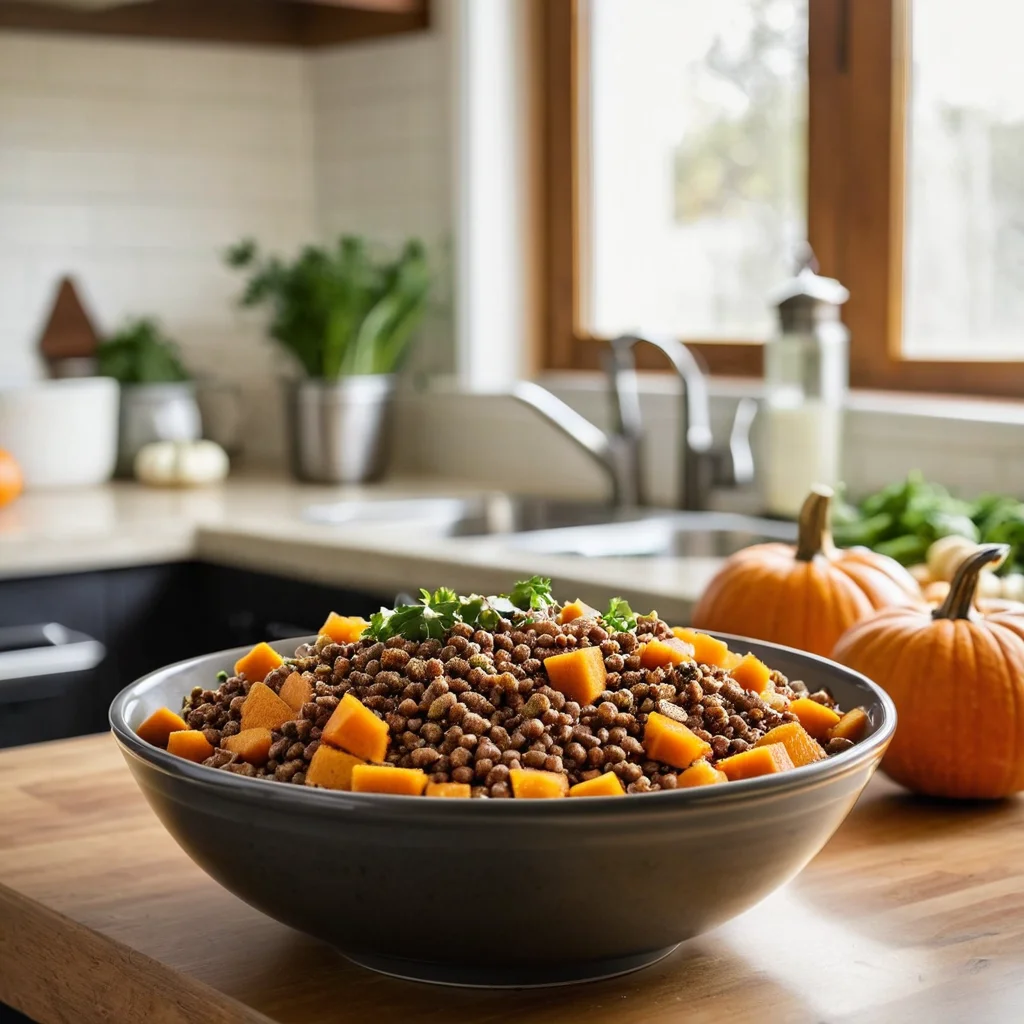

High-fiber pet food is an effective supporting treatment for diabetes, obesity, constipation, IBD and anal gland problems. Fiber comes in two types: soluble (dissolves in water) and insoluble (doesn't dissolve). Each one serves a different purpose. The right type and amount of fiber is critical. In this article, we look at the details of high-fiber food and how to put it into practice.
1. What Is Fiber? The Two Types
- Soluble fiber (psyllium, beta-glucan):
- Dissolves in water → gel-like texture.
- Slows down bowel movement.
- Good for diarrhea and diabetes (slower glucose absorption).
- Lowers blood cholesterol.
- Insoluble fiber (cellulose, pumpkin skin, corn bran):
- Doesn't dissolve → adds physical bulk.
- Speeds up bowel movement.
- Good for constipation.
- Feeling of fullness (obesity).
2. When Is High Fiber Called For?
- Diabetes: Soluble fiber → stabilizes blood sugar.
- Obesity: Insoluble fiber → fullness and low calories.
- Constipation: Insoluble fiber → bulk, bowel movement.
- IBD (Inflammatory Bowel Disease): Soluble fiber and prebiotic effect.
- Anal gland problems: Bulky stool helps empty the glands.
- Hairballs (cats): Fiber helps move hair through.
3. Fiber Levels
- Regular adult food: 2-4% fiber.
- High-fiber formula: 5-15% fiber.
- Very high fiber (therapeutic): 15-25% fiber.
- Too much fiber: nutrient absorption drops, weight loss.
4. High-Fiber Food Brands
- Royal Canin Gastrointestinal High Fibre: Dog and cat versions.
- Hill's w/d Multi-Benefit: Combines obesity, diabetes and fiber support.
- Hill's r/d Weight Reduction.
- Purina OM (Overweight Management).
- Eukanuba Restricted Calorie.
- Price: 400-700 Turkish lira/kg.
5. Natural Fiber Sources
For support beyond pet food:
- Pumpkin: The most popular, a mix of soluble and insoluble. 1 tablespoon for a medium dog.
- Sweet potato (boiled): Fiber-rich and tasty.
- Psyllium husk: Pure soluble fiber, 1/2 - 1 teaspoon per meal.
- Oat bran: For dogs. Cats aren't grain eaters, so don't give it to them.
- Pea fiber: A pet food ingredient.
- Apple (peeled, seeds removed): A mild source of fiber.
6. Fiber Strategy for Diabetes
- A mix of high soluble fiber and moderate insoluble fiber.
- Blood sugar rises slowly → less need for insulin peaks.
- Feeling of fullness → less overeating.
- Choose a vet-approved diabetic food.
7. Fiber Strategy for Obesity
- High insoluble fiber and a low-calorie formula.
- Your pet feels "full" on fewer calories.
- 5-10% weight loss in 2-3 months.
- Exercise and portion control together.
8. Solving Constipation
- Pumpkin, 1 tablespoon per meal.
- Increase water intake (fountain, wet food).
- More exercise.
- See a vet if constipation keeps coming back.
- Special food and laxative for megacolon (cats).
9. Side Effects and Cautions
- Too much fiber:
- More gas.
- Frequent, large stools.
- Nutrient absorption drops.
- Weight loss.
- Water intake needs to go up, because fiber holds water.
- Starting suddenly → diarrhea/gas. Switch gradually.
- Too much fiber is a NO for puppies and kittens: it disrupts growth.
10. Transition Plan
- Regular food → high-fiber food.
- Gradual switch over 7-10 days.
- Keep track of water intake.
- Watch stool consistency and frequency.
- Vet check after 4 weeks.
High-fiber food is an effective supporting treatment for diabetes, obesity, constipation and IBD. Knowing the difference between soluble and insoluble fiber and getting the ratio right is critical. Pumpkin is a natural alternative; commercial formulas are for clinical cases. Advice from your vet and a gradual switch are a must. In the DoldurKabı app, you'll find vet clinics with nutrition experience on a map.









