


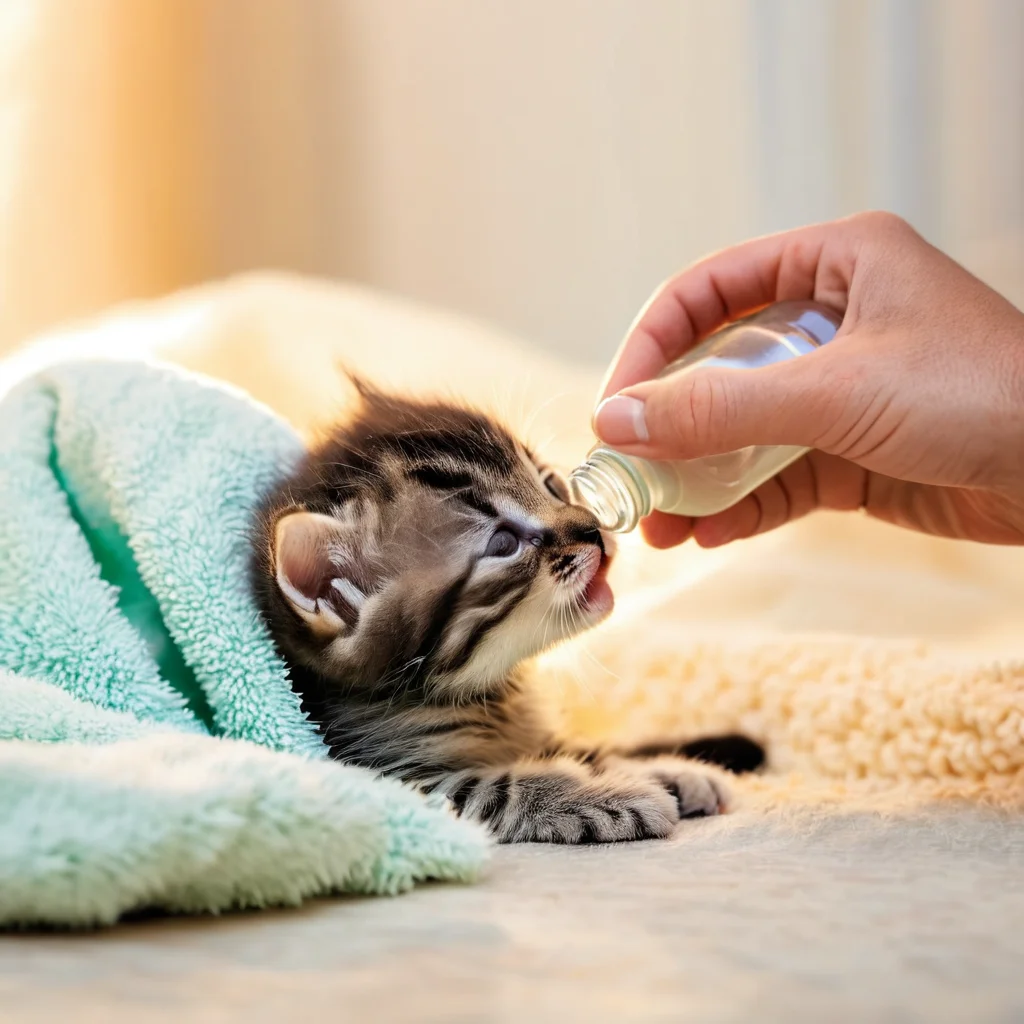

A kitten that has lost its mother or been abandoned is in a high-risk, life-threatening situation. A newborn kitten (0-4 weeks) has a low chance of surviving without its mother and needs professional-level care. The combination of warmth, feeding, potty stimulation and hygiene is vital. In this article, we look at an hourly care protocol, emergency first aid and the stages of raising a kitten.
1. Kitten Life Stages
- 0-2 weeks (neonatal): Eyes closed, fully dependent; warmth, feeding and potty stimulation are a must.
- 2-4 weeks: Eyes open, small steps, milk feeding continues.
- 4-6 weeks: Introduction to semi-solid food.
- 6-8 weeks: Weaning.
- 8-12 weeks: An independent kitten, intense socialization.
2. Emergency First Aid
When you find a kitten on the street or the mother goes missing:
- Check body temperature: A newborn is 35-37°C (an adult is 38-39°C). If it is cold, warm it up.
- Warming: A hot water bottle (wrapped in a towel) or an electric heating mat (LOW setting).
- Hydration: If the lips are dry, 1-2 drops of sugar water (emergency energy).
- Vet check: Within 24 hours, to rule out parasites and illness.
- Prepare the milk formula.
3. Milk Formula (KMR: Kitten Milk Replacer)
- NEVER give cow's milk: Lactose is too high, which causes diarrhea and death.
- KMR brands: PetAg KMR, Royal Canin BabyCat Milk, Beaphar Kitty Milk.
- Available in Türkiye at pet shops and pharmacies.
- Powder form: 1 scoop of powder + 2 scoops of warm water.
- Give it at body temperature (35-37°C); check with a thermometer.
4. Emergency Temporary Formula (If You Don't Have KMR)
A temporary solution for 24 hours (only to save a life):
- 1 cup of goat's milk.
- 1 egg yolk.
- 1 teaspoon of corn syrup or honey.
- 1 drop of vitamin A + D.
- Mix, cool, then bring to body temperature.
- Switch to KMR as soon as possible.
5. Feeding Technique (Bottle)
- Kitten bottle (PetAg Nursing Bottle): Made for cats.
- Position: Belly down (the human baby position is WRONG and risks choking).
- Flow: Squeeze gently, drop by drop (not a steady stream).
- Check swallowing: The kitten is sucking and swallowing.
- If milk goes into the lungs: Go to the vet urgently; this is aspiration pneumonia.
- After feeding: Hold the kitten on your shoulder and pat gently to release gas.
6. Feeding Frequency (Hourly)
| Age | Frequency | Amount |
|---|---|---|
| 0-1 week | Every 2 hours (including at night) | 2-4 ml |
| 1-2 weeks | Every 2-3 hours | 4-8 ml |
| 2-3 weeks | Every 4 hours | 8-12 ml |
| 3-4 weeks | Every 4-5 hours | 12-18 ml |
| 4-6 weeks | Every 6 hours + introduce solid food | 15-25 ml |
7. Potty Stimulation (Important)
A newborn kitten (0-3 weeks) cannot pee or poop on its own; it is a reflex triggered when the mother licks it. Without the mother:
- After feeding, use warm, damp cotton or a soft cloth.
- Gently rub the anus and genital area (simulating the mother's licking).
- If urine (yellow liquid) and stool come out, it worked.
- After 3 weeks, it goes on its own; introduce the litter box.
8. Temperature Management
- 0-2 weeks: The environment must be 30-32°C.
- 2-4 weeks: 27-29°C.
- 4-6 weeks: 24-27°C.
- 6+ weeks: A normal room (21-24°C).
- Put a soft blanket in the kitten's bed and keep it dry.
- More than one kitten = they keep each other warm.
9. Weight Tracking (Vital)
- Weigh daily, in the morning at the same time.
- A precise kitchen scale (grams).
- Healthy weight gain: 7-10 g/day for the first 4 weeks.
- If the weight stays the same or drops: go to the vet urgently.
- Birth weight is 80-120 g; the target by week 4 is 400-500 g.
10. Emergency Signs (Go to the Vet Right Away)
- Lethargy and not nursing.
- Weight loss.
- Diarrhea (newborns dehydrate quickly).
- A cold body (below 35°C).
- Trouble breathing, blue gums.
- Seizures / shaking.
- Suspected milk in the lungs.
- Infection (eyes, navel, anus).
A kitten that has lost its mother: with proper care, survival is possible if the caregiver is informed. The combination of KMR, a bottle, warmth, potty stimulation and an hourly schedule is vital. Vet advice, daily weighing and awareness of emergency signs are a must. In the DoldurKabı app, you can find vet clinics experienced with kittens on a map.









