
Some cats vanish the moment the doorbell rings. They don't come out from under the bed, from the top of the closet or from behind the laundry basket until the guest leaves. If you have a cat like this, the first question on your mind before a vacation or business trip is clear: if my cat never shows itself when the pet sitter comes, how will I know it is eating and doing well?
For shy cats, in-home care is still often a good option, because changing homes can be a bigger stress for them than meeting a stranger. But the secret is in the preparation. This post has a plan that will help owners of shy cats, from the first meeting with the sitter to the checks done without seeing the cat.
Tell the sitter about your cat's hiding habits
The sitter getting to know your cat starts before they ever see it. A sitter who understands what kind of animal your cat is by listening to you will give it space on the first visit instead of pushing it. Try to cover these:
- Where does your cat usually hide when a stranger comes? If there is more than one spot, list them all.
- How long does it take to come out after hiding?
- Which sounds and movements scare it? For example, the vacuum, rustling bags or quick footsteps.
- What does it like? Wet food, a certain wand toy, a paper ball or just quiet.
- Does it accept being picked up or petted?
Taking photos of your cat's hiding spots and sharing them also helps. The sitter will know where to look while walking through the home on the first visit.
The meet-and-greet: while you are home
Before care starts, a short visit from the sitter while you are home makes a big difference for shy cats. The goal of this visit is not to become friends with the cat right away; it is for the sitter to see the home and where the food and litter box are, and for the cat to encounter the sitter's voice and scent, even if only once.
What can be done during the meeting?
- The sitter sits on the floor or a low seat and does not walk toward the cat.
- They chat with you in a calm voice and don't try to talk to the cat.
- If the cat is watching from a distance, they avoid eye contact and can respond with short, slow blinks.
- They leave a small treat the cat likes on the floor, a little away from themselves.
Your cat may not show up at all during this visit. That is not a failure. The sitter still learns the layout of the home, and the cat hears that this new voice does it no harm.
Arrange the hiding spots ahead of time
Letting your cat hide is important, but if it gets into a place the sitter can't reach, things get harder. Make a few simple changes before you leave:
- Block off spaces the sitter can never see, such as under the bed and under the couch.
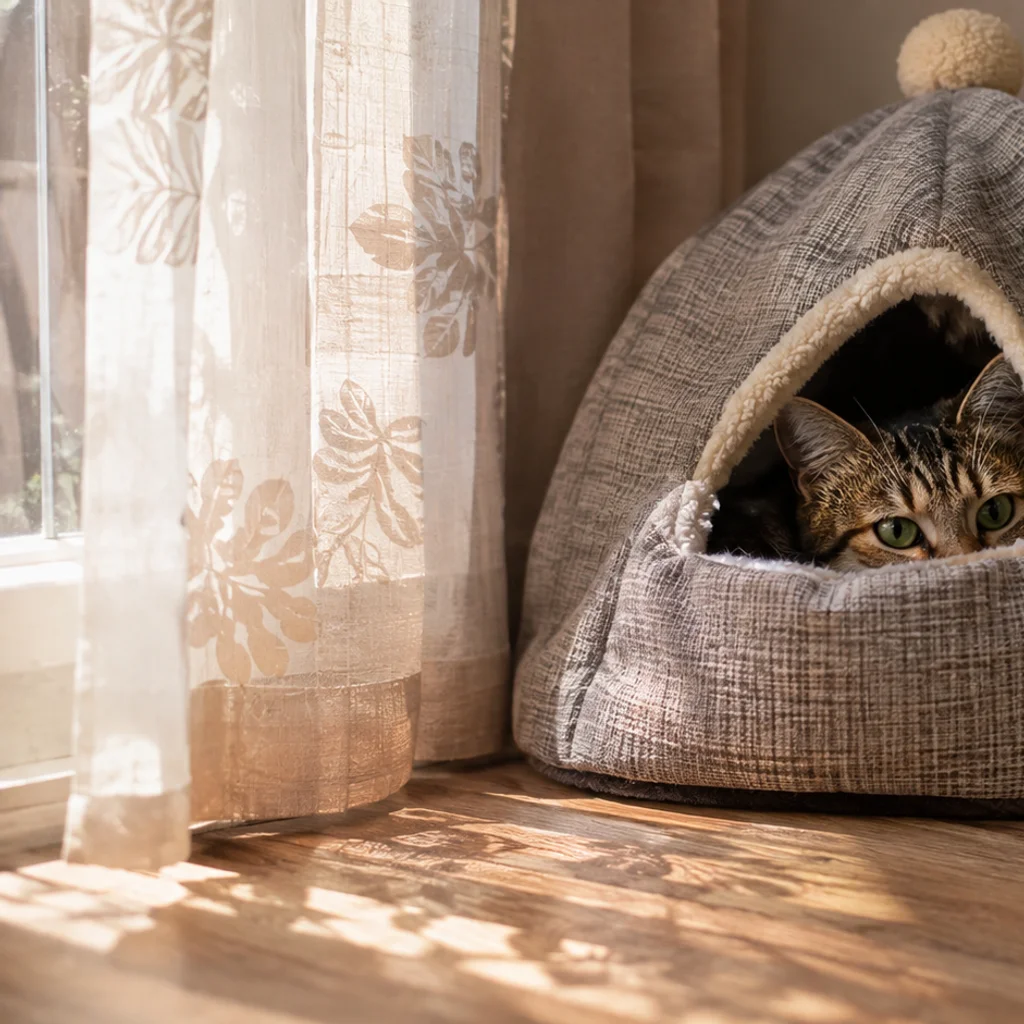
- Leave a hiding box or a covered bed that the cat can get into but where you can still see inside.
- Put this safe corner in a room your cat already likes.
- Close the doors of rooms you don't want the cat to go into, and tell the sitter which doors will stay closed.
This way the cat feels hidden, and the sitter can see it from a distance without disturbing it.
Checking without seeing the cat: what to look for
In the first days, the sitter may not see your cat on every visit. In that case, small signs around the home tell whether the cat is doing well. Talk about these signs with the sitter ahead of time:
- Food bowl: Has the food left on the previous visit gone down?
- Water: Has the water level changed?
- Litter box: Is there urine and stool, and is the amount normal?
- Surroundings: Have the toys moved, has the blanket been disturbed?
- Hiding spot: Can the cat be seen from a distance or with a flashlight, without being pulled out of its hiding spot?
You can ask the sitter to share these observations in a short message after each visit. It is also important that they don't force the cat out of its hiding spot; that makes the cat even shyer on later visits.
Number of visits and the pace of each visit
For a shy cat, routine matters more than the length of the visit. The sitter coming at roughly the same time every day and doing the food, water and litter tasks in the same order helps the cat learn the routine. For one cat, one visit a day may be enough; if there is more than one cat or medication is involved, you might consider two visits a day.
In the first days, it also helps if the sitter sits quietly for a few minutes after finishing the tasks. Some shy cats come over on their own to a person sitting quietly after a few visits. Putting the food down right at that moment links the sitter's presence with something good in the cat's eyes.
When should the sitter contact you or the vet?
It is normal for a cat to stay shy for a few days. But some signs can't wait. Agree with the sitter that they will let you know right away in these situations:
- If the cat has not eaten at all for more than a day
- If there is no urine in the litter box at all, or the cat goes to the litter box and strains
- If vomiting, diarrhea or trouble breathing is seen
- If the cat does not move at all in its hiding spot and does not react to being called
In these situations, the vet's phone number should be close at hand for the sitter. If your cat doesn't have a regular vet, note one from the list of nearby vet clinics before you leave and share it with the sitter. Also leave the number of a relative or friend the sitter can call if they can't reach you.
Final checklist before you leave
- Where the food, litter and water are, and how much food to give
- Medications in use, when and how they are given
- Photos of the hiding spots
- Doors that will stay closed, windows that must not be opened
- The phone numbers of the vet and a relative or friend
- The house key or how to get in
When you get home
When you return, your cat may greet you excitedly or, on the contrary, keep its distance for a while. Both are normal. Shy cats may need a few days to get back to the old routine after days when it changed. Don't try to pull it out of its hiding spot as soon as you walk in; put your bag away, refresh the food bowl and wait for the cat to come to you on its own.
A short debrief with the sitter is also very valuable for future trips. On which visit did the cat start showing itself, at what times was it more relaxed, which treat worked? If you note these down, you'll get off to a faster start with the same sitter next time. With shy cats, sticking with the same sitter is usually easier than starting over with someone new every time.
Finding a cat sitter on DoldurKabı
On DoldurKabı's in-home cat sitter page, you can choose your city, look at the profiles of sitters near you and decide for yourself who to work with. You can send your request from the page without downloading the app, and write in the request note that your cat is shy and that you'd like a meet-and-greet. The number of visits, dates, fee and payment are agreed between you and the sitter.
Frequently Asked Questions
Is it a problem if my cat never sees the sitter?
If the food, water and litter are being used regularly, your cat's routine is continuing. Some shy cats never show themselves to the sitter during the whole care period, and that on its own is not a problem.
Is a meet-and-greet a must?
It isn't required, but it is helpful for shy cats. The sitter seeing the home in advance reduces confusion on the first visit, and the cat gets to hear the new voice once.
Should I shut my cat in one room before the sitter comes?
For longer care, keeping the cat in a single room is usually not necessary. But blocking off unreachable spaces like under the bed and leaving a safe hiding corner makes the sitter's job easier.
Is in-home care or a hotel better for my shy cat?
A change of surroundings can be harder for most shy cats than meeting a stranger. That is why care in its own home is often the more comfortable option; still, it is a good idea to get your vet's opinion based on the cat's health.