
In short: Yes, abandoning a pet is explicitly prohibited under Animal Protection Law No. 5199 (Article 14(n)). This prohibition was added to the law in 2021, and anyone who violates it faces an administrative fine per animal (Article 28(j)). If you can't care for your pet, the lawful path is not to leave it on the street but to find it a responsible new home.
A move, a new baby, allergies, lack of time or an unexpected expense. Many people who feel they can no longer care for their pet may, in a hard moment, think "if I leave it on the street, maybe someone will take it in." In this article we first explain what the law says, then why this idea isn't a good path for the animal or for you, and what you can do instead. The legal information is based solely on the current text of Law No. 5199.
What does the law say about abandonment?
Law No. 7332, dated July 9, 2021, added a new subparagraph to the prohibitions article of Law No. 5199:
The prohibitions concerning animals are as follows: (…) n) Abandoning a pet animal. (Law No. 5199, Article 14)
The law also defines a "pet animal": any animal kept by real or legal persons, particularly at home, at workplaces or on their land, for special interest and companionship, whose care and responsibility are assumed by its owners (Article 3(ı)). In other words, the prohibition isn't limited to cats and dogs; a bird, rabbit or turtle kept at home also falls within this definition. The law also makes no distinction about where the abandonment happens. The text treats leaving an animal on the street, in a forest, in another neighborhood or in another city the same way.
What does Article 14(o) cover?
Subparagraph (o), added in 2024 by Law No. 7527, addresses a different situation: it prohibits abandoning ownerless animals collected on behalf of local governments anywhere other than a care facility, or releasing dogs housed in a care facility anywhere outside it. This subparagraph concerns those who carry out the work of collecting and housing animals. For a person who leaves their own pet, the applicable provision is subparagraph (n).
What is the penalty for abandonment?
The law sets an administrative fine per animal for anyone who violates either subparagraph (n) or (o) (Article 28(j)). The fine for abandonment was raised significantly in 2024 by Law No. 7527. We don't list the amount here; you can find the current amount from official sources. There are a few more rules worth knowing:
- The fine is calculated "per animal"; if more than one animal is abandoned, a separate fine applies for each (Article 28(j)).
- If the act is repeated, fines are doubled, and for further repetitions they are increased threefold (Article 30).
- If the offense is committed by someone such as a veterinarian, a veterinary health technician, or a member of an animal protection association or foundation, the fine is increased twofold (Article 28).
- The fine is issued by the authority the law grants supervisory power to; this power belongs to the Ministry and can be delegated to the local chief administrator when needed (Article 17, Article 25).
The law also lists the owner's obligations: a person who adopts an animal is obliged to house it, meet the needs suited to its species and look after its health (Article 5). Neglecting its care, leaving it hungry and thirsty, and exposing it to extreme cold or heat are also among the prohibitions (Article 14(a)). A person who seriously neglects the care of an animal they adopted is banned from keeping animals, and their animals are confiscated (Article 24).
The "it'll survive if I leave it outside" myth
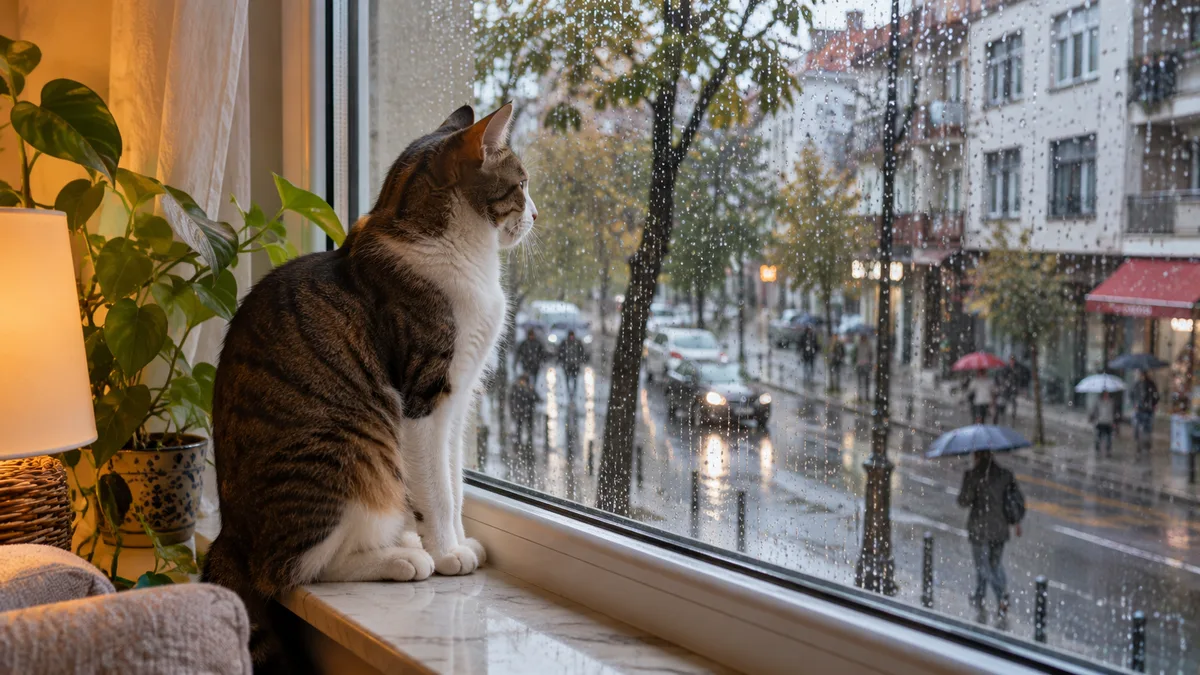
A cat or dog raised indoors isn't used to finding its own food, or to traffic, rain, cold and a space shared with other animals on the street. In an unfamiliar environment it gets scared, hides, can't feed itself or may get hurt. Animals living on the street have usually adapted to that life in the place they were born; for an animal left from a home, the transition is usually harsh.
The system the law sets up doesn't match this fantasy either. Ownerless or weakened animals must be taken promptly to animal care facilities set up or authorized by local governments; animals admitted to a care facility are registered in the Ministry's data system, and rehabilitated dogs are housed in the facilities until they are adopted (Article 6, Additional Article 1). Article 13 of the law, titled euthanasia, also states that for some dogs admitted to care facilities (for example, those with an untreatable disease), the measure in Law No. 5996 will apply. In short, an abandoned animal isn't headed for a "free life on the street"; it's headed for uncertainty.
If you can't care for your pet: legal and humane options
- First, see whether the problem can be solved. A change in behavior, litter box issues or crankiness can sometimes be a sign of a health problem. Don't decide without consulting a veterinarian.
- Reach out to people you know. Family, friends or neighbors who already know your pet. Familiar faces make a fresh start easier for the animal.
- Post a free adoption listing. You can post a free adoption listing on DoldurKabı. Write its age, health and vaccine details and its temperament honestly. Talk with the applicants and choose the family yourself; don't rush.
- Get in touch with volunteers. The law expects local governments to run their animal care facility work in cooperation with volunteer organizations (Article 4(j)). Volunteers working in animal protection in your area can guide you in finding a new home.
- Ask the municipality directly. In the law, municipal care facilities are defined for ownerless, weakened or dangerous animals (Article 3(k), Additional Article 1). The text explicitly says that an owner may leave their animal at a care facility, and that the facility must accept it, only for the dangerous breeds covered by Provisional Article 3. For other animals, the text doesn't describe a general surrender procedure; ask your municipality how it handles this.
Whichever path you choose, hand over the vaccination record, the vet records and the animal's habits to the new family.
Common reasons and solutions
Moving
Ask whether pets are allowed in the new home before signing the lease, and mention your pet from the start. If you're changing cities, the law requires animals to be transported in conditions suited to their species and characteristics (Article 4(ı)). Ask your vet for advice on the carrier, the travel plan and adjusting to the new environment.
You're expecting a baby
Babies and pets grow up together in many homes. Talk with your doctor and your vet about topics such as hygiene, litter box cleaning and vaccines. Gradually getting the animal used to the new routine before the baby arrives often makes things easier.
Allergies
Have a doctor determine whether the symptoms really come from the animal. Even if the diagnosis is confirmed, talk with your doctor about changes you can make at home. If parting ways is unavoidable, choose the new home carefully and without rushing.
Time and budget
For long working hours or unexpected expenses, asking the people around you for support, sharing the responsibility or reorganizing your routine are often steps worth trying before parting ways.

Adopting is a promise
The law's definition is short but clear: a pet is an animal whose care and responsibility are assumed by its owners (Article 3(ı)). Most abandonment problems come from not weighing this responsibility from the start. So before you adopt, think honestly about your lifestyle, your home, the years ahead and your budget. If you're not sure which animal suits you, try the Suggest a Pet for Me quiz.
When you're ready, adopting instead of buying is also part of this responsibility. Many animals are waiting for a home in shelters and in adoption listings. While buying fuels demand for breeding, adopting opens a home to an animal that is already in the world. The law also calls for encouraging people who want to adopt ownerless animals out of humane and moral responsibility, without seeking financial gain (Article 4(d)). Spaying or neutering the animal you adopt prevents uncontrolled breeding and new abandonments; the law requires spaying/neutering to be done without causing the animal pain (Article 7). Decide on the timing and method with your vet.
Frequently Asked Questions
Is taking a pet to another city and leaving it there also abandonment?
Yes. The law says "abandoning a pet animal" and makes no distinction about where it happens (Article 14(n)). Taking the animal far away doesn't change the nature of the act.
Can I leave my pet at the municipal shelter?
The law explicitly grants this right only for the dangerous breeds covered by Provisional Article 3. For other animals, ask your municipality directly, and first try to find a new home.
What should I do if I see an abandoned animal?
The law requires ownerless animals to be taken to care facilities (Article 6). Notify the municipality where you are; if the animal is injured, get it to a vet. The animal may not have been abandoned but lost; take a look at the lost pet listings.
What happens if the abandonment offense is repeated?
Under the law, when acts subject to a penalty are repeated, fines are doubled, and for further repetitions they are increased threefold (Article 30).
If you're looking for a new home for your pet, post a free adoption listing on DoldurKabı; if you'd like to give an animal a home, browse the adoption listings.
This article is for information only; for your specific situation, consult a lawyer or the provincial or district directorate of agriculture and forestry.