



People who want to bring a bird home usually have the same first question: Which species is right for me? This decision, which should come before choosing a cage, food, and toys, also largely shapes how the coming years will go. That's because bird species differ significantly in care difficulty, noise level, and need for attention.
Some species are happy with a few minutes of attention a day, while some parrots expect almost as much time and interaction as a family member. If you live in an apartment, noise level will be the deciding factor; if you work long hours, the need for social contact will. A poor match makes both you and the bird unhappy.
In this article we compare 10 bird species suited to home life across four criteria: care difficulty, noise level, sociability, and apartment fit. By the end, it will be clear which species suits whom.
The Four Criteria We Used for Comparison
Before getting to the species, let's clarify the criteria so you can weigh each bird on the same scale:
- Care difficulty: How much effort the variety of diet, cage cleaning, health monitoring, and daily routine take.
- Noise level: A sweet chirp, a melodic song, or loud calls? The part your neighbors will hear too.
- Sociability: The bird's need for interaction with people. Some species want hands-on contact, others enjoy being watched from a distance.
- Apartment fit: The sum of noise, space needs, and cleaning factors.
Three Classics for Beginners
1. Budgie
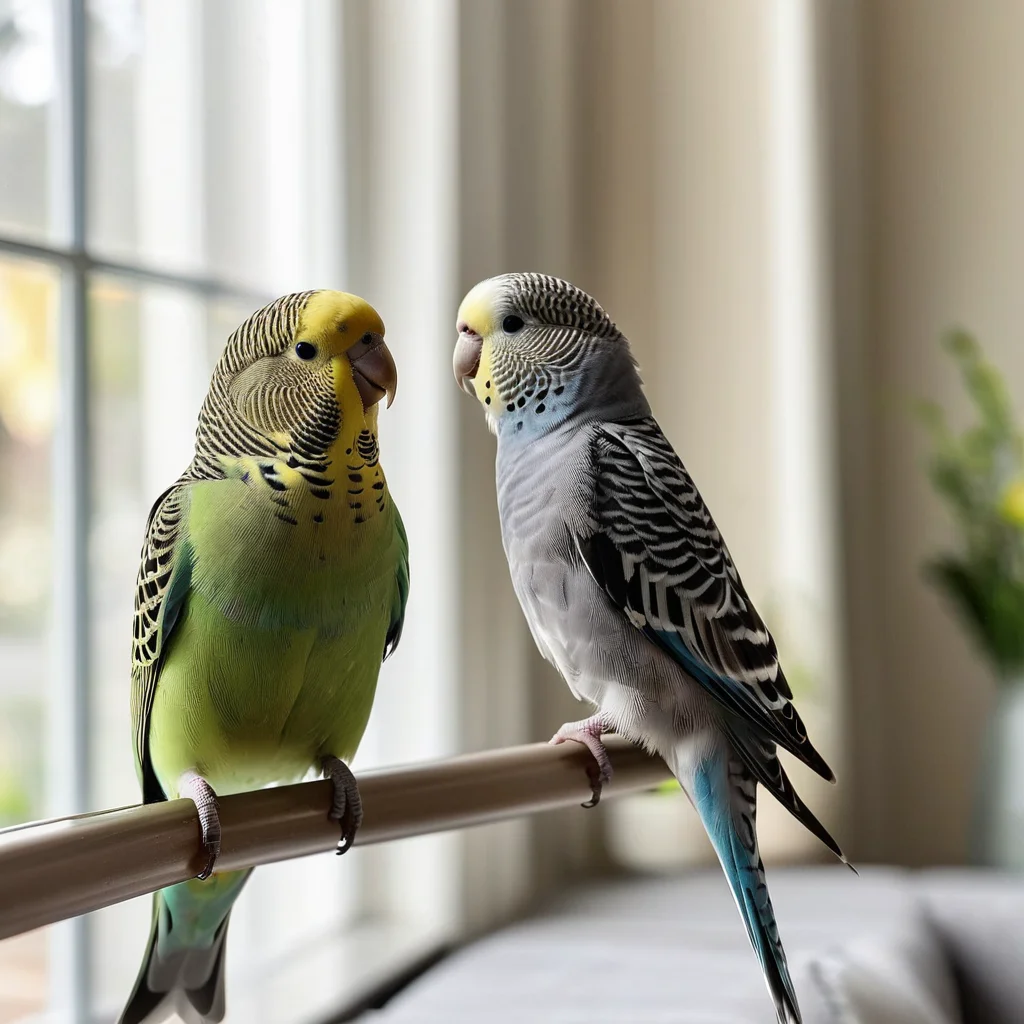
The budgie is the first species that comes to mind when people think of a pet bird, and there are solid reasons for that. Care is simple, the cage fits in a small space, and with regular attention it becomes hand-tame. Males brought home young can even learn words. The noise level is a pleasant chirp; it's quite suitable for an apartment. Depending on the quality of care, it lives 7-12 years on average.
2. Cockatiel
The cockatiel is known for its calm, easygoing, and affectionate nature. Its crest makes its mood easy to read; it stands up when curious and lies flat when tense. Males tend to learn whistled melodies. The noise level is moderate; it calls in the morning and evening, but not to a bothersome degree. It needs a slightly bigger cage and a bit more attention than a budgie. Since it can live 15-20 years, it's a long-term companion.
3. Canary
If you're looking for a bird that doesn't want hands-on contact but is a joy to watch and listen to, the canary is just right for you. A male canary's song is like background music for the home. Its expectation of social contact is low; a daily routine of food, water, and cleaning is enough. The noise level is melodic and neighbor-friendly. It's an easy start for people who work long hours and first-time bird keepers.
Intermediate: Species That Need a Bit More Effort
4. Rosy-faced Lovebird
The colorful, energetic rosy-faced lovebird is a delight to watch. However, its voice is sharp for its small body; in apartments with thin walls it can be heard at times. Kept alone, it forms a strong bond with its owner but wants attention every day; kept as a pair, the birds are content with each other. Plenty of toys and chewing material are a must, or it takes its energy out on the cage bars.
5. Masked Lovebird
A close relative of the rosy-faced lovebird, the masked lovebird has a similar profile: bold, curious, and possessive. If it isn't socialized at a young age, it may tend to nip. The noise level is medium to high; it makes short but shrill calls. Because it has a strong personality, it needs a patient owner.
6. Forpus (Pacific Parrotlet)
At about the size of your palm, the forpus is a valuable option for people who want parrot personality without the noise. It is remarkably quiet among parrots, and its apartment fit is high. On the other hand, its personality is big: bold, stubborn, and playful. With regular interaction it tames very well and may even pick up a few words.
7. Zebra Finch
The zebra finch is another species that doesn't want hands-on contact. It talks in tiny beeps, a sound most people find soothing. Since it doesn't like being alone, it should be kept in pairs or groups. Care is very simple; a wide but low cage is enough. In terms of noise and care, it's one of the trouble-free residents of apartments.
For the Experienced and Those Seeking Something Different
8. African Grey Parrot
The African grey is a highly intelligent parrot known for its talking ability. But that intelligence comes at a cost: hours of interaction a day, a rich rotation of toys, and a consistent routine. An African grey left without attention can develop behavior problems such as feather plucking. It can live 40-60 years; this is often a lifelong, even multigenerational, responsibility. Its talking is fun, but the loud sounds it makes when bored can strain relations with neighbors. It is not recommended as a first bird.
9. Hill Myna
The hill myna is an exotic species chosen for its impressive song. Its care is different from parrots: it needs a special fruit-heavy diet and a large cage. It doesn't expect hands-on contact, but once used to its surroundings it recognizes and greets its owner. Because of the way it eats, the cage needs cleaning more often. It suits people with experience in bird care.
10. Quail
The surprise name on the list, the quail is a bird that lives on the ground rather than on a perch. It needs a wide-based cage or a small area on an enclosed balcony. It is generally quiet; only the males call from time to time. It loves dust baths, so you should put a sand tray in its cage. Females lay eggs regularly, which makes caring for them a joy of its own. It's not a lap pet, but it's calming to watch.
So Which Species Suits Whom?
Let's sum up all these differences at a glance:
- If you're keeping a bird for the first time: A budgie or a cockatiel.
- If you don't want hands-on contact: A canary or a zebra finch.
- If quiet is your priority: The forpus, zebra finch, and canary stand out.
- If you dream of a talking bird: The African grey; with more modest expectations, a young male budgie.
- If you're looking for an exotic song: The hill myna.
- If you want to go off the beaten path: The quail.
If you're still undecided, you can try the Suggest a Pet for Me quiz, which recommends a pet that fits your lifestyle. In a few minutes, you get a concrete suggestion based on your availability during the day and your home conditions.
Frequently Asked Questions
Which birds suit people living in apartments?
Species with low noise levels stand out: the forpus, zebra finch, canary, and budgie are easy options for an apartment. The shrill calls of rosy-faced and masked lovebirds can be heard through thin walls. The loud sounds of an African grey require serious planning in an apartment setting.
I want a talking bird. Which species should I choose?
The African grey is clearly ahead in talking ability, but the care load is heavy. An easier alternative is a young male budgie; with regular repetition it can learn words. The cockatiel is better at whistled melodies than words. Still, remember that talking isn't a sure thing; every bird is an individual.
Should I get one bird or a pair?
If you want to tame your bird and have hands-on contact, you need to get one and give it attention every day. If you can't be home during the day, getting a pair is better for the bird's mental health. Flock birds like the zebra finch should be kept in pairs or groups in any case.
How can I tell if my bird is sick?
Feathers staying fluffed up all the time, loss of appetite, changes in droppings, a stop in singing, and inactivity are the first warning signs. Birds are good at hiding illness; by the time symptoms become visible, the condition may be advanced. When you notice changes like these, consult your vet without delay.









