
In short: Under Animal Protection Law No. 5199, selling kittens or puppies born at home is not freely allowed without conditions. People who sell pets are required to attend a training program run by local governments and obtain a certificate (Article 5), and people who have not received animal care training are banned from selling pets (Article 14/c). The path that keeps you within the law and works in the animals' favor is to rehome them for free with a responsible family after a vet checkup.
Your cat or dog has given birth, there are a few little ones at home, and the first question that comes to mind is: "Can I sell them?" Most people who ask this mean no harm. The birth has cost money, food and vaccines are on your mind, and people around you have said "these are purebred, they're worth something." In this post we explain the topic based only on the current text of Animal Protection Law No. 5199: what the law says, what it does not say, and which path is right for the young ones.
Does the law ban the sale of cats and dogs completely?
No. In Türkiye, the sale of cats and dogs is not banned outright by law; that is a commonly repeated piece of misinformation. Sales are, however, tightly restricted by a few conditions. The sentence added to Article 10 by Law No. 7332 in 2021, which came into force on July 14, 2022, reads:
Cats and dogs may not be kept at pet sale premises; however, cats and dogs from pet breeding facilities permitted by the Ministry may be sold there. (Law No. 5199, Article 10)
So keeping cats and dogs in a pet shop window is banned. The cats and dogs that can be sold at a sale premises are those from breeding facilities permitted by the Ministry of Agriculture and Forestry. Puppies or kittens born in your home do not come from such a permitted breeding facility. The text of the law does not list the conditions for this permit in detail; the details are left to Ministry regulations.
What does the law require to sell puppies or kittens born at home?
Training and certificate requirement
Article 5 of the law says that people who sell pets are required to attend training programs organized by local governments on the care and protection of these animals and obtain a certificate. The text says "people"; it does not distinguish between a shop owner and someone selling puppies or kittens from home. The list of prohibitions in Article 14 completes the same point: selling pets by people who have not received animal care training is banned (Article 14/c). Selling pets to people under 16 is also banned (Article 14/d).
Health requirement and the sick animal rule
According to the first sentence of Article 10, when animals are sold, they must be in good health, and the place they are kept must be clean and meet health standards. Those who breed and trade pets are also required to take the necessary measures so as not to endanger the animals' health (Article 10). The last paragraph of the same article is even clearer: it is banned to transfer, sell or buy an animal that is sick, disabled or old, or in pain to a degree that cannot be cured, for any purpose other than proper slaughter or painless killing.
Selling online or on social media
The law has no separate provision on selling over the internet. That does not mean online sales are unrestricted. Wherever the sale takes place, the certificate obligation (Article 5), the training requirement (Article 14/c), the age limit (Article 14/d) and the health rules (Article 10) apply in the same way. Writing a price for a puppy or kitten on a listing site or social media does not remove these conditions.
Penalties
The law sets out administrative fines for violations and lists the penalty for each provision separately in Article 28. For example, the penalties for violating the ban on keeping cats and dogs at sale premises and for transferring or selling a sick or disabled animal are written in Article 28/f, and the penalty for selling to people under 16 is in Article 28/j. A separate penalty is also set for business owners who violate the certificate obligation (Article 28/b). If the same act is repeated, the penalties are increased (Article 30). We do not list the amounts here; you can find the current amounts from official sources.
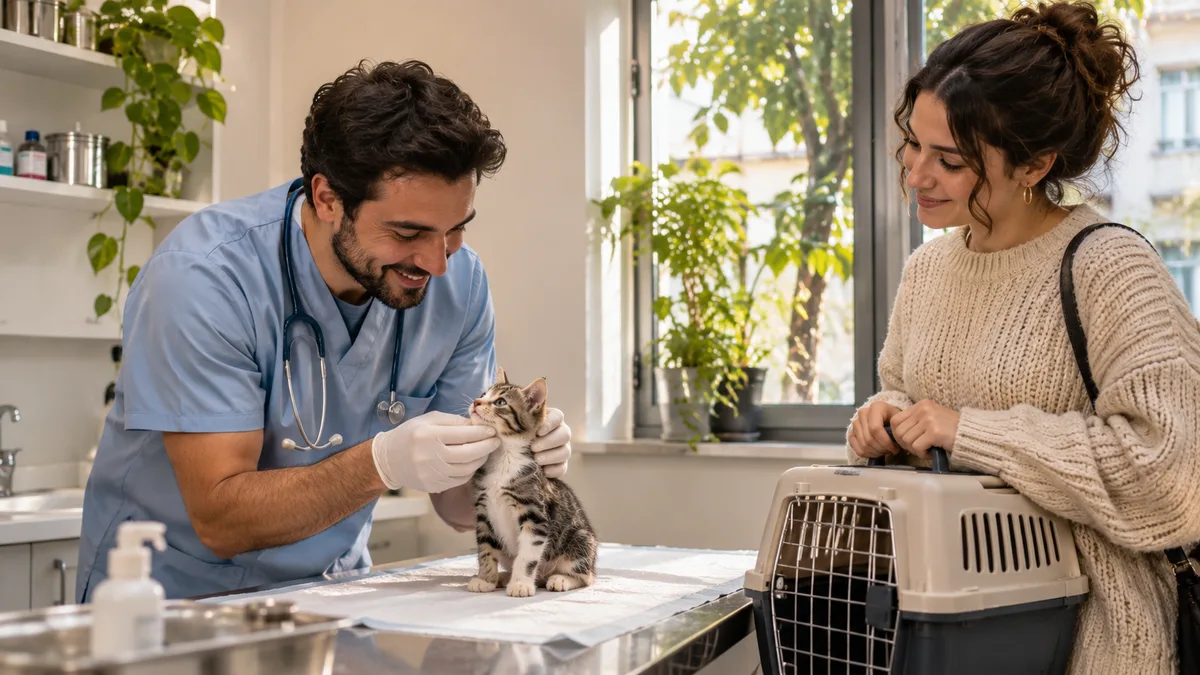
The path that keeps you within the law: free adoption
The way to move forward without dealing with the conditions for selling, and to act in the animals' favor, is to rehome them for free with a responsible family. The law's article on principles is based on encouraging people who want to adopt ownerless and weakened animals with humane and conscientious responsibility, without seeking any financial gain or benefit (Article 4/d). When you do not charge a fee, the choice is made by the family that will take good care of the little one, not by whoever pays.
Getting the young ones ready for a new home
- Don't rush the time they leave their mother. When puppies or kittens can be separated from their mother depends on the species and their development. Make this decision together with your veterinarian.
- Get a vet checkup. Before they go to a new home, visit a vet for a general exam, parasite treatments and a vaccination schedule. The vet decides the timing and dose of vaccines. You can find clinics near you in the vet directory.
- Remind them about registration. The law requires cat and dog owners to have their animals registered with digital identification methods (Article 4/k). The definition of an "owned animal" also covers pets whose care, vaccines and periodic health checks are done and that are registered in the Ministry database (Article 3/j). Ask your vet how registration is done and pass this on to the new family.
- Hand over the health information. Give the new family the vaccines given, the parasite treatments and the vet's notes in writing.
How do you choose a responsible family?
- Don't hand over a young pet without meeting first. Talk about the family's daily routine, who lives in the home and whether they have cared for animals before.
- Ask about the landlord's and the household's approval. Talk about obstacles that might come up later, such as moving or allergies, right from the start.
- Ask whether they are ready to take on the responsibility of vaccines, spaying/neutering and regular vet checkups.
- If someone wants the pet as a surprise for a child, make sure an adult in the family takes on the responsibility.
- Ask them to stay in touch for a few weeks after the handover. Agree from the start that the young one can come back to you if things don't work out.
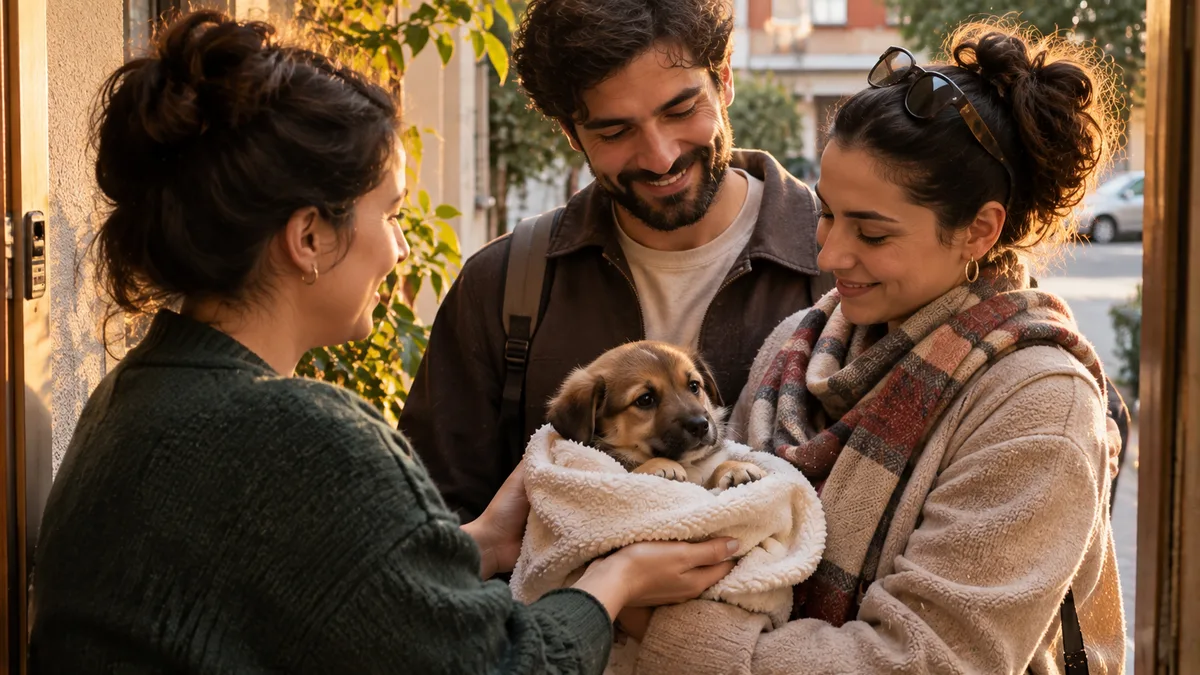
Preventing unwanted litters: spaying and neutering
Finding homes for this litter is today's task; preventing the next birth is the lasting solution. The law is clear on this:
To prevent uncontrolled breeding, sterilization procedures are performed on animals without causing them pain. (Law No. 5199, Article 7)
The same article says that medical and surgical procedures on animals are to be performed only by veterinarians. Among the law's basic principles is also that cats and dogs fed and kept in communal living areas are to be sterilized by their owners to prevent uncontrolled breeding (Article 4/k).
At what age and by which method spaying or neutering is done depends on the animal's species, breed and health. Ask your veterinarian when the mother cat or dog can be spayed after giving birth. Spaying prevents the question "where will these little ones go" from being asked again with every new birth.
Why adopt out instead of selling?
Rehoming the young ones for free is not only a legal choice. There are many cats and dogs waiting for a home in shelters and on the street. The law gives local governments the duty to set up animal care centers so that ownerless animals are looked after until they are adopted (Article 4/j). The definition of care centers also describes this purpose: facilities where animals are kept and rehabilitated until they are adopted (Article 3/k). You can see the care centers on the shelters page.
Asking for a fee for a puppy or kitten turns the animal into goods to be bought and sold. As demand for buying grows, uncontrolled breeding grows with it. With free adoption, what decides the little one's future is not the money paid but whether the family is ready. When you carefully rehome this litter and have the mother spayed, you prevent new animals from being added to the street and the shelter.
Frequently Asked Questions
Does giving the young ones away in exchange for covering costs count as a sale?
The law does not separately define the concept of "sale." A transfer in exchange for money may fall under the conditions for selling (Article 5, Article 14/c). If you are unsure, rehome them without charging a fee, and hand the vaccine and health records over to the new family.
Can a pet shop take the puppies or kittens born in my home and sell them?
Under the law, cats and dogs may not be kept at pet sale premises; only cats and dogs from pet breeding facilities permitted by the Ministry may be sold there (Article 10). Puppies and kittens born at home do not fall within this scope.
How many weeks old should the young ones be when I rehome them?
The law does not set a period for this. The right time depends on the species, the young one's development and the mother's condition; make the decision together with your veterinarian.
Can I give a puppy or kitten to someone under 16?
The law bans selling pets to people under 16 (Article 14/d). In free adoption, too, an adult in the family needs to take on responsibility for the young one's care.
If you are looking for a responsible family for your puppies or kittens, you can post a free adoption listing on DoldurKabı. To see other animals looking for a home, browse the cat adoption and dog adoption listings.
This post is for information only; for your specific situation, consult a lawyer or the city or district directorate of the Ministry of Agriculture and Forestry.