


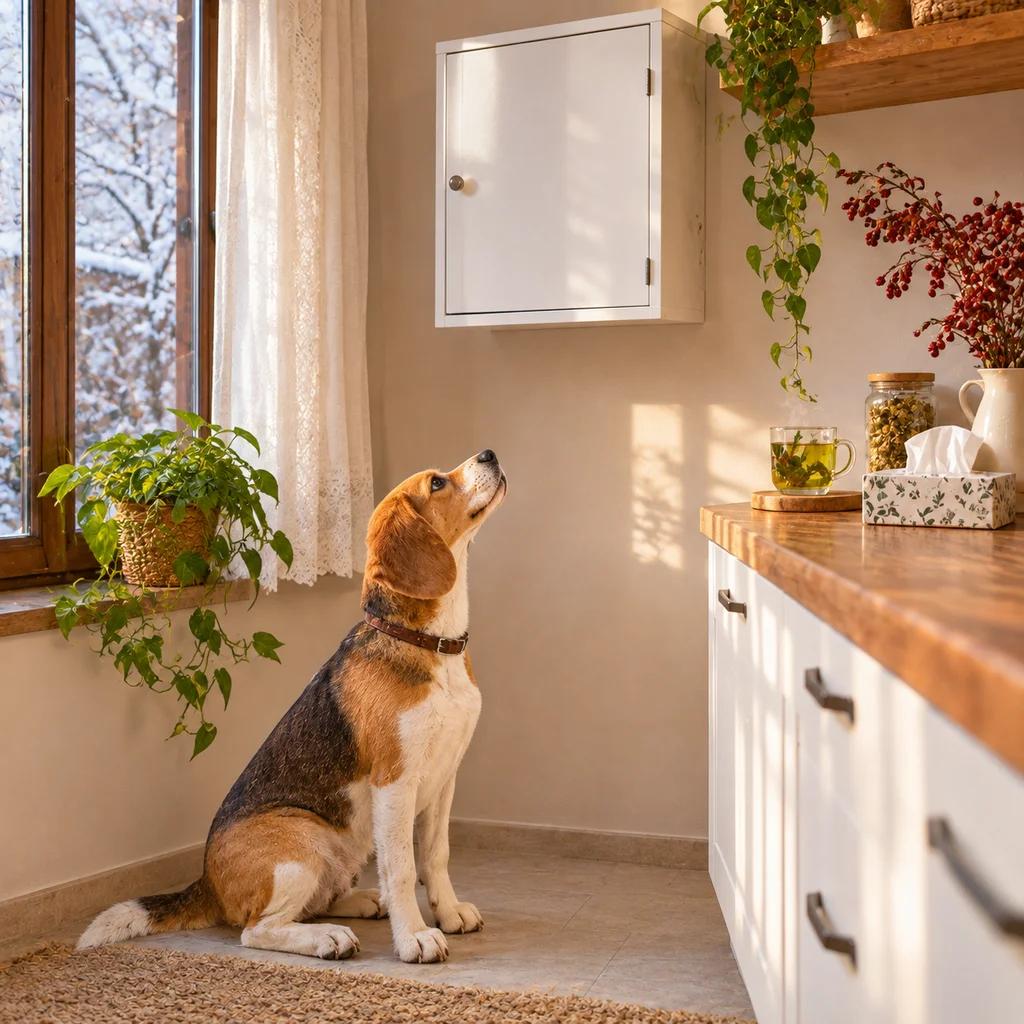

When winter comes, the medicine boxes at home multiply. Painkillers on the table, flu medicine on the nightstand, throat lozenges in your bag, nasal spray in the bathroom. When someone gets sick, the medications come out of the cabinet and often never go back.
This is a time of year when accidents involving pets getting into human medications are common. Either a pill that fell on the floor gets found, or a medication given with good intentions causes a problem. Knowing that a drug that helps you can have a different effect in an animal's body prevents most of these accidents.
Why aren't human medications right for pets?
Cats and dogs process some drugs differently from people. Cats' livers in particular struggle to break down some substances that humans break down easily. Then there's the size difference: what is a single tablet for you can amount to a very high dose for a small cat or dog.
So the rule is simple: never give your pet any human medication that a veterinarian hasn't specifically recommended. The idea that "half a tablet won't hurt" doesn't apply here.
Risky medications that pile up at home in winter
Painkillers and fever reducers
Paracetamol (acetaminophen) is very dangerous for cats; even a small amount can cause serious problems for the blood and liver. It's risky for dogs too. Common painkillers such as ibuprofen and naproxen can have severe effects on the stomach and kidneys in both cats and dogs. If your pet is in pain, the answer is to go to a veterinarian for pain management designed for them.
Flu and cold medicines
Most combination flu medicines contain decongestants alongside a painkiller. These substances can affect heart rhythm and the nervous system in animals. Packets of powdered flu medicine you mix into water are also sweet-flavored, so they can attract dogs' interest.
Nasal sprays and drops
Because decongestant sprays come in small bottles, dogs chew them easily. Even a small amount of what's inside can have a serious effect on animals. A bottle left on the bathroom shelf or by the bed can turn into a toy for a curious dog.
Lozenges, gum and sugar-free products
Some throat lozenges and sugar-free gums contain xylitol. Xylitol is toxic to dogs and can cause a sudden drop in blood sugar and liver problems. Check the ingredient list on the package; if it says "xylitol" or "sugar alcohol," keep that product somewhere your dog can't reach. The same goes for sugar-free syrups, mouth sprays and some vitamin tablets.
Menthol rubs and scented vapors
Chest rubs containing menthol, camphor or eucalyptus can cause digestive problems and more serious conditions in animals if licked. If you put a rub somewhere your pet could lick, think about that before you cuddle them. Essential oils dripped into a vaporizer are also risky, especially for cats.
Reorganize your medicine cabinet
Most accidents happen because medication was left out in the open. A few changes in habit prevent this to a large extent.
- Keep medications in a high cabinet with a door that closes. A drawer may be something a dog can open with its nose.
- Don't leave medication on the nightstand or coffee table. Put the medicine you take at night back in the cabinet along with its box.
- Pop tablets out of the blister pack over a table so you can find one right away if it falls.
- Bags, coat pockets and bags left by guests are a risk too. Dogs are good at rummaging through bags.
- Store your pet's own medications in a separate box from human medications. Mix-ups are the second biggest source of accidents.
Guests, older relatives and bags
Home visits also increase in the winter months. A relative who comes to stay over New Year's, during the midyear school break or when someone is ill brings their own medications along. Blood pressure, heart, diabetes or sleep medications are often carried in weekly pill organizers with lids that open easily. When these organizers are left by the bed or on the living room coffee table, they become reachable for a dog.
Kindly ask your guest to keep their medications in a closed cabinet or inside their suitcase. Keeping the guest room door closed helps too. Some of these medications can have serious effects on animals even in small amounts; if one is swallowed by accident, find out the name of the drug and call your veterinarian without wasting time.
Trash cans and empty boxes
The risk continues when used blister packs, empty syrup bottles and boxes with a few tablets left inside are thrown away. Dogs love to dig through the trash, and cats may start playing with a box that rattles. Throw medication waste into a trash can with a tight-fitting lid, or use the waste boxes that pharmacies collect.
Mix-ups with your pet's own medications
If your pet is also on treatment during the winter months, their medication times can get mixed up with the other medications at home. One family member says "I gave it," another gives it too; or it doesn't get given at all. The way to reduce this confusion is to keep track in one place of who gives the medication, on which day and at what time. In the DoldurKabı app, you can set reminders for your pet's medications and log the doses given, so everyone at home looks at the same information. You can see how these features work on the health tracking page.
Don't change a medication's dose on your own or stop treatment before it's finished. Even if your pet seems to have recovered, make the decision together with your veterinarian.
If your pet swallowed a medication
In this situation, time matters. Do the following in order:
- Move your pet away from the medication, and pick up any remaining tablets or bottles.
- Write down what they swallowed, roughly how much and at what time. Keep the medication's box or package insert with you.
- Call your veterinarian without waiting for symptoms. Some medications take effect hours later.
- Don't try to make your pet vomit on your own, and don't give salt water or anything else to drink. In some cases this can do more harm.
To find a place that's open at night or on a holiday, you can use the emergency vet page. For daytime hours, clinics near you are on the vet list.
"My pet caught a cold too, what can I give them?"
This is one of the questions heard often in winter. Giving a sneezing, runny-nosed or coughing pet the flu medicine you have at home can be very dangerous. There can be different causes behind these symptoms, and a veterinarian decides which one it is through an examination. What you can do at home is keep your pet in a warm, draft-free spot, keep water and food nearby and take them in for an exam.
Frequently Asked Questions
Can I give my dog a little children's syrup?
No. Children's syrups can also contain active ingredients that are risky for animals and sweeteners like xylitol. Don't give any syrup without consulting your veterinarian.
My cat licked a tablet that fell on the floor, but I don't think she swallowed it. What should I do?
If you can't be sure, act as if she swallowed it. Write down the name of the drug and the time and call your veterinarian; especially with painkillers, even small amounts can matter in cats.
Are herbal products and vitamins risky too?
Some are, yes. Herbal blends, effervescent tablets and vitamins can also contain substances that aren't suitable for animals. If you're thinking of giving your pet a supplement, ask your veterinarian first.
My pet swallowed a medication but has no symptoms. Should I still go?
Yes, don't wait for symptoms to call. The effects of substances like painkillers, decongestants and xylitol can appear hours later, and early treatment is often easier. Tell your veterinarian the name of the drug, the approximate amount and the time; they'll decide what needs to be done based on your pet's weight and the substance swallowed. Don't forget to bring the box or package insert with you.









