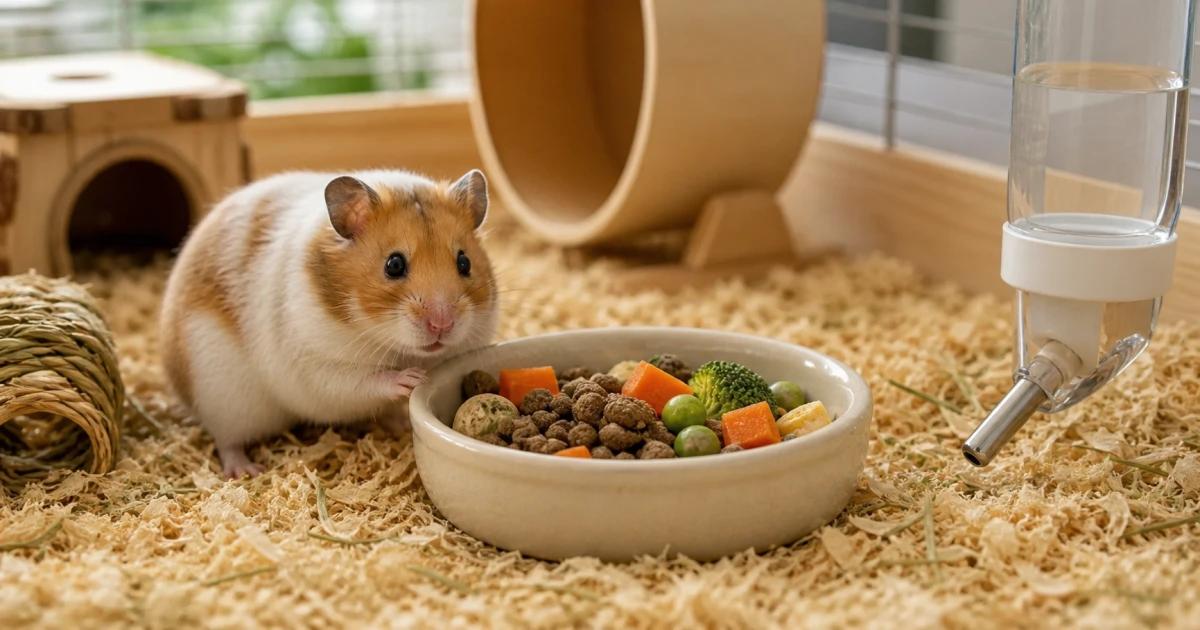

When you feed a hamster, what you put in the bowl is only part of the story. What your hamster picks out and carries back to its nest matters just as much. The bowl can look empty while a big stash sits under the bedding. That's why a daily menu should be planned around four things together: the main food, measured portions of fresh food, clean water and regular stash checks.
Before you start, take a photo of the current setup and spend a day observing. Instead of just following a list on paper, you'll see which areas your hamster actually uses and how things change over the course of the day. If you need more background on species or basic needs, browsing the hamster breeds is a good place to begin.
This guide breaks the setup into small steps you can easily check. After each step, watch appetite, activity, rest and how clean the enclosure stays. Changing many things at once makes it hard to tell which detail is helping or causing a problem.
Choose the main food and watch for picky eating
Use a balanced main food made for hamsters, with clearly listed ingredients. If you feed a seed mix, watch for a few days to see whether your hamster picks out only the fatty favorites. Instead of topping up the bowl automatically, take the dry stash in the nest into account too. Adjust everything to your hamster's age, species, health and living space. If you notice discomfort, fear or unusual behavior, stop pushing; check for a cause in the environment, and get a vet's opinion if there are any signs of illness.
- Use a balanced main food made for hamsters, with clearly listed ingredients.
- If you feed a seed mix, watch for a few days to see whether your hamster picks out only the fatty favorites.
- Instead of topping up the bowl automatically, take the dry stash in the nest into account too.
In this part, it's safer to make one adjustment and observe the result than to make big changes all at once. Keep short notes on the food you use for your hamster, the date and any changes you notice. That way, if a problem comes up, you'll know which step to undo, and everyone at home can follow the same daily routine.
Introduce fresh food slowly
Offer a new vegetable one type at a time, in a small piece, and watch the droppings and appetite. Serve washed food dry, and if a piece is gone the next day, look for it around the nest. Think of fruit as an occasional small treat for variety, not a daily staple. Adjust everything to your hamster's age, species, health and living space. If you notice discomfort, fear or unusual behavior, stop pushing; check for a cause in the environment, and get a vet's opinion if there are any signs of illness.
- Offer a new vegetable one type at a time, in a small piece, and watch the droppings and appetite.
- Serve washed food dry, and if a piece is gone the next day, look for it around the nest.
- Think of fruit as an occasional small treat for variety, not a daily staple.
In this part, it's safer to make one adjustment and observe the result than to make big changes all at once. Keep short notes on the food you use for your hamster, the date and any changes you notice. That way, if a problem comes up, you'll know which step to undo, and everyone at home can follow the same daily routine.
Foods to keep away completely
Never give chocolate, caffeinated drinks, alcohol, onion, garlic or moldy food. Keep salty, spicy and sugary human snacks out of the cage. Fruit pits, sticky candy and sharp shells are also risky for cheek pouches. Adjust everything to your hamster's age, species, health and living space. If you notice discomfort, fear or unusual behavior, stop pushing; check for a cause in the environment, and get a vet's opinion if there are any signs of illness.
- Never give chocolate, caffeinated drinks, alcohol, onion, garlic or moldy food.
- Keep salty, spicy and sugary human snacks out of the cage.
- Fruit pits, sticky candy and sharp shells are also risky for cheek pouches.
In this part, it's safer to make one adjustment and observe the result than to make big changes all at once. Keep short notes on the food you use for your hamster, the date and any changes you notice. That way, if a problem comes up, you'll know which step to undo, and everyone at home can follow the same daily routine.
Daily checklist
Check with your finger every day that the water bottle is working, and refresh the water. If you notice a clear change in appetite, water intake or droppings, contact your vet instead of changing the menu at random. Keep an eye on weight and body shape regularly, and don't let treats replace the main meal. Adjust everything to your hamster's age, species, health and living space. If you notice discomfort, fear or unusual behavior, stop pushing; check for a cause in the environment, and get a vet's opinion if there are any signs of illness.
- Check with your finger every day that the water bottle is working, and refresh the water.
- If you notice a clear change in appetite, water intake or droppings, contact your vet instead of changing the menu at random.
- Keep an eye on weight and body shape regularly, and don't let treats replace the main meal.
In this part, it's safer to make one adjustment and observe the result than to make big changes all at once. Keep short notes on the food you use for your hamster, the date and any changes you notice. That way, if a problem comes up, you'll know which step to undo, and everyone at home can follow the same daily routine.
Set Up a Practical Check Routine
For hamster feeding, you can use a three-level checklist. The daily list covers water, food, droppings, activity and any visible safety issues. The weekly list covers a thorough cleaning, an equipment check and comparing your notes. The monthly list reviews worn-out materials, seasonal changes in the living space and emergency preparedness. You can find similar how-to articles in the blog archive.
Doing your checks in the same order every time helps you avoid missing details. First, look at your hamster from a distance, then check the water and food, and then inspect the enclosure. Do any cleaning or moving things around last. That way, you see your hamster's natural state before you step in. If more than one person at home handles care, use a simple chart; knowing who did what prevents mistakes like double feeding or a missed cleaning.
When the seasons change, room temperature, daylight, humidity and the way the home is used can all shift. Reassess new risks with the same setup in mind, such as direct sun and dehydration in summer, or being close to a heater and dry air in winter. Moving, guests, renovations or a new animal arriving can also affect the routine. During these times, observe more often, but don't keep handling your hamster to check on it.
Common Mistakes and a Safer Approach
The first mistake is assuming a small animal will be fine with a small space. Natural behavior determines its needs far more than body size does. The second mistake is constantly resetting scent and layout in the name of cleanliness. The third is applying a single tip seen online without considering differences in species, age and health. When choosing materials, safe construction, how easy they are to clean and your hamster's behavior matter more than marketing claims.
Another mistake is judging a change only by how it looks. A tidy-looking space may not let your hamster hide, move around or eat comfortably. After setting things up, watch which paths it actually uses, where it rests and which areas it avoids. Don't keep a piece just because it's decorative; give the space over to useful behaviors.
Don't try to solve a health symptom by experimenting with care. If you see a clear loss of appetite, changes in breathing, loss of balance, bleeding, signs of pain or a fast-progressing change in behavior, contact your vet instead of waiting. Bring the notes, photos and any measurements you took at home; they don't replace an exam, but they help explain what has changed.
Frequently Asked Questions
Should I change the setup or routine completely in one day?
If there's no urgent safety risk, changes made in stages are easier to track. Start with the safety and basic needs step, watch your hamster's behavior, then move on to the next adjustment. Urgent hazards like toxic substances, an open escape route or a burn risk should be removed right away.
How do I know if a material is suitable?
Check for sharp edges, loose strings, small parts that break off easily, strong odors and surfaces that can't be cleaned. Also consider whether your hamster might chew it, dig into it or climb on it. If you're unsure whether a product is right for the species, ask your vet before using it.
How often should I review the routine?
Along with the basic daily check, a detailed weekly cleaning and a monthly safety round are a practical start. Temporarily check more often after an illness, a change of season, a move or new equipment. Changes in your hamster's behavior matter as much as the calendar.
When should I get professional help?
Contact your vet if you notice a clear drop in appetite, trouble breathing, an injury, fast weight or behavior changes, digestive problems that go on for a long time or trouble moving normally. If you're not making progress with training or the home setup, ask for support from a specialist who knows the species' behavior and doesn't use fear or punishment.