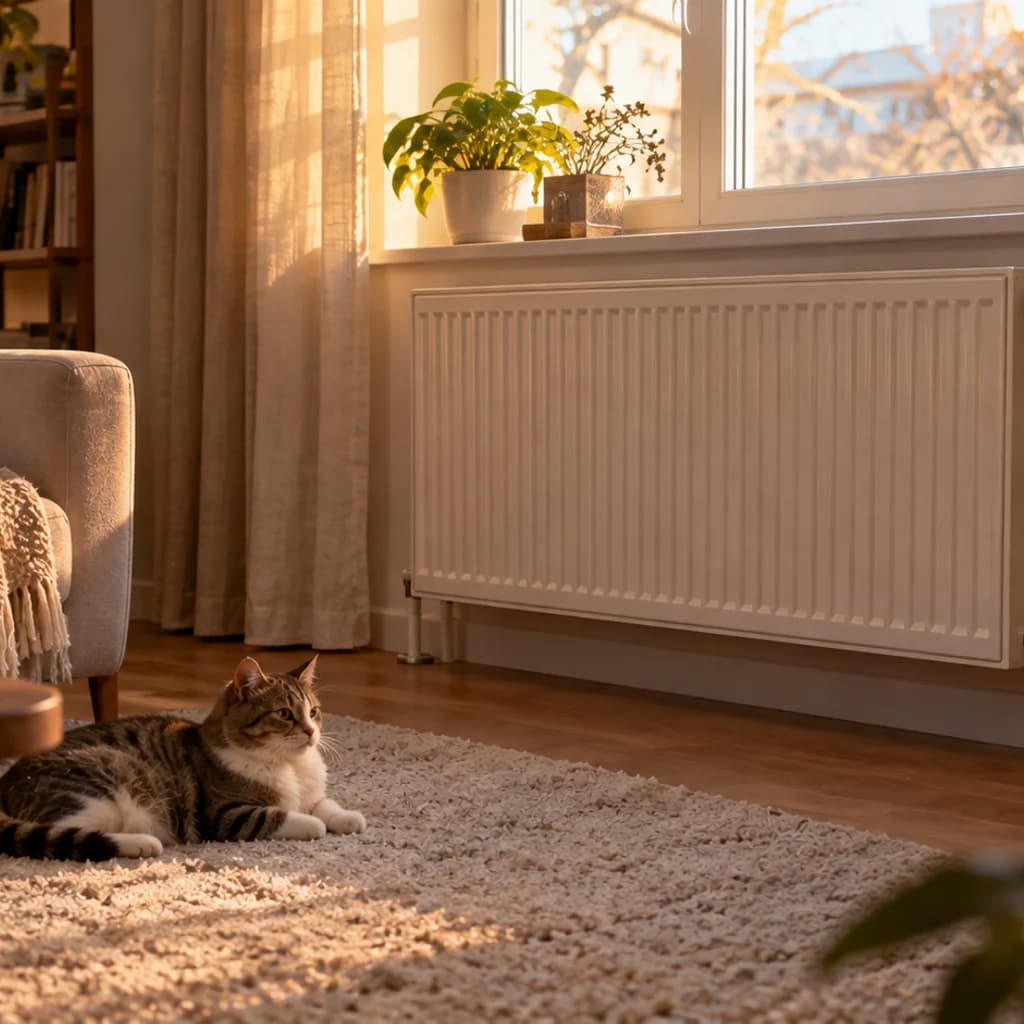

The day you turn on the radiators or the air conditioner, the air in your home quietly changes. The temperature rises, relative humidity drops and air circulation slows down. People usually notice this as a dry throat or chapped lips. Cats and dogs go through the same change in their nose, eyes and skin, but they can't tell you about it.
This article looks at heating season under three headings: the air itself, how your pet reacts, and where the heater sits in your home. All three are connected. If you buy a humidifier but put the heater in the wrong spot, you lose what you gained.
Before you start, watch your home for a full day. Which room warms up first, which corner stays cold, and where your pet lies down at different times of day. Without these notes, every change you make is guesswork.
Why heated air gets dry
The amount of moisture air can hold goes up with temperature. When cold outdoor air comes inside and warms up, the water vapor in it stays the same, but the ratio drops. The result is a dryness you don't feel in the same home in summer. Closed windows and a heater that runs nonstop make it worse.
Dry air thins the mucous lining of the airways. The thin layer of moisture inside the nose has a harder time trapping dust, pollen residue and bits of hair. Dust also increases in the same space, because radiators keep the air moving, and the fur, litter dust and carpet fibers on the floor get stirred back into the air.
- Don't turn the room temperature up higher than you need; every extra degree lowers the humidity a little more.
- Air out the room twice a day for five to ten minutes with windows open on opposite sides. Choose short, effective bursts of fresh air over leaving a window open for a long time.
- While airing out, make sure your cat can't reach the window; the risk of falling doesn't go away in winter.
- Vacuum and dust with a damp cloth more often throughout the season.
Breathing signs in cats and dogs
The first sign of dry air is usually small. A dry cough toward morning, an occasional sneeze, crusting at the edge of the nose, slightly watery eyes. None of these is a diagnosis on its own; they just tell you it's time to take a look at the environment.
Flat-faced cat and dog breeds, senior pets and animals that have had breathing problems before are affected by dry air more quickly. Reading about your pet's breed-specific traits in the Pet Encyclopedia and setting up your home accordingly makes things easier.
In these cases, go to the vet without waiting: breathing that is fast or labored even at rest, a cat breathing with its mouth open, wheezing, a bluish tint, loss of appetite, or a cough that lasts more than a few days. These are not things to try to solve by rearranging your home. You can reach clinics near you through the vet directory.
Humidifying: measure first, then buy a device
Before buying a humidifier, you need to know the humidity level in your home. A small hygrometer does the job. A device you run without measuring causes problems in two directions: it either isn't enough, or it starts condensation on walls and around windows. Too much humidity means mold, and mold is a more serious breathing problem than dry air.
If you use a device, change its water every day and clean the tank regularly following the manufacturer's instructions. Microorganisms that grow in standing water get sprayed into the room. Don't add scented oils, essences or menthol additives to the tank. Some essential oils are not safe for cats, and birds' breathing is very sensitive to substances like these.
- Place the humidifier where it won't blow directly onto your pet's bed, and hide the cord so it can't be chewed.
- A wet towel or a bowl of water hung on the radiator is a slow but harmless alternative; change it every day.
- Keep the water bowl away from the heater and refresh it several times a day. Pets drink more in dry air.
- Move caged birds and small rodents out of the direct path of heaters and drafts.
Static electricity and fur
In dry air, surfaces that rub together build up a charge. The crackle when you pet your animal, fur standing on end and the jolt you feel when you touch a door are the result. It seems harmless, but some animals start avoiding touch after these small shocks. Sometimes that's the reason a cat stops climbing into your lap.
Bringing the humidity back up usually makes the problem smaller. Regular brushing helps too: as dead hair is removed, there's less surface to build up a charge. A soft-bristle brush works well for cats, and for long-haired dogs a detangler first, then a comb.
Synthetic blankets and fleece beds increase the charge. Swapping them for a cotton cover, or laying a cotton layer on top, makes a difference. Don't rub human grooming products labeled anti-static into your pet's fur; anything they lick off ends up in their digestive system.
Heater placement and burn risk
Cats love warmth and aren't good at judging how much heat their bodies can handle. They may settle on top of a radiator, in front of a heater or inside an electric blanket and stay there for hours. Contact burns are often noticed late, because the fur hides the damage.
- Put a tip-resistant barrier around electric heaters, stoves and fireplaces.
- Don't set up a heater on top of, or right next to, rugs, curtains or your pet's bed.
- Run cables through cable covers; for a kitten or puppy that chews, an exposed cable is a serious hazard.
- If your cat sleeps on the radiator, lay a thick cover over it or set up another warm bed nearby.
- Choose devices that shut off when tipped over and have a timed shut-off feature.
If you suspect a burn, don't try to cut the fur, apply ointment or use ice. Leave the area clean and dry and go to the vet. In homes with gas heaters, a carbon monoxide detector is necessary for both you and your pets; small bodies are affected by this gas more quickly.
A check routine that works all season
Heating season lasts several months, so a one-time setup isn't enough. Build a simple rhythm: every day, refresh the water bowl and change the humidifier water. Once a week, look at the hygrometer, check the items around the heater and shake out your pet's bed. Once a month, go over the cables, barriers and your airing-out habit.
If more than one person lives in your home, make it clear who does these checks. A heater pushed into the wrong spot or a window left open by mistake usually comes from poor communication. If you're thinking of making room in your home for the cold animals waiting by the door in winter, you can look at adoption listings or the shelter list for your area; shelters also need donations of blankets and pet food this time of year.
Make changes one at a time and watch the results for a few days. If you start a humidifier, move the bed and switch the food all in the same week, you won't be able to tell what caused things to get better or worse.
Frequently Asked Questions
What should the humidity be at home?
Keep an eye on the reading on your hygrometer to stay in a healthy range, and avoid the extremes. If you see condensation by the windows, damp patches on the walls or a musty smell, the humidity is too high; turn the humidifier down and air out more. If you have concerns about your pet's breathing, talk to your vet about a target level.
Is it a good idea to add essential oils or menthol to the humidifier?
No. Many essential oils are not considered safe for cats, and birds' airways are even more sensitive. A scent spreading through the room creates an exposure your pet can't escape. Put only clean water in the device.
My cat always lies on the radiator. Is that harmful?
Long contact can cause skin irritation and burns, and an overheated animal can become dehydrated. Lay a thick cover over the radiator, keep the water bowl close and create a warm, soft bed somewhere else in the room. If you notice redness on the skin, hair loss or more licking than usual, have your vet take a look.
What can I do at home for my dog who coughs in winter?
The first step is to reduce dust and dryness and get rid of cigarette smoke and strong cleaning smells. But if the cough lasts more than a few days, gets worse at night, or your dog is eating and moving less, waiting it out at home isn't the right call. See a vet before trying any medicine or syrup.