
A Basic Care Guide for Cage Birds
When cared for properly, birds are wonderful pets that bring years of joy and companionship. Budgies, canaries, cockatiels and lovebirds are among the most popular cage birds in Türkiye. But their small size does not mean they are easy to care for. For birds to live a healthy and happy life, their species-specific needs have to be met.
Choosing a Cage
The cage is your bird's living space, and it is the most important choice for its comfort and health:
Size: The cage should be roomy enough for your bird to spread its wings comfortably and make short flights. The general rule: the bigger, the better. For a budgie, a minimum of 45x45x45 cm is recommended, but the ideal size is well above that.
Bar spacing: Bar spacing should be 1-1.5 cm for small birds and 2-2.5 cm for large parrots. Wide gaps carry the risk of a bird getting its head stuck.
Material: Stainless steel or powder-coated metal cages are the safest. Avoid materials that contain zinc or lead; birds can be poisoned when they chew on the cage bars.
Nutrition
The right diet is the foundation of a long and healthy life for your bird:
Seed mix: A seed mix suited to the species is the basic food, but it is not enough on its own. Vitamin and mineral deficiencies are common in birds fed only seeds.
Fresh vegetables and fruit: Fresh foods like broccoli, carrots, spinach, apples and pears should be offered every day. Avocado, chocolate, onion and garlic are toxic to birds.
Pellet food: Vets often recommend pellets because they provide balanced nutrition. They can be given alongside a seed mix.
Mineral block and cuttlebone: Always keep these in the cage as a source of calcium and minerals.
Health Care
Birds tend to hide their illnesses, so regular observation is very important:
Signs of Illness
- Fluffed-up, messy feathers
- Discharge from the eyes or nostrils
- Loss of appetite or weight loss
- Changes in the color or consistency of droppings
- Sitting on the cage floor instead of sleeping on the perch
- Making noise while breathing or bobbing the tail
If you notice any of these signs, see a vet who is an exotic animal specialist right away. General vets may not specialize in bird health.
Socialization and Training
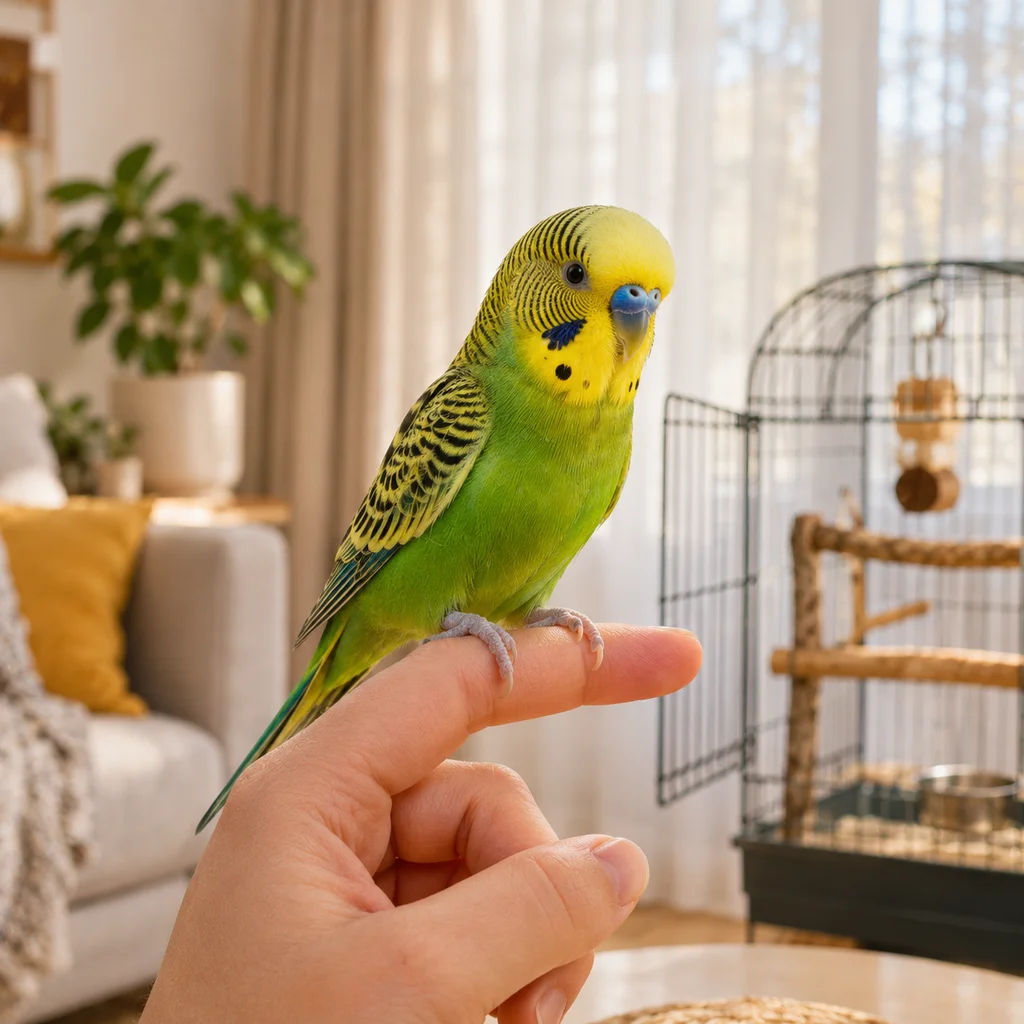
Birds are highly social and intelligent animals. Let them spend at least 1-2 hours a day outside the cage (in a safe environment). Regular talking and interaction help budgies and parrots in particular learn to talk. Toys, swings and mirrors provide mental stimulation and prevent boredom.
Cage Care and Hygiene
- Daily: Clean the food and water dishes and offer fresh food
- Weekly: Clean the cage floor and wipe down the perches
- Monthly: Wash the whole cage with natural cleaning products
Living with birds takes patience and dedication, but in return it is a joyful experience. With the right care, your feathered friend will be by your side for many years.