
A budgie isn't an animal made to spend its whole day in a small cage. In the wild, it flies long distances with its flock, moves from tree to tree, and forages for food. At home, the way to meet part of that need is to give it safe flight time outside the cage every day.
But a home is full of dangers for a bird. A glass window, an open glass of water, a running fan, or a door left ajar can turn into an accident in seconds. In this article, we explain how to prepare the room before letting your bird out of the cage and how to plan its flight time.
Choose the room first
Keeping the room where your bird flies the same every time makes things easier. You make the room safe from top to bottom once, and over time your bird gets to know it and learns where it can land.
The kitchen and bathroom aren't suitable for flying. The kitchen has the stove, hot pots, open water, and cooking fumes. The fumes released when nonstick pans overheat are very dangerous for birds; the cage and the flight area should be kept away from the kitchen. In the bathroom, the toilet and a full sink pose a drowning risk.
A living room or a bedroom is usually a good choice. The room doesn't need to be very big, but there should be enough open space for your bird to fly comfortably from one end to the other.
Pre-flight room checklist
Go over this list once before every flight. After a few weeks, it takes less than a minute.
Windows and doors
- Keep the windows closed. A screen alone isn't enough protection; your bird can push on it or the screen can come loose.
- Keep the doors closed and make sure everyone at home knows the bird is out. Hanging a small note on the door helps.
- Draw sheer curtains over the glass. Birds may not notice the glass and fly into it. Especially during the first flights, curtains reduce this risk.
Mirrors and shiny surfaces
Large mirrors, like glass, can cause your bird to crash into them. Covering large mirrors during the first weeks is a good precaution. As your bird gets to know the room, this risk goes down.
Open water and containers
- Remove glasses, vases, and containers full of water.
- If you have an aquarium, keep its lid closed.
- Don't bring hot drinks into the room.
Electricity and appliances
- Turn off ceiling fans and standing fans. There are no exceptions to this rule.
- Gather up cables or run them through cable covers. Budgies are curious about pecking at everything.
- Keep hot appliances like irons and hair dryers out of the room.
Plants and small objects
- Some potted plants can be toxic to birds. Take any plants you're unsure about out of the flight room.
- Put away small items like earrings, hair clips, and buttons. Your bird can peck at them and swallow them.
- Don't use candles, incense, room sprays, or aerosol cleaning products during flight time. A bird's respiratory system is very sensitive to these kinds of substances.
Other animals
No matter how gentle your cat or dog is, keep them in another room while the bird is out. Even a single swipe of a cat's paw can have serious consequences for a bird; even a scratch that looks minor should be seen by a vet.
The first flights
Let it come out on its own
Instead of grabbing your bird and taking it out of the cage by hand, open the cage door and wait. Placing a perch on top of the cage or next to the door makes the first step easier. When your bird comes out of its own accord, it finds the surroundings less frightening.
Start short
Keep the first flights short. It takes time for your bird to get to know the room and learn where it can land. Some birds don't leave the top of the cage at all the first time. That's normal. Within a few days, they gain confidence.
Set up landing spots
Make sure the room has safe places where your bird can land. A standing perch, a natural branch set on top of a bookshelf, or a play area on top of the cage reduces the chances of your bird heading to hard-to-reach spots like the top of a wardrobe.
Things to keep it busy outside the cage
Flight time isn't just about flapping wings. When your bird lands somewhere and finds something to do there, it stays in that area instead of going to the tops of wardrobes or the curtain rail.
- Set up a small play area on top of the cage or on a table: a few perches, a ladder, a hanging toy.
- Leave some wet greens in a shallow dish. Many budgies love to bathe by rolling around in the leaves.
- Rotate paper or natural wood toys made for birds.
- Hang a treat like a millet spray in the play area to guide your bird there.
Setting up the play area right next to the cage door also makes the return easier. When your bird is already spending time a few centimeters from the cage, going back inside is easier.
How to plan flight time
Budgies love routine. Having flight time at roughly the same time every day puts both your bird and you at ease.
- Plan flight time during daylight, when your bird is active.
- Get your bird back in its cage before it gets dark in the evening. A bird that flies in a panic in the dark can crash into something.
- Stay in the room yourself during flight time. Don't leave your bird alone.
- Gradually lengthen daily flight time as your bird gets used to it.
Flight time isn't just about flying; it's also time to spend with you. Sitting on the floor and talking quietly, holding out your finger and waiting for it to come, strengthens the bond between you. For general budgie care, see the budgie encyclopedia page.
Getting back in the cage
Getting the bird back in its cage is the part most owners struggle with. The goal here isn't to catch your bird, but to make going back to the cage appealing to it.
- Tie mealtime to the return. When you put fresh greens or its favorite food in the cage, your bird starts returning on its own.
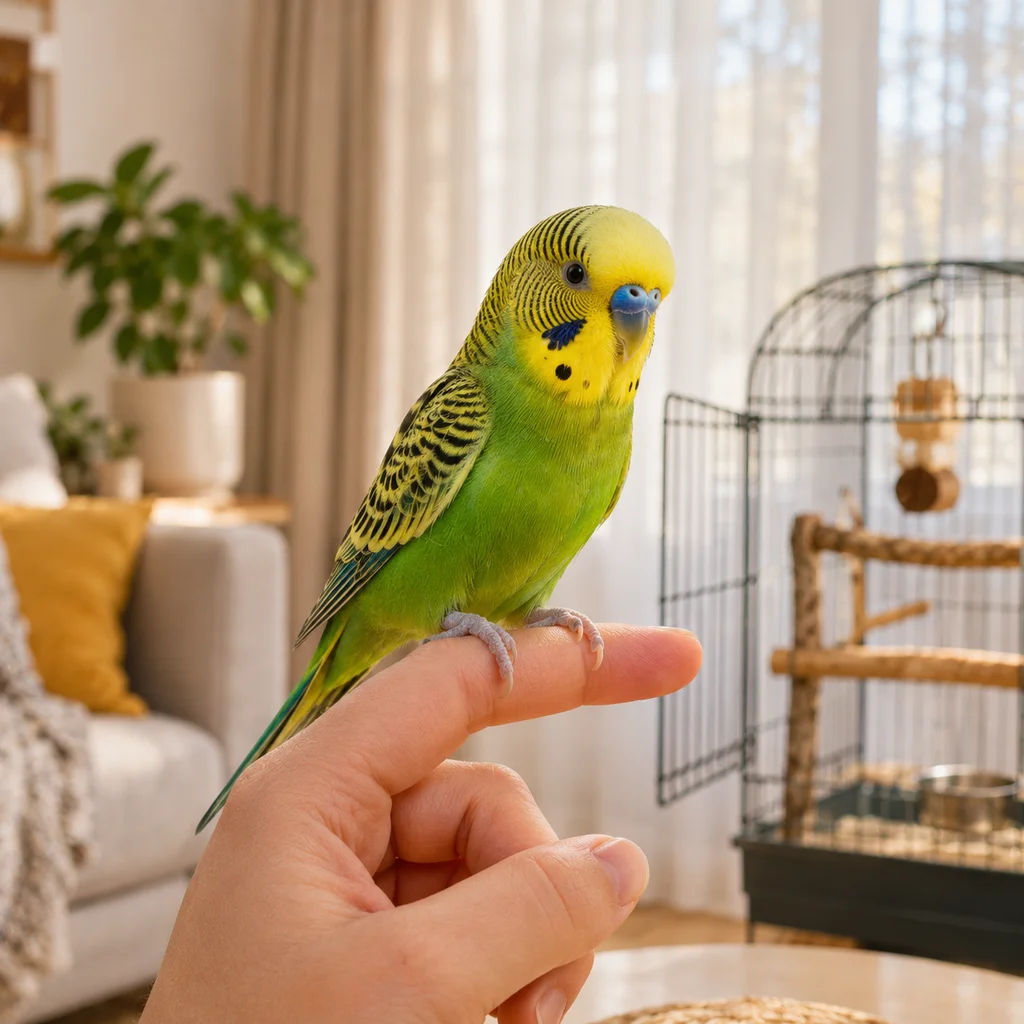
- Teach it to step up onto your finger. Hold your finger just in front of your bird's chest, close to its feet. When it steps onto your finger, praise it in a calm voice. This little exercise makes the return much easier.
- Avoid chasing. Chasing your bird around the room teaches it that flight time is scary, and it gets harder to bring back next time.
If your bird just won't go back, stay calm, leave the room for a short while, and leave the food in the cage. It usually returns on its own within a few minutes.
A quick check after flying
Take a look at your bird once it's back in the cage. Is it standing on the perch normally and showing interest in its food? If it's drooping one wing, standing unsteadily, or sitting fluffed up all the time, it may have hit something. Because birds can hide pain for a long time, reach a vet who treats birds without waiting when you see changes like these. If a problem comes up at night, you can find open clinics on the emergency vet page.
Frequently Asked Questions
Should a budgie come out of its cage every day?
If possible, yes. Daily flight outside the cage is good for both your bird's physical and mental health. Adjust the length to what your bird is used to and how your home is set up.
My bird keeps flying into the windows. What should I do?
Draw sheer curtains over the windows or put stickers on the glass that your bird can notice. As your bird gets to know the room, the crashes decrease. If you see weakness or loss of balance after a crash, talk to your vet.
Should I have its wings clipped?
Make this decision together with your vet, based on your bird's situation and how your home is set up. Being able to fly is a natural need for a bird; preparing a safe room is the way to meet that need in most homes.