


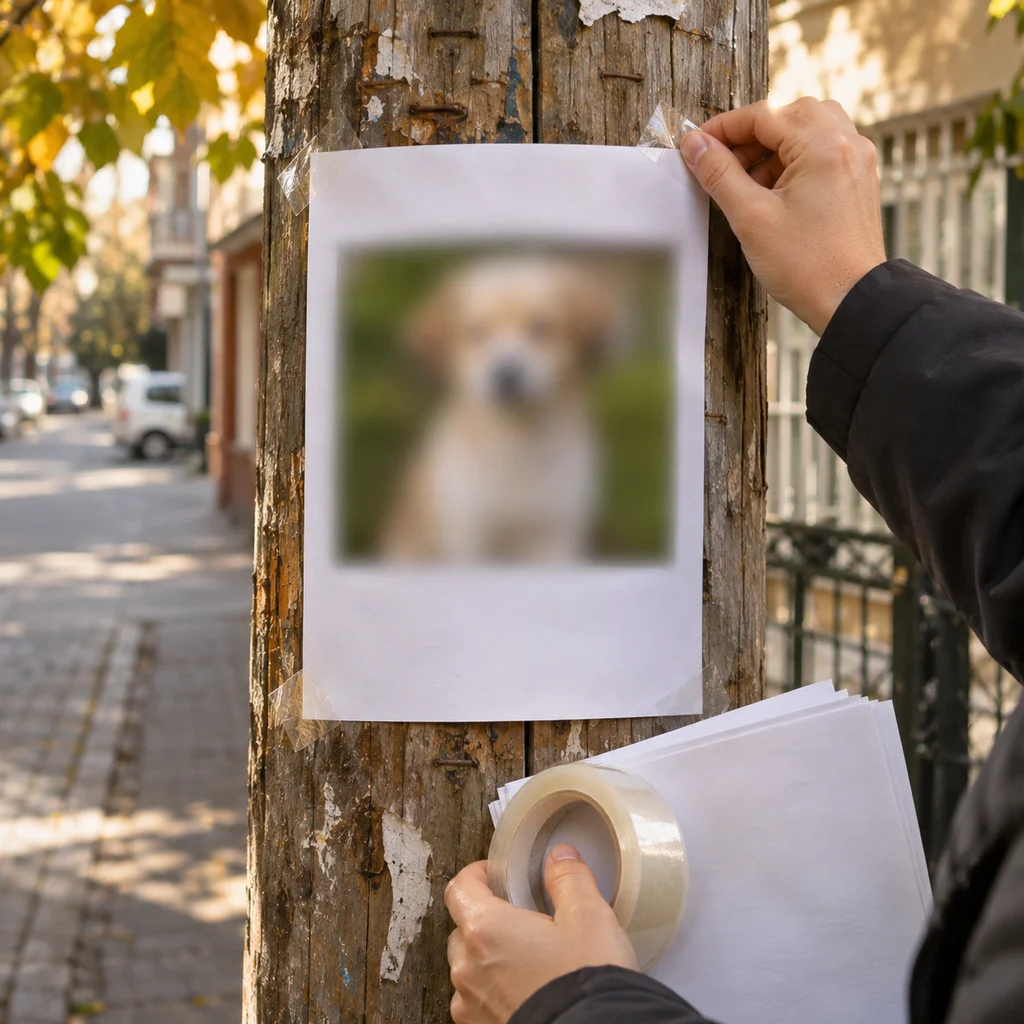

Most people who read a lost pet listing move past it within a few seconds. If a photo and two lines of text they see while scrolling on their phone, at a building entrance or in a corner store window stick in their mind, they will remember you when they come across that animal on the street the next day. If not, the listing is no help, however long it is.
In this article, we explain how to prepare the two cornerstones of a lost pet listing: the photo and the description. We also cover what to watch out for with suspicious calls that may come in after you post the listing.
The photo: more than half the listing
People recognize a listing by its photo first and read the text later. So when you look through the dozens of shots on your phone, don't pick the one you "love most." Pick the one that helps people recognize your pet.
- Make it clear and recent. A photo from when they were young, or one taken right after a shave, may not reflect how they look today.
- Make it show true colors. Filtered, yellow-lit or very dark photos change the color. A gray cat can look brown, a cream dog can look white.
- Make it show the whole body. Not just the face: size, tail and pattern should be visible too.
- Make it a solo shot. Photos taken in someone's arms, with other animals or against a busy background confuse the reader.
If you can, use two photos: one showing the face up close and one showing the whole body from the side. If your poster only has room for one, choose the full-body photo, because people on the street usually see an animal from a distance and from the side.
If you don't have a good photo
Sometimes all you have are blurry shots. In that case, use the clearest one and make the description stronger. If you are going to use a photo of a different animal with a similar color, say so clearly, or readers will look for the wrong animal. Going forward, we also suggest taking a few photos of your pet at home in daylight against a plain background and keeping them in a separate folder.
The description: short but distinctive
Descriptions like "yellow cat" or "medium-sized dog" fit dozens of animals in a neighborhood. A good description includes details that let the reader think, "this could be the one." You can write it in this order:
- Species and appearance: cat or dog, coat length, color and pattern
- Size: describe it with a comparison, for example "a bit smaller than an adult cat" or "knee-high"
- Distinctive marks: a white tail tip, a notch in the ear, one eye a different color, a limp, an old scar
- The color of any collar, ID tag or harness
- Whether they are neutered and whether they have a microchip
At the top of the listing, put a one-sentence summary: "Black and white male cat with a black spot on his nose." Someone looking at the poster sometimes reads only this line.
Keep one detail to yourself
Don't put everything in the listing. Keep one detail to yourself, such as a small spot on the belly, a different-colored claw on one paw or a missing tooth. By asking about it when someone calls saying "I found it," you can tell whether they really saw your pet.
A short example
When you put all this information together, the first part of the listing might look like this: "Gray tabby female cat, two years old, spayed. Short, curled tail tip, wearing a red breakaway collar. Microchipped." These few sentences create a clear picture in the reader's mind and make it easier to compare a cat they see on the street with the listing.
Describe their behavior too
Whether the person who spots the animal knows what to do directly affects the chances of finding it. A well-meaning person trying to approach a timid cat may scare it even farther away without realizing it. So add a short note about behavior:
- "Very timid, please don't approach or chase. If you see her, let us know right away."
- "Friendly with people, may come when called by name."
- If there is health information such as "takes medication regularly" or "has a special diet," add that too. It makes the situation more urgent for readers.
State the place and time clearly
Describe where they went missing with a well-known landmark, not just the neighborhood name: "Near the bakery on the mosque street." Add the time and day, and if they were seen, which direction they went. Readers should be able to say, "I saw a cat over that way last night."
Contact info: one number, clear hours
Write the phone number large and legible. Use a single number, ideally one that can take calls at any hour. Don't put your home address, full name or your children's names in the listing. Just saying "If you see them, please call or text" is enough.
If you want to mention a reward, you don't have to state an amount. Saying "Reward offered" is enough; listing the amount sometimes draws more interest from opportunists than from people who actually saw your pet.
Watch out for suspicious calls
Some people who post lost pet listings run into callers who claim to have found the animal but never actually saw it. That is hard to spot while you are panicking. Watch for these signs:
- Being asked for money for shipping, travel or vet costs before you have seen the animal
- Not knowing the detail you kept to yourself, or avoiding sending a photo
- Being told the animal was found in a city very far away, and being rushed
If you go to meet someone, choose a busy place and take someone with you. Don't make any payment before you see the animal.
Readability on a paper poster
People usually see a poster on the street while walking or from a car, from a few meters away. So the poster needs little text in a large size. Write "LOST CAT" or "LOST DOG" in bold letters at the top, put the photo in the middle, the one-sentence description below it and the phone number in large type at the bottom. Long paragraphs don't get read on a poster.
Adding tear-off strips with the number along the bottom edge makes it easy for people to take the number with them. Putting the poster in a clear sleeve or taping over its edges helps it last in the rain. Don't forget to ask building management or the shop owner for permission before putting it up.
Where should you share the listing?
Paper posters and online listings complement each other. Building entrances, local shops, pharmacies, vet clinics and bus stops are good places for posters. Online, you can create a lost pet listing so it shows up on the map. On DoldurKabı, an approved listing appears in the list and on the map, and the app prepares a poster ready to share. Also check the lost pet listings regularly; a listing posted for a found animal could be the one you are looking for.
Keep the listing up to date
When a new sighting comes in, update the listing: "Last seen Tuesday evening behind the park." When your pet is found, close the listing and take down the posters you put up. It is a thank-you to the neighbors who helped, and it matters so the next lost pet listing is taken seriously.
Frequently Asked Questions
Should I include my pet's name in the listing?
You can. Especially with dogs who respond to their name, it helps the person who sees them call them over. For a timid cat, a "don't approach, let us know" note works better than the name.
Is it a problem to put a filter on the photo?
It can be. Filters and artificial light change coat color. A photo taken in natural light that reflects how the animal looks on the street is always safer.
Do I need to offer a reward?
It isn't required. If you want to, saying "Reward offered" without an amount is enough. Be careful not to make any payment before you see the animal.
When should I take the listing down?
The day your pet comes home. Close the online listing, collect the posters and let the people who helped know. Listings left up for a long time make it harder for other lost pet listings to get attention.









