
You have probably lived through this scene: the moment your cat sees the carrier, it bolts under the bed, digs its claws into the rug and resists with all its might. You're late for the vet appointment, your cat is stressed, you're sweating, and everyone's mood is ruined before the trip even starts. What's more, this struggle gets a little harder every time, because each time your cat sees the carrier, it remembers the last bad experience.
At its core, this is a simple conditioning problem. If the carrier sits on the top shelf of a closet most of the year and only comes out on vet day, it means just one thing to your cat: unease, car noise, strange smells and the exam table. Cats make cause-and-effect connections very quickly, and once they have made one, they don't forget it easily.
The good news is that the same mechanism works in reverse. If you make the carrier an ordinary, even enjoyable, part of your home, your cat will start to see it not as a threat but as its own safe space. In this article, we walk you through the whole process step by step, from keeping the carrier out at home permanently to gradual training steps, and from pheromone support to tips for travel day.
Why Does the Carrier Only Mean "Bad Day"?
Cats are creatures of habit and routine. They first inspect every new object in their surroundings with cautious curiosity; if the object gets paired with a bad experience, they stay away from it for a long time. When the carrier shows up a few times a year, always at the start of the same stressful scenario, a clear equation forms in your cat's mind: the carrier appeared, something bad is going to happen.
At this point, forcing your cat into the carrier only makes things worse. Force makes that day's trip traumatic and also increases resistance the next time you try. The solution isn't force; it's rewriting the equation from scratch.
Rule One: Keep the Carrier Out at Home Permanently
The foundation of carrier training is turning the carrier from a "special occasion item" into an everyday piece of furniture. To do that:
- Take the carrier out of the closet and put it in a quiet spot, like a corner, in the room where your cat spends the most time during the day.
- Remove the door or secure it so it stays open; a closed door creates a sense of being blocked all on its own.
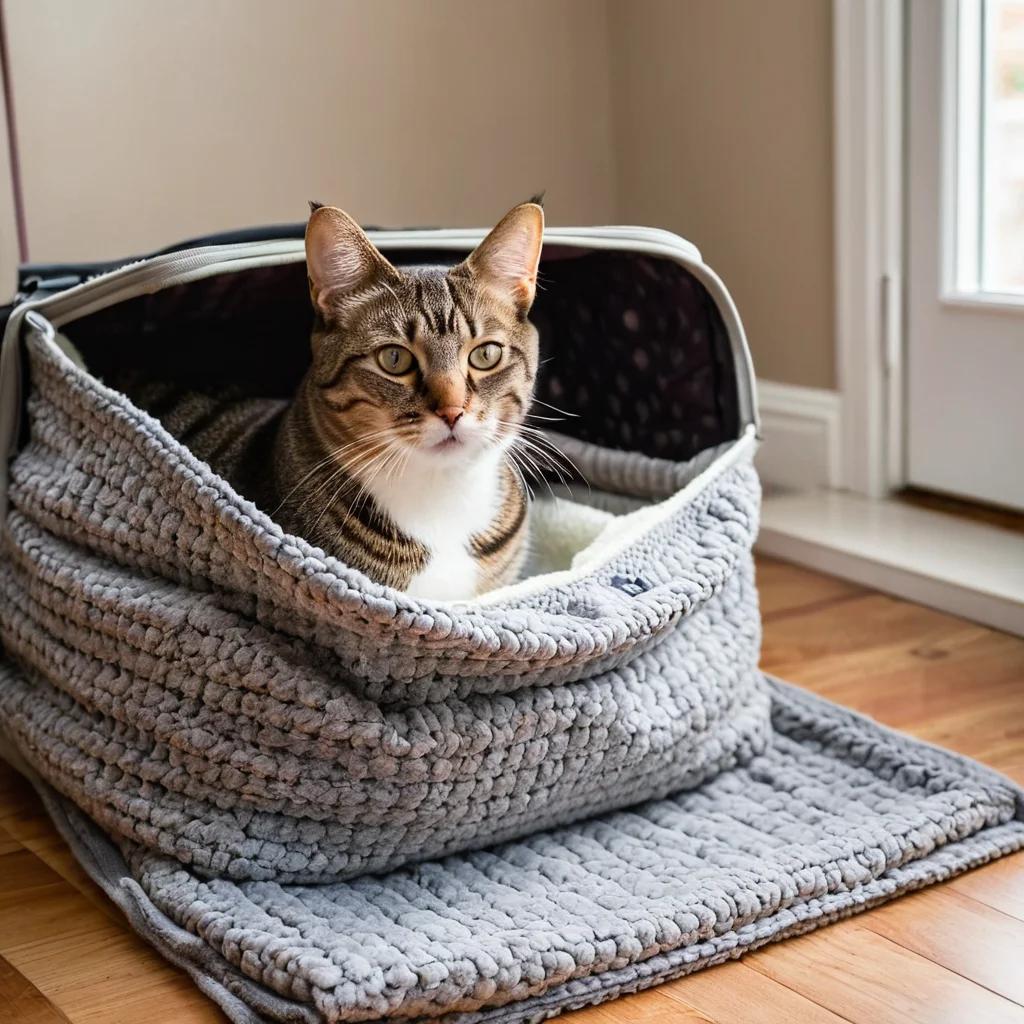
- Lay a soft blanket that carries your cat's scent, or a cover it often uses, inside. A familiar scent is the key to feeling safe.
- Leave treats in and near the carrier from time to time, and toss its favorite toy inside.
- Never push your cat into the carrier by hand, and don't insist that it go in. The exploring should be entirely up to your cat.
Within a few days, most cats start sniffing the carrier, and within a few weeks they begin napping in it. If your cat is spending time in the carrier on its own, you have crossed the first and most important threshold.
Gradual Training: A Four-Stage Plan
Now that the carrier is a natural part of your home, it's time to prepare for travel. Move through each stage only as long as your cat stays relaxed; if you notice signs of unease, don't hesitate to go back to the previous stage.
- Open door period: The carrier is out, the door is open and there are treats inside. Your cat goes in and out voluntarily. Don't rush this stage; a solid foundation is everything.
- Door closed briefly: While your cat is inside, slowly close the door for a few seconds, open it right away and give a treat. Increase the time day by day: first seconds, then a minute or two. The goal is for your cat to learn that a closing door brings a treat, not panic.
- Carrying around the house: With the door closed, lift the carrier with calm movements and take a short tour from room to room. Take care not to swing the carrier, and keep it close to your body and level. As soon as the tour is over, open the door and give a treat.
- Car stage: First, sit together in the parked car for a few minutes with the engine off. Over the following days, start the engine and wait, then take a short drive around the block. Each time, end on a sweet note with treats and play when you get home.
The whole plan varies from cat to cat but usually takes a few weeks. Age, temperament and past experiences set the pace; some cats are naturally more tolerant of travel. To learn more about your cat's personality traits, take a look at the cat breeds encyclopedia.
Pheromone Support and Scent Management
Cats make sense of the world largely through their noses. Synthetic calming pheromone sprays mimic the natural pheromones a cat releases from its face, which send a "this place is safe" message. Spraying a few spritzes on the blanket inside the carrier about fifteen to twenty minutes before the trip brings visible relief for many cats. Never spray it directly on your cat.
The other side of scent management is preserving familiar smells. If you have washed the carrier, "re-home" it by putting in a cover your cat uses or an old T-shirt that carries your scent. The smell of an unfamiliar detergent can quietly reset the trust built during training.
Vet Day: Tips That Make the Trip Easier
When the big day comes, any rush rubs off on your cat instantly. Staying calm and organized is half the battle:
- Have the carrier ready in its usual spot well before the appointment time. Last-minute rattling in the closet is an alarm bell.
- Not feeding for a few hours before the trip may reduce car sickness and nausea. Water should always be available.
- Draping a thin, breathable cover over the carrier reduces visual stimuli and calms many cats.
- In the car, secure the carrier on the seat with a seat belt; a carrier that slides during sudden braking is both dangerous and frightening.
- In the waiting room, keep the carrier on your lap or somewhere high instead of on the floor; eye-level contact with dogs increases stress.
If you don't have a clinic you visit regularly yet, you can browse options near you on the vets page and plan your appointment ahead. A short drive, a short wait and a familiar vet make the rest of the trip much easier for your cat.
The Advantage of a Top-Opening Carrier
When choosing a carrier, we recommend models that can also open from the top. Instead of pulling the cat through a narrow door at the clinic, the vet can gently lift it out from above; part of the exam can even be done while the cat sits in the bottom half. This small design difference noticeably reduces tension on the exam table. A model with a hard plastic shell that is easy to clean and well ventilated is the most practical choice in the long run.
Frequently Asked Questions
My cat never goes into the carrier on its own. What should I do?
Slow the process down even more. Place treats a few steps away from the carrier first, then at the entrance, and finally inside. Removing the top part entirely and using only the bottom half also works; an open bed is far less threatening than a closed box. Be patient and think in terms of weeks, not days.
How long does the whole training process take?
A young, curious cat may get through all the stages in a few weeks, while for a cat that has had bad travel experiences in the past, the process can stretch over months. Follow your cat's body language more than the calendar: if the ears are up, the body is relaxed and the appetite is normal, you're going at the right pace.
I have two cats. Can they share the same carrier?
It isn't recommended. Stress in a tight space can turn into tension even between the most compatible cats, and one may pass its fear on to the other. Give each cat its own carrier; that way each carrier carries the scent of just one cat and the sense of a safe space stays intact.
My cat meows constantly during the trip. Should I give a sedative?
Don't give any sedative or medication on your own. Meowing is usually a harmless protest and decreases as training progresses. If you see heavy drooling, vomiting or panic attacks, describe the situation to your vet; if needed, they will assess pre-travel support options specifically for your cat.