


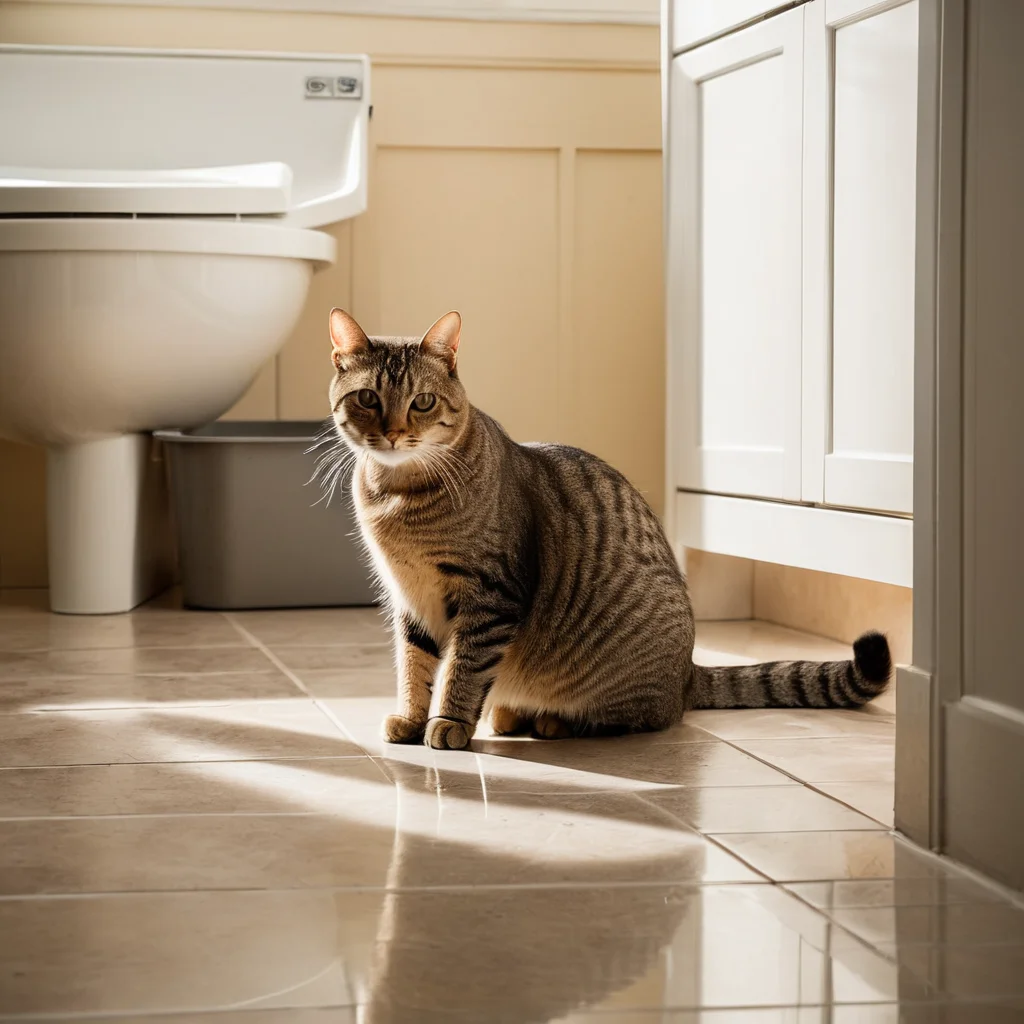

Your cat keeps going to the litter box and peeing only a little, crying, leaving urine outside the box. This isn't "acting spoiled." These can be signs of FLUTD (Feline Lower Urinary Tract Disease). FLUTD affects roughly 1-3% of pet cats every year and can turn into a blockage emergency in male cats, with a risk of kidney failure and death within hours. This article covers the 7 subtypes of FLUTD, the emergency signs, how to manage it properly at home, and how to keep it from coming back.
WARNING: If you suspect a blockage in a male cat (constant trips to the litter box without being able to pee, screaming, lethargy), go to a vet right away, not in the next few hours. This is an emergency.
1. What Is FLUTD? Not One Disease, but an Umbrella Diagnosis
FLUTD is a general term for several conditions that affect a cat's lower urinary tract (bladder + urethra) and cause similar symptoms. Common subtypes:
- Feline Idiopathic Cystitis (FIC): The most common (~55-65%). Stress-triggered bladder inflammation; the exact cause isn't fully known.
- Urinary stones (urolithiasis): Stone types such as struvite and calcium oxalate.
- Urinary tract infection (UTI): More common in older cats.
- Urethral blockage: An emergency in male cats; caused by a buildup of mucus, stones or sediment.
- Bladder tumor: Rare in older cats, but important.
- Anatomical abnormalities.
- Behavioral (owner-related): Avoiding the box because of litter box, location or cleanliness problems.
The right treatment depends on the right diagnosis. Your vet will run a urinalysis + ultrasound + (if needed) X-rays.
2. Symptoms: 8 Warning Signs
- Frequent trips to the litter box, peeing only small amounts (pollakiuria).
- Meowing or crying while peeing, a sign of pain.
- Blood in the urine (hematuria): pink or red traces in the litter box.
- Peeing outside the litter box: bathroom, rug, bathtub.
- Excessive licking of the genital area.
- Abdominal pain: doesn't want to be touched, tenses up.
- Lethargy, loss of appetite.
- Unable to pee: squatting in the litter box for a long time, making noise, but nothing comes out. THIS IS AN EMERGENCY.
Being unable to pee leads to kidney failure and death within 24-48 hours. Don't wait.
3. Risk Factors
- Male + neutered: The urethra is narrow; high risk of blockage.
- Apartment living, little activity.
- Overweight cats.
- Stress: A new cat, moving house, noise, a change of owner.
- A diet mostly of dry food (reduces water intake).
- Several cats, too few litter boxes.
- Ages 4-7 are the most common.
4. What Tests Will the Vet Run?
- Urinalysis (general + sediment + culture): Checks for blood, crystals and bacteria.
- Ultrasound: Bladder wall thickening, stones, tumors.
- X-ray: Some stones show up on X-rays.
- Blood test: Kidney values (creatinine, BUN), electrolytes.
- Urethral catheterization (if there's a blockage): draining + treatment.
5. Treatment Depends on the Diagnosis
- FIC (idiopathic cystitis): Stress management + high-moisture food + Feliway + pain relief. Medication isn't always needed; changes to the environment come first.
- Struvite stones: A vet prescription diet (Hill's c/d, Royal Canin Urinary) dissolves them in 4-6 weeks, followed by a preventive diet.
- Calcium oxalate: Surgery may be needed, followed by a special diet.
- Bacterial UTI: Antibiotics chosen based on culture and sensitivity testing.
- Urethral blockage: Emergency catheterization + IV fluids + 2-5 days in the hospital.
6. Home Management: Preventing Relapse
Increasing Water Intake
- Increase the share of wet food: at least 50% of the daily diet should be wet. Wet food contains 70-80% water.
- Place several water bowls around the house, one in every room.
- Fountain-style waterer: Cats love running water, so drinking goes up by 30%+.
- Bowl material: Ceramic or glass; stainless steel is the second choice. Plastic bowls hold odors, and cats often refuse them.
- Bowl hygiene: Refresh the water once a day and wash the bowl once a week with mild soap.
Stress Management
- A Feliway pheromone diffuser in the home; the effect becomes noticeable after 4-6 weeks.
- Vertical space enrichment: cat shelves, a cat tree, a window perch.
- Regular play sessions: 2x 10 minutes a day.
- Introducing a new pet or a new person: Gradual introductions.
- A steady routine: Keep mealtimes and playtimes consistent.
Optimizing the Litter Box
- One litter box per cat, plus one.
- Spread them across different rooms.
- Clean them daily.
- Open, roomy boxes in a quiet spot.
- Move them gradually if you change locations.
For a more detailed litter box setup, you can read the Science of the Cat Litter Box guide.
7. Blockage in Male Cats: Lifesaving Information
A male cat's urethra is much narrower than a female's. A mucus plug, a small stone or a buildup of sediment can close it off. Signs:
- Squatting in the litter box for a long time with nothing coming out.
- Loud meowing, screaming.
- A swollen, hard belly.
- Lethargy, vomiting.
- Confusion in later hours.
The first 24 hours of a blockage are golden. Past 36 hours, kidney failure and death develop quickly. If in doubt, don't wait. A cat that has blocked once is prone to blocking again, so a special diet + stress management after treatment are a must.
8. Risk of Relapse
In a cat that has had FLUTD once, the risk of it coming back is 30-65%. A preventive protocol:
- A urinalysis check every 6 months.
- Sticking with a diet mostly of wet food.
- Keeping stress factors to a minimum.
- Ongoing Feliway use.
- Regular weight tracking (obesity triggers FLUTD).
9. Frequently Asked Questions
My cat suddenly has FLUTD symptoms. Will it pass if I wait?
No. Especially if it's a male cat, don't wait at all: an emergency blockage can happen within hours. In females, too, early treatment lowers the risk of relapse.
Are antibiotics unnecessary?
In FIC cases, antibiotics are unnecessary and create resistance, because the cause isn't infection but idiopathic cystitis. When a culture confirms a UTI, antibiotics are a must.
My cat won't drink water. What should I do?
Increase the share of wet food, try a fountain, switch the bowl to a different material, and put water in several spots. In the first week, measure water intake (using the same bowl) so you know the baseline.
Is prescription urinary food something I can manage on my own?
No. Long-term (lifelong) use should be under a vet's supervision. Some urinary foods reduce calcium oxalate formation but don't dissolve struvite (or the other way around); you need the right diagnosis + the right prescription.
How do I measure stress?
Watch behavior: more hiding, refusing to play, constant self-licking, peeing outside the box, aggression. These signs show the stress level; changes to the environment are a must.
I keep having problems in my multi-cat home.
Competition for resources is common. Follow the number of cats + 1 rule: litter boxes, food bowls, water bowls, scratching posts, beds, all spread out. High spots (cat shelves) lower stress in multi-cat homes because they create vertical space.
Is FLUTD fatal?
A blockage in a male cat that's left untreated is fatal within hours. With correct, fast treatment, the large majority recover fully; with long-term management, a happy life is possible.
Final Word
FLUTD isn't so much a disease as a warning system. It's your cat's way of saying "I'm not drinking enough, I'm stressed, my box has a problem." Working with your vet to solve the root cause and improving the daily routine keeps future episodes away for years.
Log water intake, urine amount, litter box use and behavior notes in DoldurKabı Pet Health Tracking. With regular data, your vet visits become much more productive.
This guide is for informational purposes; if you suspect FLUTD, always consult your vet first.









