


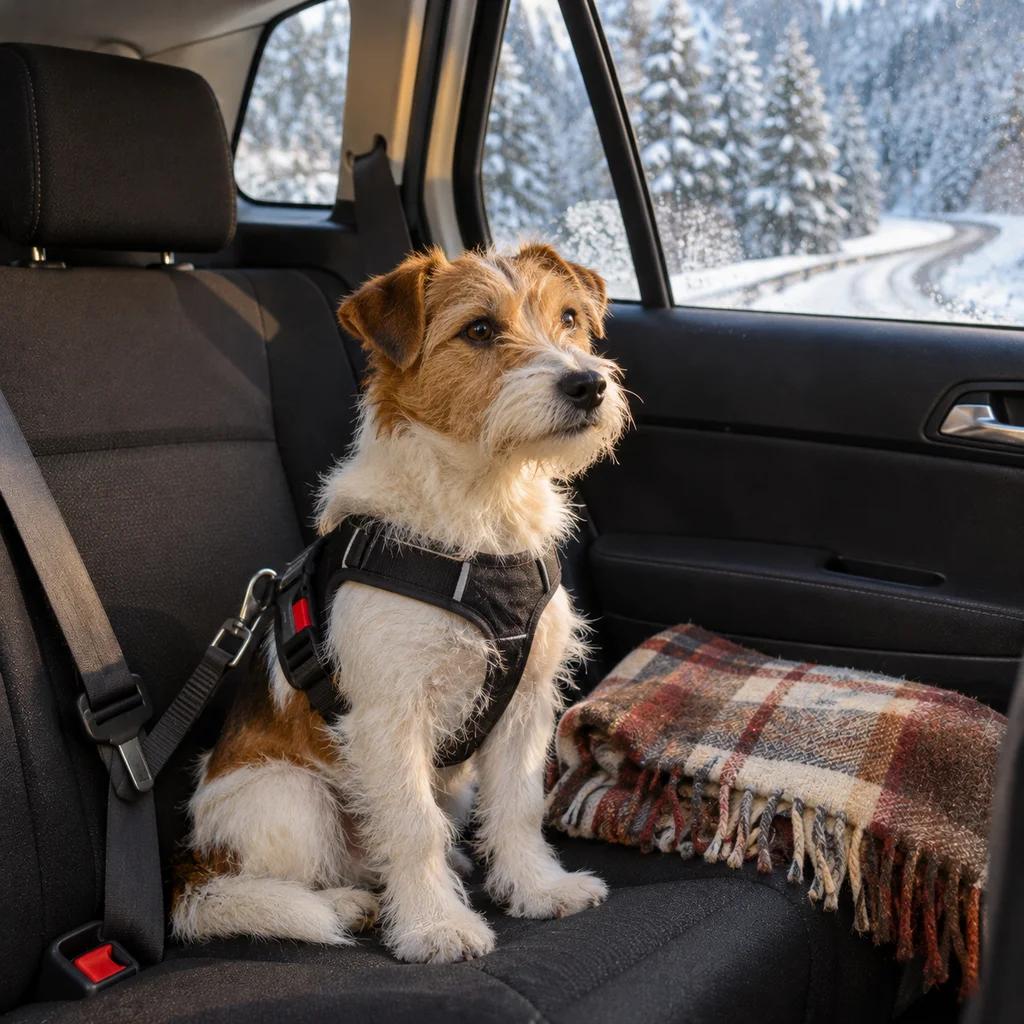

Most of us know the warnings about animals left in cars during the summer months. In winter, the problem is the reverse. Once the engine stops, the car cools down quickly, the windows frost over and the closed cabin soon turns into a fridge. For a cat or dog waiting inside, this is a risk that builds much faster than you might think.
Driving with your pet in the winter months is often unavoidable. A vet appointment, a New Year's visit, a trip to the village or the summer house. In this article, we have gathered the key points of winter travel, from short waits to long drives.
Leaving a pet waiting in a cold car
A car gets as cold as the air outside, and even if the windows are kept shut to block the wind, it can't hold the heat inside. An animal sitting still gets cold much faster than one that is walking. Small breeds, short-haired pets, hairless cats, seniors, puppies and kittens and thin animals are more sensitive in this respect.
At the store you pop into saying "I'll be back in five minutes," the line gets long, and the bank takes longer than expected. In winter, try not to leave your pet alone in the car. When you have no choice, keep it very short, leave your pet in a carrier or bed with a blanket and park the car not in the shade but somewhere sheltered from the wind.
Is leaving the engine running a solution?
Leaving the engine running to keep the car warm brings other risks. Exhaust gas contains carbon monoxide. Especially when the exhaust pipe is blocked by a pile of snow, the gas can leak into the cabin, and this is an odorless danger. Leaving the engine running in a closed garage is never safe under any conditions. Also, an animal left in a running car can step on the gear shift or buttons; even the door locks can close by accident.
Keeping the temperature balanced on the road
Turning the heater up high in the car is a winter habit. But while you sit there in your coat, your pet is already sitting in its own fur. A thick-coated dog can overheat in a car with the heat turned all the way up and start panting quickly.
- Don't point the heater vents toward your pet's face.
- Keep the cabin warm, not hot, and watch for signs like panting and restlessness.
- Don't turn on the seat heater where your pet is sitting; direct heat contact carries a risk of burns.
- Don't cover the carrier completely with a blanket; leave one side open so air can flow.
For dogs that wear a winter coat, you might consider taking the coat off in the car. In a warm cabin the coat is too much; putting it back on before getting out is enough.
Safe transport
Roads are slippery in winter, and sudden braking happens more often. An animal roaming freely in the car can be thrown forward in a hard stop and hurt both itself and the driver.
- Carry cats in a sturdy carrier with a door that locks. Secure the carrier on the back seat with a seat belt or place it in the space behind the front seats.
- For dogs, use a harness that clips into the seat belt or a secured crate. A seat belt attached to a neck collar puts strain on the neck in a sudden stop.
- Don't carry your pet on the front seat. Airbags can cause serious injury when they deploy.
- The cargo area can be much colder than the cabin. If you carry your pet in the trunk area, make sure it is a section connected to the cabin and heated.
Rest stops on long drives
If you are setting out on a long trip over New Year's or the winter school break, plan your stops ahead of time. Stops are needed for your pet to go to the bathroom, move around a bit and drink water. In winter, the ground at rest stops may be icy and salted.
- Put the leash on before getting out of the car. Dogs bolting when the door opens are a common cause of lost pets at rest areas.
- Don't take cats out of the carrier at rest stops. For bathroom needs, you can use a small litter box inside the car.
- Wipe the paws of a dog that has walked on salted ground with a damp cloth before getting back in the car.
- The water bowl can freeze in the car. Carry water in a thermos or in a warm corner of the cabin.
What to bring with you
On a winter trip, traffic can back up, roads can close and you can get stuck for hours somewhere you didn't expect. Prepare a small bag for this possibility: a few meals' worth of food, water, a dry blanket, a towel, a spare leash, poop bags, any medication your pet takes regularly and vaccination information. Checking the vet list before you leave to see whether there is a vet open where you are going is also a good habit.
Pets that aren't used to the car
For a cat or dog that gets in the car only once or twice a year, just to go to the vet, a long winter trip can be hard. Doing short trial runs a few weeks before the winter vacation makes things easier. First, put your pet in the car in its carrier while the engine is off, sit for a few minutes and give a treat. Then take short drives around the neighborhood. Make it a little longer each time.
Leaving the carrier open at home for days before the trip also helps. If your cat starts sleeping in the carrier, on the day of the trip it won't be a strange box but a familiar bed. Putting the blanket from home inside gives warmth along with a familiar scent.
Before getting in and after getting out
A dog that walks in rain or snow and gets in the car with wet fur will be very cold until the car warms up. Dry it well with a towel before it gets in, and keep a second towel in the car if needed. Long-haired dogs collect clumps of snow between their paw pads; melt and clean them with a warm cloth.
Don't rush to open the door when you arrive, either. In an unfamiliar place, a tired and anxious animal may run off at the first chance. Check the leash or the carrier door first, then open the car door. If the home you are visiting is in a village or has a yard, don't let your dog off leash in the first few days.
Your pet belongs in the pre-winter car check too
When adding antifreeze to the car or carrying a spare jug in the trunk, make sure the cap is tightly closed. Antifreeze tastes sweet and is very dangerous for animals; even a few drops that drip can be a risk. Also, in winter street cats can take shelter in the engine compartment of parked cars. Tapping on the hood a few times before starting the car is a simple but life-saving habit.
If your pet goes missing during the trip or at a rest stop, post a listing in the lost pets section right away and add the location where it went missing. A lost pet listing posted in the DoldurKabı app is sent as a notification to users in that area; even in an unfamiliar city, letting people who live nearby know speeds up the search.
Frequently Asked Questions
How many minutes can I leave my dog in the car in winter?
It's hard to give a safe time, because it depends on the outside temperature, the wind and your dog's size, coat and age. Aim not to leave your pet alone in the car in winter; when you have no choice, keep it as short as possible.
My cat meows a lot and shivers in the car. Is it because she's cold?
Cats can also meow and shiver from stress during travel. Partly covering the carrier with a blanket, talking calmly and avoiding sudden maneuvers help. If the shivering continues during stops and after the trip, talk to your veterinarian.
Is car sickness worse in winter?
Car sickness doesn't depend on the season, but closed windows and heavy heater air can bother some animals more. Keep meals light a few hours before the trip, and if car sickness happens often, talk with your veterinarian.
Can I carry my cat on my lap during a winter trip?
A cat carried on your lap can get out of control in a sudden stop or when a door opens. Since slippery roads and sudden stops are more common on winter roads, it's safer to carry your cat in a secured carrier with a door that locks. If you put a blanket with a familiar scent inside the carrier, your cat will stay warm and calm down. At rest stops, make sure the car doors and windows are closed before opening the carrier.









