

Because of their small bodies, hamsters are quickly affected by changes in the temperature around them. The hamster you try to protect from the heat in summer can also get cold in winter because of a chilly room, a window left open or radiators that switch off at night. Keeping your hamster's surroundings steady all day long is the first thing to watch in the winter months.
In this article, we cover where to put the cage, nesting material, the risks around heating devices and what to do for a hamster found motionless in the cold.
Why do hamsters have a hard time with the cold?
A small animal's body loses heat much faster than a large animal's. In the wild, some hamster species save energy in the cold season by going into a torpor-like state deep in their burrows. At home, this is not something you want. For a pet hamster, sudden cooling and the torpor that comes with it are a serious risk, because the hamster stops eating and drinking enough, and its body temperature can drop dangerously.
So the goal is to keep the hamster's room steady and mild in winter too. The general recommendation is a room temperature where you can sit comfortably in a sweater without feeling cold; many care sources point to roughly 20 to 24 degrees as a suitable range. What matters most is that the temperature does not swing widely during the day and at night.
Where to put the cage
Where the cage sits in your home is half of keeping the temperature steady in winter. Pay attention to these points:
- Away from windows and balcony doors: The area in front of the glass warms up in the sun during the day and cools quickly at night. When you open the window to air the room, the cold air should not hit the cage directly.
- Not right against the radiator: The spot right next to a radiator can be too hot and dry. Placing the cage a meter or two away from the radiator gives a more balanced environment.
- Not on the floor: Cold air collects low down. Putting the cage on a sturdy table or stand protects your hamster from the chill of the floor.
- Not by a doorway: Pick a corner away from drafts from outside doors and hallways that open and close often.
- A room used all day: Rooms that are not heated in winter and kept closed can get very cold at night.
Around heating devices
The heaters used at home in winter carry their own risks for a hamster. Putting an electric heater or a stove next to the cage may seem tempting, but it overheats one side of the cage while leaving the other side cold, and the hamster may end up right in front of the heat. Place the heater away from the cage so it warms the room as a whole.
In homes that use a stove or fireplace, remember that smoke and gas can affect small animals before they affect people. Air the room regularly, but while you do, move the cage for a while to a spot without drafts, or loosely cover it in a way that still lets air in. A home where the chimney, boiler and gas connections are checked regularly is safer for both you and your hamster.
Nesting material and bedding
On cold days, hamsters thicken their nests on their own. Your job is to give them plenty of the right material.
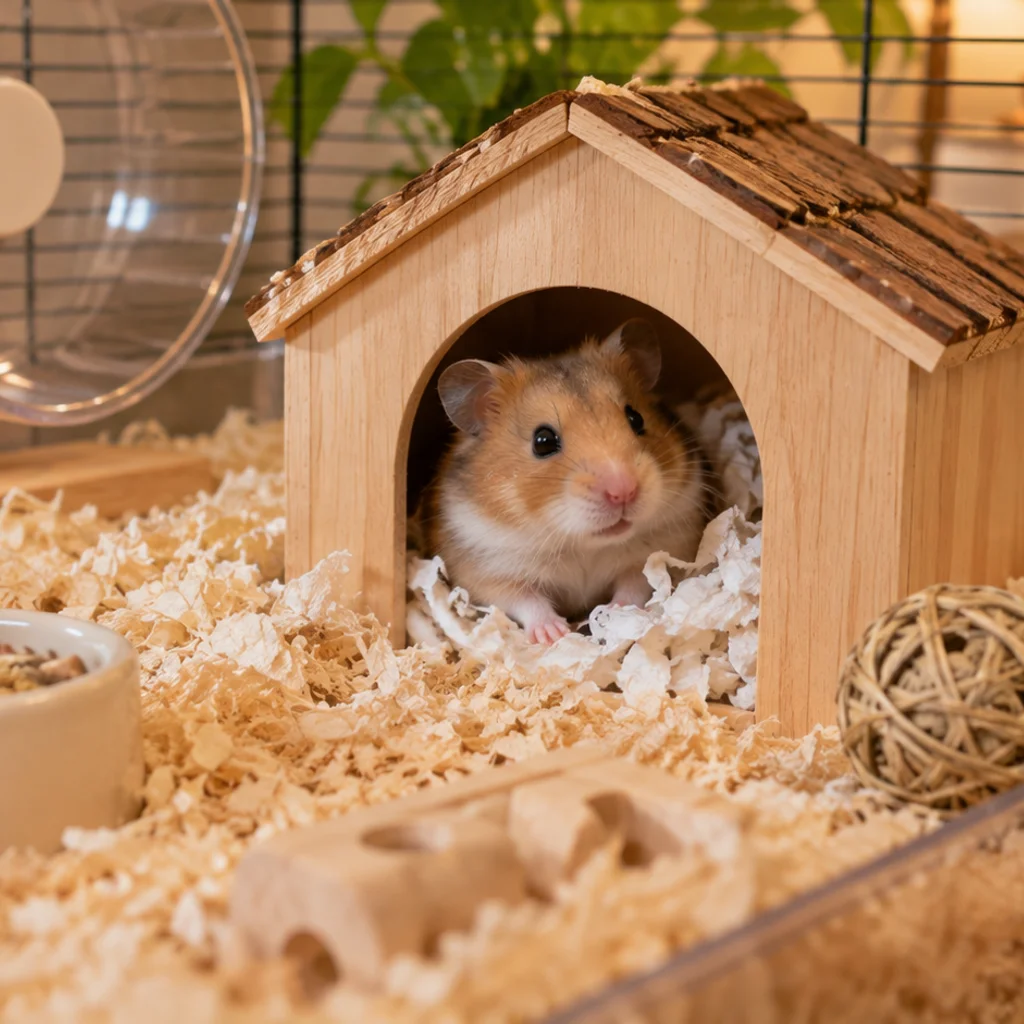
- Thick bedding: Spread paper-based, dust-free and unscented bedding generously across the bottom of the cage. Hamsters love digging tunnels and building nests.
- Nesting material: Ink-free, unscented paper strips or pieces of toilet paper are safe options.
- Things to keep away: Fluffy, fibrous synthetic nesting materials can wrap around a hamster's feet or cause digestive problems if swallowed. Scented bedding can also strain their sensitive airways.
- An enclosed hideout: A little house where it can put nesting material helps your hamster hold on to its warmth.
In the winter months, try not to disturb your hamster's nest often. When cleaning the cage, changing only the dirty areas and leaving part of the nest in place protects the warm spot your hamster built for itself.
Food and water routine
Hamsters carry food in their cheeks and store it in their nests. It is normal for this behavior to increase in winter; don't try to remove the food it has stored, and only clear out fresh vegetable and fruit pieces that can spoil the next day. Check every day that the water bottle is working. If the water level is not going down in a cold corner, watch closely to see whether your hamster has stopped drinking.
If you want to look at care differences between species, you can check out the Syrian hamster and the hamster encyclopedia page that covers the other species.
Watch for the nighttime temperature drop
Hamsters are active at night. They sleep during the day, then run, eat and arrange their nests through the evening and night. In many homes, though, the heating is turned down or switched off at exactly these hours. If you turn down the boiler at night, use a room thermometer for a few nights to measure how cold your hamster's room gets toward morning. If the temperature drops noticeably, consider moving the cage to a room in your home that stays warmer.
A short checklist for the start of winter
When the weather starts to turn cold, setting aside one evening to go over your hamster's setup heads off most of the problems you might face over the winter.
- Put a room thermometer in the room where the cage is and note the morning and night readings for a few days.
- Check with your hand for drafts coming from the edges of windows and under doors.
- Refresh the bedding and make it thicker, and add more nesting material.
- Make sure the surface under the cage is not a cold floor or an outside wall.
- Check the distance between any heaters you plan to use and the cage, and make sure their cables are out of your hamster's reach.
- Plan how the room's heating will be kept on for days when no one will be home.
After these checks, watching your hamster for a few days is enough. If it wakes up at its usual time, eats its food, drinks its water and runs on its wheel, the routine has settled in.
If your hamster is found motionless in the cold
Hamsters sleep deeply during the day; a sleeping hamster is curled up, soft and breathing regularly, and it responds when touched, even if slowly. In a cold room, though, a hamster can sometimes go into a torpor-like state. In that case, you usually see the following:
- Noticeably cold to the touch
- Very slow breathing that is hard to notice
- No response to touch or sound
In this situation, don't panic and don't assume your hamster has died. Here's what to do:
- Take your hamster to a warm room.
- Let it warm up slowly between your palms or wrapped in a soft, warm cloth.
- Don't use direct, intense heat sources like a hair dryer, a hot water bottle or the front of a heater; sudden warming can cause harm.
- Don't try to force water or food on it.
- At the same time, call a vet who treats exotic animals and explain the situation.
Even if your hamster comes around, it is a good idea to have a vet see it. Afterward, reviewing where the cage is and how cold the room gets at night keeps the same thing from happening again.
Frequently Asked Questions
Should I cover my hamster's cage in winter?
A light cover at night can help block drafts, but it should not stop air from getting into the cage. Covering the cage completely can lead to humidity and airflow problems.
Can I use a heating pad for my hamster?
Keeping the whole room steady is a safer approach than putting a heater in the cage. If you are thinking about an extra heat source, talk to your vet about it; your hamster should always have a space where it can move away from the heat.
My hamster runs less in winter. Is that normal?
A slight drop in activity can happen. But if its appetite and water intake are falling and it stays still through the night as well, check the room temperature and talk to your vet.
Can I keep the cage on the balcony?
In winter, this is definitely not recommended. Nighttime temperatures on balconies drop quickly, and a hamster cannot protect itself from that cold.