


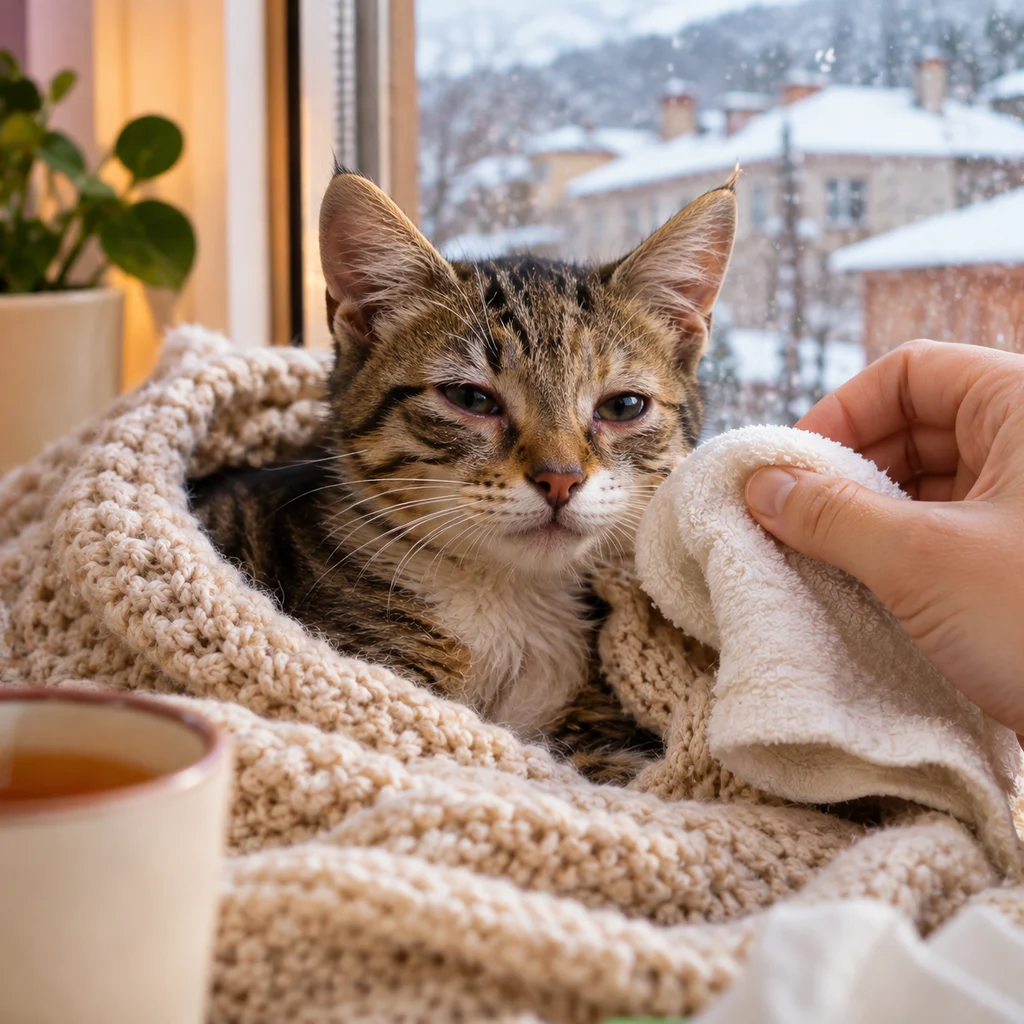

When winter comes, the questions vets hear change too. "I think my cat caught a cold, she keeps sneezing." "My dog came back from the park and he's coughing." These signs, which look a lot like a cold in people, are common in cats and dogs during the winter months as well.
This article will not teach you how to diagnose. Very different causes can sit behind similar signs, and only an exam can tell which one it is. The goal is for you to know what to watch for at home, what can wait and when you should head out without waiting.
Why is it more common in winter?
In winter, animals spend more time indoors. In homes with radiators the air dries out, and the moist layer in the nose and throat thins. Dogs come into close contact with other dogs at parks, the groomer or a boarding facility. With cats, a new cat coming into the home shares the same bowls with the other cats. All of this makes it easier for respiratory infections to spread.
Then there is the cold and the wet. An animal that gets soaked in the rain and lies in a cold corner before drying off puts more strain on its body. You can think of it this way: cold alone does not cause illness, but it can lower resistance.
What signs should you look for in cats?
- Sneezing: A sneeze or two now and then is usually from dust or a smell. Sneezes that keep coming back throughout the day, in fits, need attention.
- Nasal discharge: There is a difference between clear, watery discharge and discharge that is yellow, green or dark. Note its color and smell.
- Eyes: Watering, redness, crusting, keeping the eyes half closed.
- Appetite: Cats care a lot about the smell of their food. A cat with a blocked nose may stop eating because it cannot smell its food. In cats, this is a change you should not ignore.
- Mouth sores or drooling: Some respiratory infections can come with sores in the mouth.
What signs should you look for in dogs?
- Coughing: A dry, honking cough that sounds like a goose and ends with something like gagging, or a wet, productive cough. Recording the sound on your phone makes it easier to describe to your veterinarian.
- Nasal discharge and sneezing: As with cats, pay attention to the color and how long it lasts.
- Willingness to move: Not wanting to go for walks, tiring quickly, hesitating on stairs.
- Breathing: Fast breathing even at rest, the belly working noticeably with each breath.
A cough that starts after time in places where dogs gather can point to a contagious cause. In that case, keeping your dog away from other dogs until it has been examined is a good courtesy.
When to go to the vet without waiting
Some signs are not suited to watching at home. If you see any of these, contact a veterinarian without losing time:
- Difficulty breathing, a cat breathing with its mouth open, nostrils flaring in and out.
- A purplish or pale color on the tongue or gums.
- A cat that has not eaten anything for more than a day.
- Clear weakness, hiding, not wanting to be touched.
- Cloudiness in the eye, keeping the eye shut or a suspected eye injury.
- Any respiratory sign that starts in a young, old or chronically ill animal.
- Signs that start in an animal with incomplete vaccines or one that was recently adopted.
If these signs start at night or on the weekend, you can find an open clinic on the emergency vet page.
What can you do at home until the exam?
With mild signs, and while you wait for an appointment after talking with your veterinarian, here is what you can do to keep your pet comfortable:
- Keep your pet in a warm room without drafts. Put the bed in a warm but airy corner, not right next to the radiator.
- If the air at home is very dry, air out the room regularly and take steps to raise the humidity a little. Letting your pet sit by the bathroom door for a while with a hot shower running is a simple method some vets suggest; ask your own vet first.
- Gently wipe discharge around the nose and eyes with a soft cloth dampened with lukewarm water.
- If your cat's appetite has dropped, warming wet food slightly brings out its smell and can encourage eating.
- Keep the water fresh and easy to reach.
- If your dog's throat is sensitive, use a chest harness instead of a neck collar on walks.
What not to do
Do not give cold medicine, painkillers or leftover old antibiotics from your cabinet. Some human medications pose serious risks to cats and dogs. Do not use menthol ointments or eucalyptus steam near your pet either. Your veterinarian decides on treatment and, if needed, the type and length of any medication.
Keeping observation notes helps
A picture that starts with mild signs can sometimes change within a few days. It is hard to remember what you saw on which day, so keeping a simple log is a good idea. Every day at the same time, check and note:
- How much did your pet eat and drink today?
- Did the sneezing or coughing increase or decrease?
- Did the color of the discharge change?
- How is the interest in play and movement?
- Is the breathing calm at rest?
Counting breaths at rest is another easy way to keep track. While your pet is asleep, count how many times the chest rises and falls in one minute and write it down. Following this number for a few days helps you notice when it goes up. Remember that normal values differ from animal to animal; ask your veterinarian when you should worry.
In homes with several pets
If you have more than one cat or dog, separate the food and water bowls of the pet showing signs, keep its bed apart for a short time and wash your hands after touching it. Have the other pets' vaccination status checked as well. Combination vaccines protect against some respiratory diseases; your veterinarian will tell you which vaccine should be repeated when, based on your pet's age and living conditions.
Why not wait with young and senior pets?
Kittens and puppies lose fluids quickly, and their condition can change even after missing just a few meals. In senior pets, respiratory signs can sometimes be the first sign of a problem with the heart or other organs. That is why, for these two groups, it is a better approach to talk to a veterinarian without waiting, even when the signs look mild.
What should you tell your veterinarian?
Gather the information that will make the exam easier ahead of time: when the signs started, how appetite and water intake are, whether there has been recent contact with other animals and when vaccines were given. If you keep vaccines and health records in the digital pet ID in the DoldurKabı app, you can pull up this information on your phone right away during the exam. You can find an easy way to keep records on the health tracking page.
Frequently Asked Questions
Can a cat's cold spread to people?
Most of the agents that cause respiratory signs in cats and dogs are species-specific. Still, washing your hands after touching a sick animal is a good habit for you and for the other pets at home. If you suspect something specific, ask your veterinarian.
Can I bathe my sneezing cat?
Bathing a cat with respiratory signs in the middle of winter can wear it out more. If needed, clean only the dirty spots with a damp cloth and save the bath for after it recovers.
Should I take my coughing dog for walks?
Short, calm potty breaks are usually enough. Put off tiring walks and places where your dog would meet other dogs until it has been examined.
My newly adopted cat started sneezing. Is that normal?
Cats coming into a new home can develop respiratory signs along with stress and the change of environment. Even so, instead of waiting for it to pass on its own, take your cat for a vet checkup in the first week; you can plan the vaccination schedule at the same visit. You can find nearby clinics in the vet directory.









