

If you and your dog have been stuck on the same issue for a while, say they pull on the leash, bark nonstop when the doorbell rings, or don't come when called, deciding to work with a trainer is a reassuring step. But as the first lesson gets closer, the questions pile up: What should I prepare, what will the trainer do on day one, and what happens if my dog misbehaves during the lesson?
The first lesson is less about teaching your dog something right away and more about a meeting that gets you and the trainer looking at the same picture. The trainer gets to know your dog, and you see how the trainer works. This post is here to help you get the most out of that meeting and set up the weeks that follow the right way.
Before the first lesson: write down your goal
Putting what's on your mind into concrete words makes talking with the trainer much easier. "I want my dog to behave" is a broad wish; "I don't want them jumping on guests" or "I want them to come to me when I call at the park" is a goal you can actually work on. Prepare a short note a few days before the lesson:
- One or two main issues you want to work on
- How long has this behavior been going on, and in what situations does it show up?
- What have you tried so far, and what worked and what didn't?
- Who lives in the home, and how much time does each person spend with the dog?
- Rewards your dog loves: bits of food, a toy, affection
This note saves the trainer from asking hundreds of questions in the first hour, so most of the lesson can go to working with your dog.
Share your dog's history and health
The better the trainer knows your dog, the more on target the plan will be. Tell them your dog's age, when and where you adopted them, their vaccination status, and whether they have any known health problems. With dogs adopted from a shelter or off the street, their history may be unknown; saying so openly helps too.
One point deserves special attention: a sudden change in behavior, for example a dog that used to be calm starting to growl when touched, isn't always about training. Pain or another health problem can also cause changes like this. In that case, the right order is to have a vet check your dog before training.
Getting ready for lesson day
The setting
The first lesson usually takes place at home or near home, somewhere your dog knows. If you're at home, tidy up the lesson area ahead of time, turn off the TV, and if you have other animals, move them to a separate room. If you're outside, picking a less crowded time makes it easier for your dog to focus.
Have these with you
- The collar or harness your dog is comfortable in, plus a sturdy leash
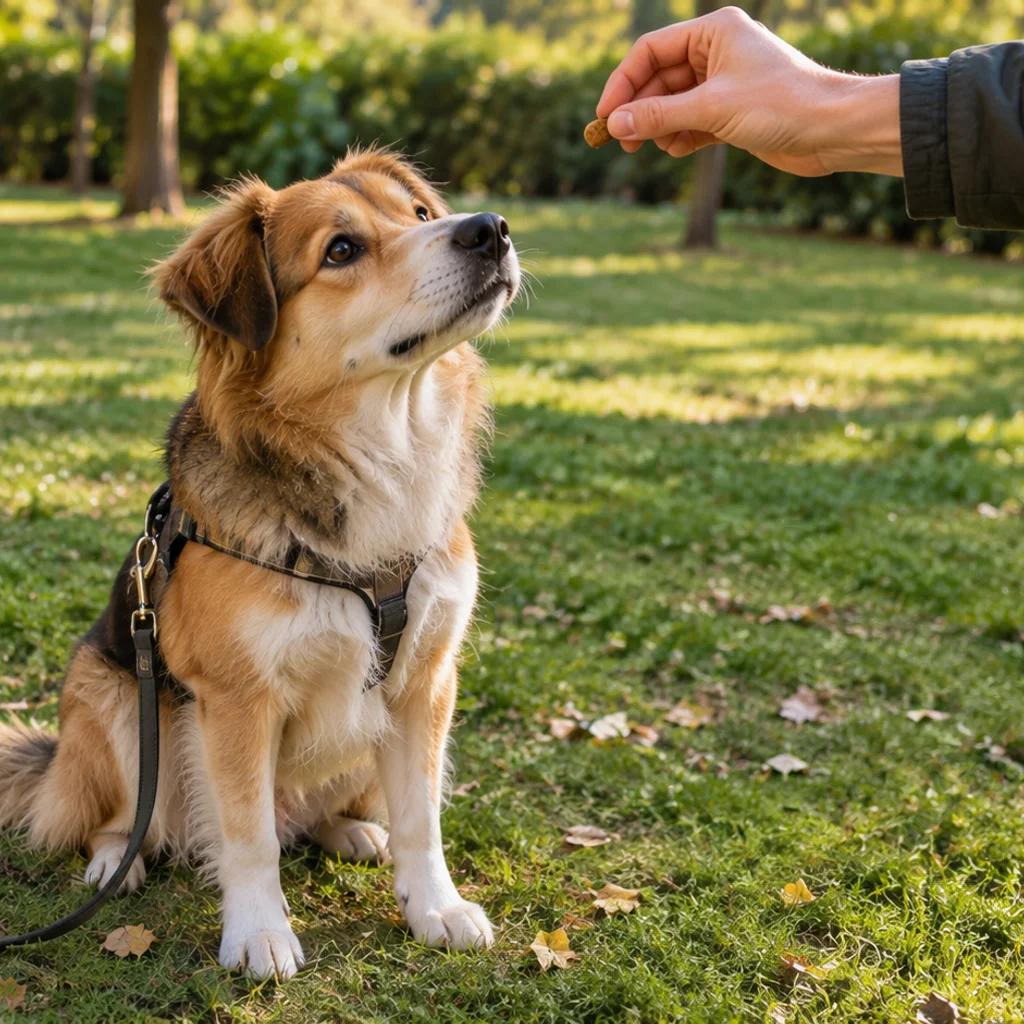
- Treats your dog really loves, broken into small pieces
- A toy they love
- A water bowl and water
- The note you prepared
Balancing hunger and energy
A full stomach right before the lesson can make a dog sluggish, while a very hungry dog gets so focused on treats that they don't hear anything else. Giving the main meal a few hours before the lesson is a balanced start for most dogs. A short walk before the lesson can also help a very energetic dog, but avoid a long run that wears them out; a tired dog has a hard time learning too.
What happens in the first lesson?
Every trainer has their own routine, but the first lesson usually follows similar steps. The trainer first watches your dog for a while: how they approach a stranger, what they do when they hear sounds, how they respond to treats. Then they ask you questions, and you go over the note you prepared together.
After that, a few simple exercises are done. These exercises are meant to see how your dog learns and to show you the method. You'll notice the trainer is working not only with your dog but with you too, because on the days between lessons, you'll be the one working with your dog. This is where you learn how to hold the leash, when to give the treat, and which word to use.
At the end of the first lesson, the trainer usually suggests a plan: how many sessions they have in mind, the order you'll work in, and what you need to do at home.
Questions you can ask the trainer
- What method do you use? Is it reward-based?
- How many sessions do you expect for this goal, and how will we measure progress?
- How much should I practice at home between lessons?
- Can other people in the home join the lessons too?
- If I run into a problem between lessons, how can I reach you?
Signs to watch for
Reward-based methods without punishment protect the trust between you and your dog. If you see your dog being frightened, yanked roughly, or stopped by yelling during the lesson, don't hesitate to question it. Your dog constantly trying to escape during the lesson, tucking their tail between their legs, or freezing up are also signs worth talking about. In a lesson that goes well, a dog stays curious and engaged even when they get tired.
After the lesson: homework
The days between lessons are where training really moves forward. Keeping the trainer's exercises short and regular works better than long, infrequent practice. A few five-minute sessions a day is a good enough start for most dogs.
- Everyone at home should use the same command word. If one person says "come" and another says "here," the dog gets confused.
- End each session with a repetition your dog gets right.
- Keep a short log: what you practiced on which day and how your dog responded. At the next lesson, this log is very valuable to the trainer.
- Slipping back into old habits in a tough moment is normal. Be patient; progress usually has ups and downs rather than moving in a straight line.
If you'd like an idea of your dog's breed-specific energy level and learning tendencies, you can take a look at the dog breeds encyclopedia. Still, every dog has their own character; breed information is only a starting point.
Set realistic expectations
Expecting a habit that has lasted for months to change in one lesson wears out both you and your dog. It makes more sense to measure the first lesson's success not by how much your dog learned but by what you take home with you. If you leave with a clear practice plan, a few simple exercises, and an understanding of what is done and why, the first lesson has done its job.
Until the second lesson, try to notice small changes: Does your dog turn to you faster when they hear their name? Does the barking stop a little sooner when the doorbell rings? These small steps are signs of bigger change to come. If something isn't improving at all or is getting worse, tell the trainer without waiting for the next lesson; the plan can be updated accordingly.
Finding a trainer on DoldurKabı
On DoldurKabı's dog trainer page, you can choose your city, browse the profiles of trainers near you, and decide for yourself who to work with. You can also send your request from the page without downloading the app. Briefly writing the goal you prepared above in your request note lets the trainer see right away whether they're a good fit for you. The session plan, fee, and payment are agreed on between you and the trainer.
Frequently Asked Questions
How long does the first lesson last?
It depends on the trainer and your dog. Since the first lesson includes getting acquainted and observation, it may go a bit differently from later lessons. If you ask the trainer when you send your request, you can plan your day around it.
What if my dog doesn't do anything during the lesson?
This happens a lot. A new person and a new routine can make a dog shy at first. An experienced trainer sees this not as a failure but as information for getting to know your dog.
When should training start with a puppy?
Starting early is helpful for puppy socialization and basic commands. For exercises where your puppy will meet other dogs outside, talk to your vet about the vaccination schedule, and the trainer will suggest a program suited to their age.
Does the whole family need to join the lessons?
It isn't required, but it helps. When everyone who spends regular time with the dog sees the method, you can all be consistent at home.