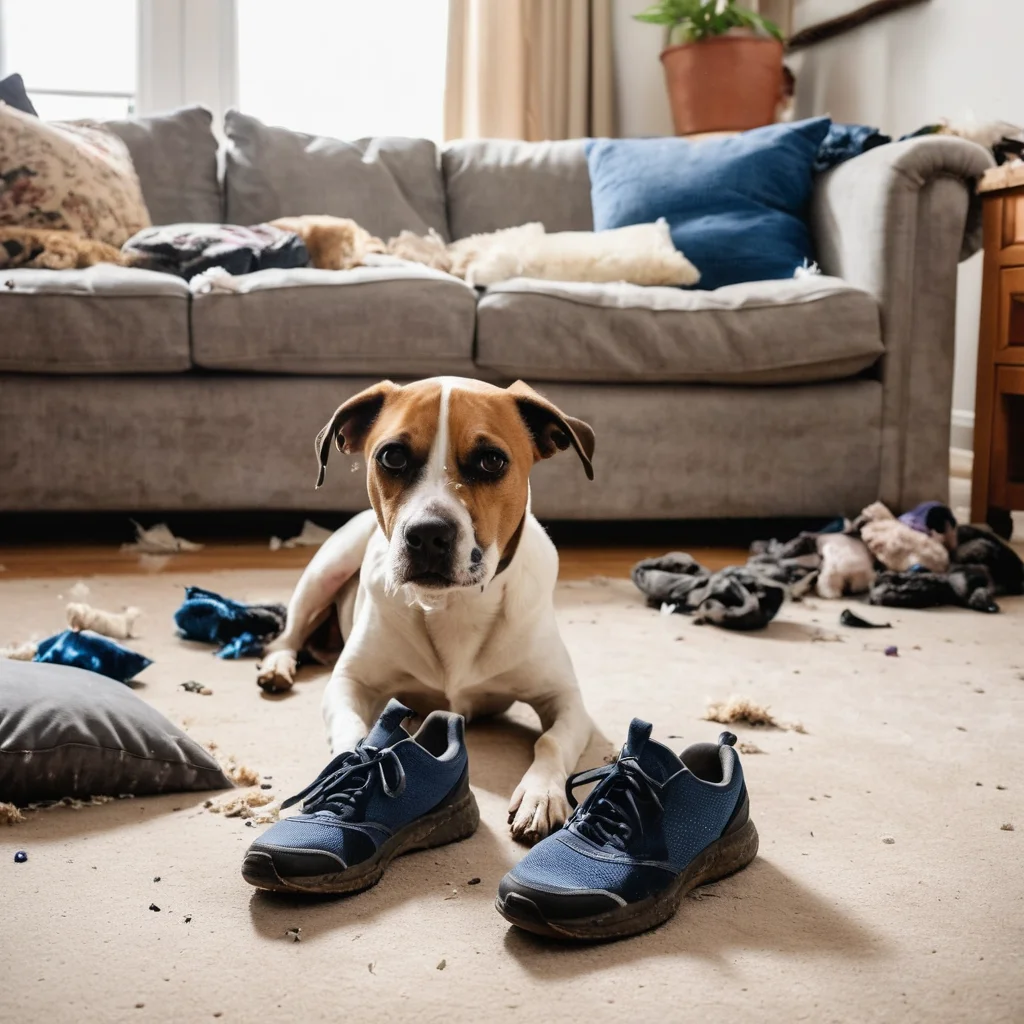

You leave the house, and when you come back the furniture is wrecked, the door is scratched and the shoes are chewed. This classic "destructive behavior" is stressful and costly for owners. It usually comes down to 3 main causes: separation anxiety, boredom or too little exercise, and fear or phobia. If the cause isn't identified correctly, treatment won't work. In this article, we look in detail at the causes of destructive behavior and a treatment protocol.
1. Causes of Destructive Behavior
- Separation anxiety:
- Most intense within 30 minutes of the owner leaving.
- Doors, windows and the owner's belongings are the targets.
- No such behavior while the owner is home.
- Boredom:
- Not enough physical exercise.
- Not enough mental stimulation.
- Usually midday, when boredom peaks.
- Fear/Phobia:
- During thunder and fireworks.
- Attempts to escape through doors or windows.
- Often after a single event.
- Puppy development stage:
- Teething and exploring.
- Normal between 2 and 12 months; not an adult issue.
2. Identifying the Cause
Record video for an accurate diagnosis:
- 30 minutes after the owner leaves: anxiety behavior.
- Midday: boredom.
- Evening (thunder): fear.
- Every time the owner leaves: anxiety; only some of the times: boredom.
- Camera apps: Furbo, Petcube, a basic IP camera.
3. Dog-Proofing Your Home
Prevent damage while treatment is underway:
- Shoes and clothes: Lock them in a closet.
- Cables: Plastic cable protectors.
- Furniture: Bitter apple spray and plastic guards.
- Rugs: Tape them down or roll them up.
- Kitchen: A baby gate.
- Trash: A lidded bin.
- Yard: A high fence and a secure gate.
4. Solving Boredom: Exercise and Mental Stimulation
- Pre-departure exercise: A 30-45 minute walk before you leave.
- Kong with frozen food: Keeps them busy for 30-60 minutes.
- Puzzle feeder: They work to earn their food.
- Snuffle mat: Hidden food, sniffing.
- Chew toy: Bully stick, dental chew.
- Rotation: Swap toys weekly so they feel new.
5. Solving Anxiety
- A separation anxiety treatment protocol (details in our separate article).
- Systematic desensitization.
- Counterconditioning.
- Medication (SSRIs, trazodone) if needed.
- An 8-12 week process.
6. Solving Fear/Phobia
- Identify the trigger (thunder, delivery person, birds).
- Sound desensitization.
- Sileo / trazodone before the event.
- A safe "hiding spot" (bathroom, closet).
- A Thundershirt pressure wrap.
7. Using a Crate
Crate training helps, but use it carefully:
- A crate introduced positively becomes a safe space.
- Only without anxiety, and not for long periods.
- If there is anxiety, a crate does NOT prevent it and sometimes makes it worse (chewing the door, broken teeth).
- 4-6 hours maximum.
- Make the bed comfortable with a Kong and toys.
8. Pet Sitter / Daycare
- Owner away for long days? Solutions:
- Daycare.
- A pet sitter (comes to your home).
- Help from neighbors or family.
- Critical for a puppy or an anxious cat.
- Cost: per day
- The dog gets tired and social, and destruction decreases.
The price depends on the city, the scope, the timing and the animal's weight and age. There is no binding minimum rate for these services; discuss the scope with the provider and get an estimate.
9. Never Do List
- ❌ Punishing after seeing the damage when you get home: the dog can't make the "connection."
- ❌ Rubbing their nose in the damage: wrong learning and trauma.
- ❌ Yelling and hitting: anxiety increases.
- ❌ Judging the dog as "bad": there is a reason.
- ❌ Looking for a fix before finding the cause: identifying the type is essential.
10. When to Get Professional Help
- 3-4 weeks of home intervention isn't enough.
- The destruction is severe and constant.
- The dog is harming itself.
- Life-threatening danger (jumping through a window, swallowing door parts).
- A consultation with a behavior vet.
- Evaluation for medication.
Destructive behavior in dogs is common and treatable, but the cause must be identified correctly. Separation anxiety, boredom, fear and puppy development each need a different treatment. With video recording, cause analysis and the right intervention, most cases improve within 4-8 weeks. In the DoldurKabı app, you can find vet clinics with behavior experience on the map.