


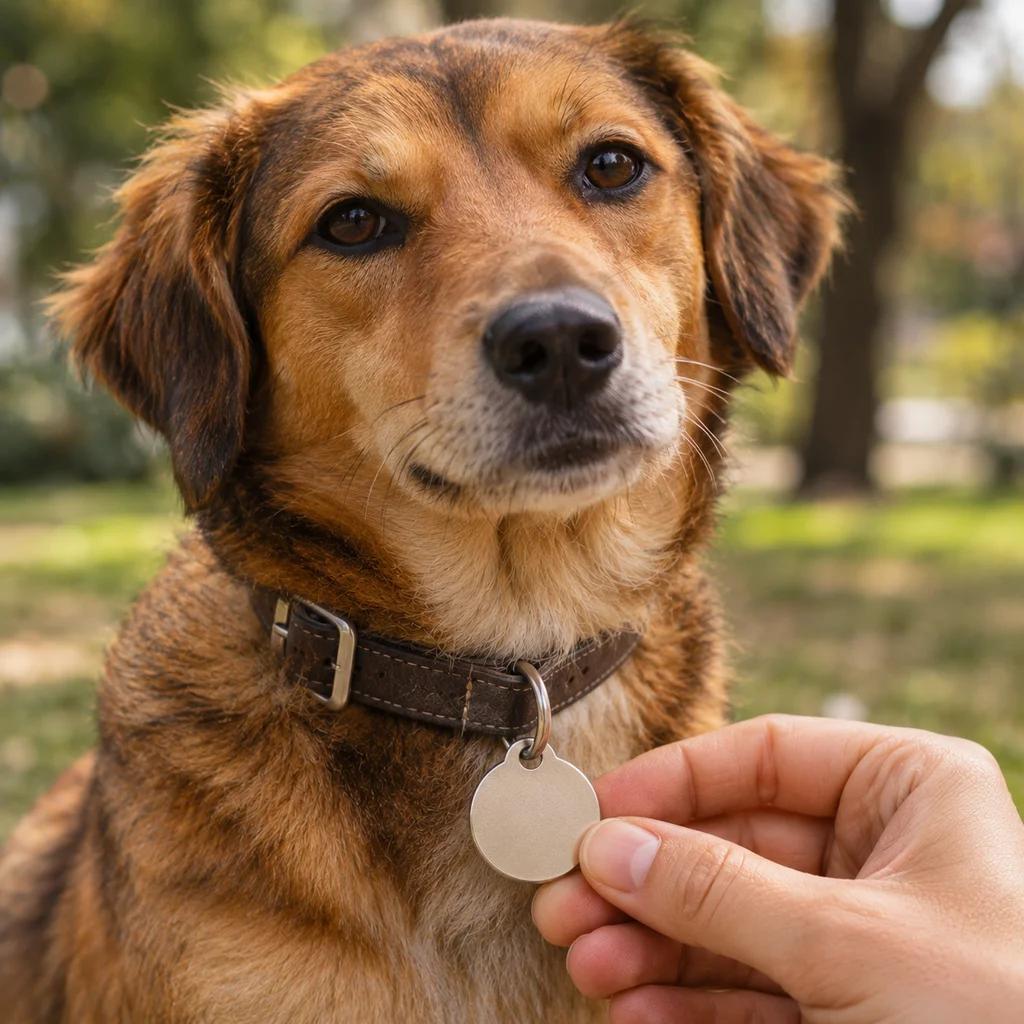

If your pet is microchipped, you have already taken an important step. A microchip sits under the skin, so it can't fall off or get lost. But it has one gap: nobody can see it. A neighbor who finds your lost dog on the street has no way of knowing it's microchipped. They would have to take it to a clinic to be scanned, and the clinic would then have to reach you through the registration. An ID tag, on the other hand, lets the finder call you at a glance.
In this post, we explain why ID tags still matter, what to put on them and how to use them safely on cats.
Microchips and ID tags do different jobs
A microchip is your pet's permanent ID. It's read with a scanner and makes it possible to reach the pet's registered owner. It also matters for documenting who the pet belongs to. In Türkiye, owned cats and dogs need to be identified with a microchip and registered; your veterinarian can give you up-to-date information on this.
An ID tag is a quick way to get in touch. The person who finds your pet can call you without going to a clinic and without needing any device. In the first minutes after a lost pet is found, that difference can matter a lot, because even a well-meaning person may not be in a position to take the animal to a clinic.
In other words, one doesn't replace the other. Used together, they raise the chance that a lost pet makes it back home.
What should you put on the tag?
There isn't much room on a tag, so put what you write in order of priority:
- Phone number: The one thing a tag can't do without. Use a number where you can always be reached. If there's room, you can add a second number.
- "Microchipped": Tells the finder your pet is registered and gives them a reason to take it to a clinic if needed.
- Health note: If your pet takes regular medication, a short note like "on medication" can prompt the finder to call you sooner.
Should you include your pet's name?
Opinions differ on this. Some owners think a person who knows the pet's name can call it over more easily. Others prefer to leave the name off, so someone who wants to keep the animal can't call it by name. Both make sense; it's your call.
What to leave off
You don't need to put your full home address on the tag. A phone number is enough for the finder to reach you. An address puts more personal information on the tag than necessary.
Readability
A tag is a small surface, so the size and simplicity of the text matter. Fancy fonts, long sentences or too much information make it harder to read. Having the number engraved with spaces between groups of digits helps the finder dial it correctly. Checking how the text will look before you order, and trying to read the tag from an arm's length away when it arrives, makes a good test.
Types of ID tags
Tags come in different materials. When choosing, look at durability and readability:
- Engraved metal tags: These last a long time. Deep engraving keeps the text from wearing off over time.
- Silicone or plastic tags: These are light and quiet. Some slide onto the collar, so they don't dangle.
- Collars with a built-in nameplate: Models where the number is stitched right onto the collar or a plate is fixed to it. A good fit if you don't want a dangling tag.
- QR code tags: Scanning one with a phone opens a page. If you choose this type, make sure a written phone number is on it too, because not everyone will think to scan a QR code.
The jingling of dangling metal tags can bother some animals. Watch how your pet reacts to the tag in the first few days.
How should you attach the tag to the collar?
One common reason tags go missing is that the ring holding them to the collar opens over time. A thin S-hook or a weak ring can open and drop the tag when a dog scratches or pushes through a bush. So attach the tag with a sturdy, overlapping steel split ring and make sure the ring is fully closed.
It's safer to attach the tag to the small ring meant for it rather than to the collar's buckle. Every time you wash or change the collar, check that the tag is still there and secure. On long-haired pets, also check that the tag isn't tangling in the fur and pulling.
Safe use for cats
Cats climb, squeeze through narrow gaps and can get their collars caught on things. That's why breakaway collars are recommended for cats. These collars open when a certain amount of force is applied, so the cat doesn't get stuck.
A proper fit around the neck matters too. You should be able to slip two fingers between the collar and the neck. A collar that's too loose can catch in the cat's mouth or around a leg, and one that's too tight is uncomfortable. Get your cat used to the collar gradually: put it on for short periods at first and pair it with enjoyable moments like play or mealtime.
Even for an indoor cat, a tag is worth considering. Indoor cats that slip out often hide somewhere nearby, and the first person to spot them is usually a neighbor. A number on the collar shortens the distance between being found and getting back home.
Practical notes for dogs
On dogs, the tag usually goes on the everyday collar. If you use a harness for walks, you can put a tag on the harness too, but if you take the harness off at home, it's safer for the tag to stay on the collar. A dog can be startled by a noise and slip out of its collar, so it's important for the tag to be on the gear your dog wears most.
For puppies, kittens and newly adopted pets
A pet you have just adopted doesn't know its new home yet, so it may be more likely to run off in the first few weeks. If it bolts out the door or slips its collar on a walk, it may not find its way back. That's why putting a tag on in the first days after it comes home is a good idea. If it has no microchip, or the registration is still in the previous owner's name, bring this up at the first vet visit as well.
Puppies and kittens grow fast, so their collars need frequent checks. A collar that fit a few weeks ago can be too tight on a growing youngster. Check it every week with the two-finger rule, and loosen or replace the collar when needed.
Keep your information up to date
An ID tag and a microchip only work if the information on them is correct. When you change your phone number, move or someone else takes over your pet's care, go over these:
- Is the number on the tag still working?
- Is the contact information in the microchip registration current? You can ask your veterinarian about making changes.
- Has the text on the tag worn down, or has the ring come loose?
Picking up the tag a few times a year and reading the text is a small habit that pays off. Vet clinics near you can help with scanning the microchip and updating the registration.
If your pet goes missing, a tag alone isn't enough
An ID tag and microchip make it easier for your pet to get home once found, but they don't replace searching. If your pet goes missing, you need to search the area right away, let your neighbors know and post a lost pet listing. You can also keep an eye on listings posted for found pets on the lost pet listings page.
Frequently Asked Questions
If my pet is microchipped, does it still need an ID tag?
Yes. A microchip can't be seen, and a device is needed to scan it. An ID tag lets the finder call you right away. Used together, they complement each other.
Should my indoor cat wear an ID tag?
It can, in case your cat slips out a door or window. For cats, it's important to choose a breakaway collar and make sure it fits the neck properly.
Do I need to put my address on the tag?
No. A phone number is enough for the finder to reach you. Leaving off your full address helps protect your personal information.
Is a QR code tag enough on its own?
A QR code can be handy for sharing extra information, but not everyone will think to scan it, and their phone may not have internet access. It's safer to have a written phone number on the tag too.









