


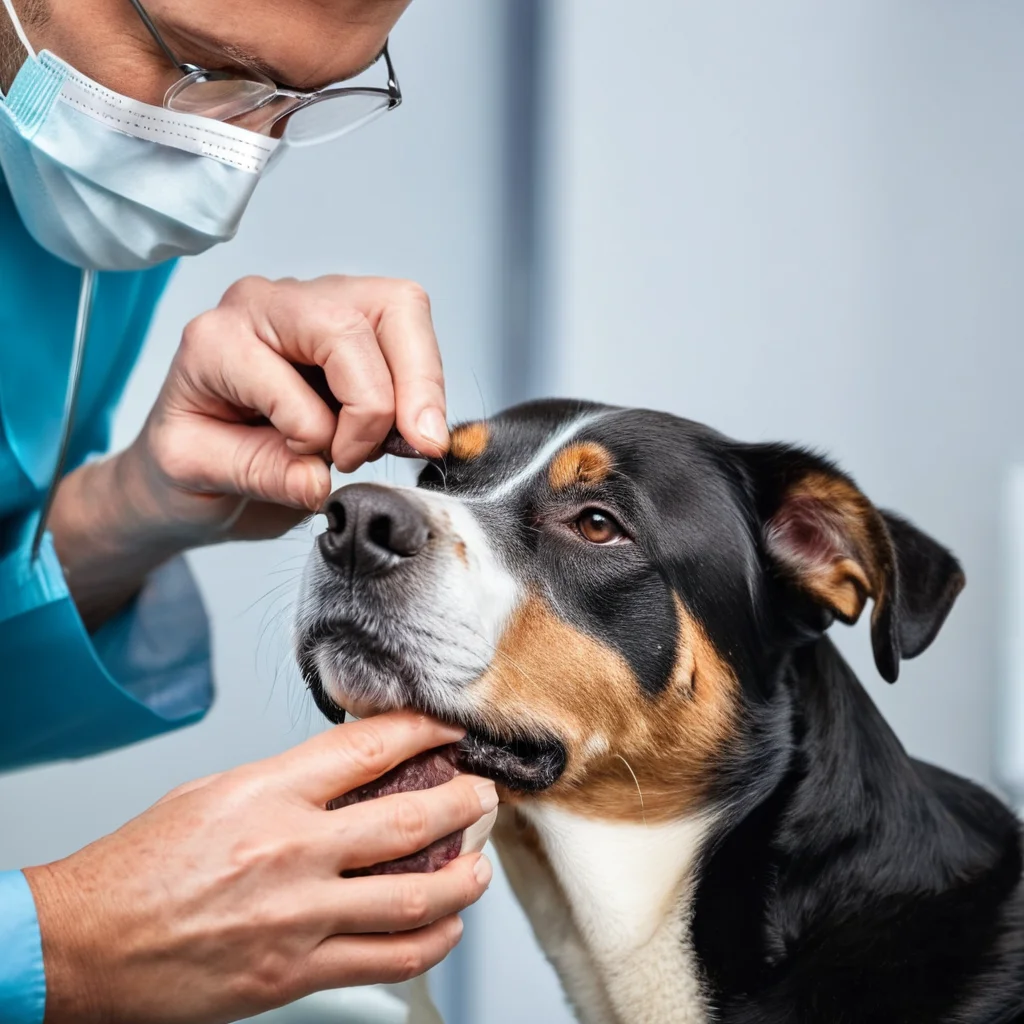

Mast cell tumor (MCT) is the most common skin cancer in dogs. Mast cells (cells of the immune system) multiply malignantly. It shows up as a skin nodule, but histamine released from mast cells creates a risk of GI ulcers and bleeding. Breeds such as the Boxer, Bulldog and Boston Terrier are predisposed. Early surgical excision and the grade score determine treatment. In this article we look at MCT in detail.
1. What Is MCT?
- Mast cell: plays a role in immune and allergic reactions, releasing histamine, heparin and cytokines.
- Malignant multiplication → tumor.
- 20% of skin cancers in dogs are MCT.
- Mostly in the skin, but sometimes in internal organs (splenic, GI).
2. What MCT Looks Like
- A nodule in or under the skin.
- Size ranges from millimeters to centimeters.
- The surface may be red, hairless and slightly ulcerated.
- Firmness varies.
- Its appearance is hard to tell apart from "other tumors/benign masses", so a biopsy is essential.
- Some MCTs swell and shrink ("waxing and waning", Darier's sign).
3. Histamine Release and Systemic Signs
- GI ulcers: Vomiting (sometimes with blood), loss of appetite, diarrhea.
- Bleeding disorders: Heparin release disrupts clotting.
- Anaphylactic shock: A large tumor or heavy handling can be life-threatening.
- Itching and redness: Around the tumor and on distant skin.
- Low blood pressure.
4. Diagnosis
- Fine needle aspiration (FNA): Usually gives a definitive diagnosis. Mast granules are distinct.
- Incisional or excisional biopsy: Assesses the grade and surgical margins.
- Blood test: Anemia and bleeding disorders.
- Abdominal ultrasound: Assesses metastasis (spleen, liver, lymph nodes).
- Lymph node cytology.
- Mitotic index and KIT mutation: Prognosis.
5. Grade Score (3-tier Patnaik or 2-tier Kiupel)
Patnaik:
- Grade I (low): Superficial skin. Good prognosis. Excision is enough.
- Grade II (intermediate): The hardest, with variable behavior. Additional treatment may be needed.
- Grade III (high): Deep invasion. High risk of metastasis. Aggressive treatment.
Kiupel (modern):
- Low grade: 93% 1-year survival.
- High grade: 46% 1-year survival.
6. Treatment (Surgery)
- Wide excision is ESSENTIAL: a 2-3 cm margin of healthy tissue plus 1 fascial layer underneath.
- Incomplete excision = recurrence.
- In difficult locations (face, paw), complete excision is hard, so radiation therapy is used as a complement.
- Antihistamine plus H2 blocker before excision (to prevent anaphylaxis).
7. Additional Treatments
- Radiation therapy: For incomplete excision and high grade.
- Chemotherapy:
- Vinblastine plus Prednisone.
- Toceranib (Palladia), a tyrosine kinase inhibitor specific to MCT.
- Lomustine (CCNU).
- Antihistamine plus H2 blocker (Famotidine): For all MCTs.
- Stelfonta (tigilanol tiglate): A local injection that breaks down the tumor; a new treatment.
8. Predisposed Breeds
- Boxer (the most predisposed).
- Bulldog (English, French, Boston).
- Golden and Labrador Retriever.
- Shar-Pei (high grade is more common).
- Rottweiler.
- Beagle.
- Doberman.
- Schnauzer.
- Pug.
9. Early Diagnosis (Vital)
- A new skin nodule on your dog → NO waiting 2-3 weeks.
- Have an FNA done right away.
- Early excision = curative in most cases.
- Owners should do a weekly full-body check (especially for predisposed breeds).
10. Prognosis Table
- Low grade plus complete excision: 85-90% at 5 years, plus recovery.
- Intermediate grade plus complete excision plus additional treatment: 60% at 2 years.
- High grade plus multimodal treatment: 20-30% at 1 year.
- With metastasis: 6 months.
Mast cell tumor is the most common skin cancer in dogs, and with an informed owner it can be caught early and cured. The formula new nodule → FNA → early surgery saves lives. Owners of predisposed breeds should check their dogs weekly. Treatment is multimodal, so a vet with oncology experience is critical. In the DoldurKabı app you can find vet clinics with oncology services on a map.









