
Emergency preparedness is about reaching the right information quickly, even before you put a few supplies in a bag. During a care job, the owner may be out of town, out of cell range, or their regular clinic may be closed. If you prepare a one-page emergency card before they leave, you won't have to dig through message history in a stressful moment.
Rather than explaining from scratch how to get started in the profession, this article focuses only on “Emergency Prep in Pet Care: What to Get Before the Owner Leaves.” To build a workable system, you'll first define the scope, then put the record-keeping and communication steps in place. Using the same checklist order with every client cuts down on improvised decisions that change from person to person.
Write down the chain of contacts
Keep the owner's primary and alternate numbers, a backup person to call if the owner can't be reached, and the limits of that person's authority all in one place. Don't let it get mixed up who only receives updates and who can take part in decisions. Have the owner confirm that the information is current for the care period.
When you apply this step, base your decision on visible information, not assumptions. For writing down the chain of contacts, record what was discussed in a dated note, confirm that the other side understood, and don't keep going on an old agreement when conditions change. Clearing up a small uncertainty before the job starts is safer than making a rushed decision during care.
Set up a two-layer vet plan
Along with the regular clinic's name, phone number and address, have an alternative to use when it's closed. Check the options ahead of time on the Vets and emergency vet pages. In an emergency, reconfirm the distance and opening hours.
When you apply this step, base your decision on visible information, not assumptions. For setting up a two-layer vet plan, record what was discussed in a dated note, confirm that the other side understood, and don't keep going on an old agreement when conditions change. Clearing up a small uncertainty before the job starts is safer than making a rushed decision during care.
Keep the health summary simple
Record known illnesses, allergies, current medications and where the written vet instructions are kept. Don't add your own interpretation or an estimated dose. At the slightest uncertainty about giving something, stop, call the owner and refer to the vet.
When you apply this step, base your decision on visible information, not assumptions. For keeping the health summary simple, record what was discussed in a dated note, confirm that the other side understood, and don't keep going on an old agreement when conditions change. Clearing up a small uncertainty before the job starts is safer than making a rushed decision during care.
Learn the transport and access route
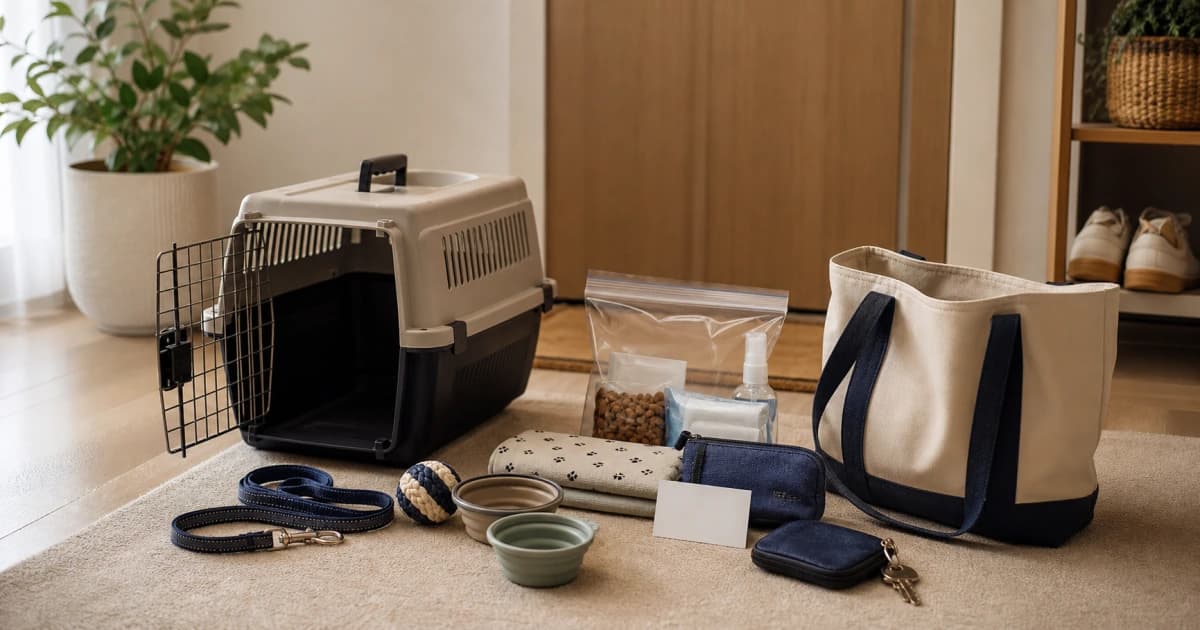
Have the owner show you where the carrier, collar, harness and towel are kept. Think through how to get out of the building, transport options and the route to the clinic. If you can't move the animal safely, say so before care begins and ask for an alternate person to be named.
When you apply this step, base your decision on visible information, not assumptions. For learning the transport and access route, record what was discussed in a dated note, confirm that the other side understood, and don't keep going on an old agreement when conditions change. Clearing up a small uncertainty before the job starts is safer than making a rushed decision during care.
Note home-related risks
Get only the information you might actually need, such as the breaker box, main water valve, alarm and fire exit. Don't attempt electrical or gas work you aren't qualified for; leave the home and call the owner and the relevant emergency service. Plan a safe handoff without putting the animal at risk.
When you apply this step, base your decision on visible information, not assumptions. For noting home-related risks, record what was discussed in a dated note, confirm that the other side understood, and don't keep going on an old agreement when conditions change. Clearing up a small uncertainty before the job starts is safer than making a rushed decision during care.
Keep the card accessible but protected
Don't collect unnecessary personal data, and don't leave the card out in the open. Set up your own system with a secure record on your phone and a printed backup; when the job ends, review how long you'll keep it. For a framework on professional preparation, see the in-home cat sitting guide.
When you apply this step, base your decision on visible information, not assumptions. For keeping the card accessible but protected, record what was discussed in a dated note, confirm that the other side understood, and don't keep going on an old agreement when conditions change. Clearing up a small uncertainty before the job starts is safer than making a rushed decision during care.
How do you keep a decision record?
Record not only the outcome of each decision you make on this, but also the information it was based on. Keep the detail the client gave, your own observation, the method you agreed on and any later change visible separately. Instead of scattering messages across different apps, use a single record thread for the job. That way, when the question “did we talk about this?” comes up during care, you won't be relying on memory.
The language of the record should be short, neutral and limited to what the job needs. Don't add personal opinions, diagnoses, blaming language or unnecessary private information. For example, if a problem comes up, write only what was seen and when, who was called and what answer you got. If a photo is needed, take it without capturing private areas of the home or personal documents. When the job ends, also review which information you'll keep and for how long.
Do a small trial run before the first job
See whether your system on paper works in real life with a low-risk trial run. While the owner is there, check that the key opens the door, that the contact numbers are current, where the needed equipment is, and the reporting channel. This trial run isn't a sign of mistrust; it's a practical check showing that both sides understand the same process.
Don't cover up a gap you find during the trial run with temporary fixes. If it can be fixed before the job starts, confirm the new setup in writing; if it can't be made safe, postpone or decline the job. Especially if there are health symptoms, an escape risk or a problem with access to the home, don't give in to pressure to rush. A calm postponement is a more responsible decision than a promise of care made under unclear conditions.
A short, practical checklist
- Confirm the scope and critical information in writing before starting.
- Postpone or decline anything that goes beyond safety or your skill limits.
- During care, record only observable information, with date and time.
- When something changes, get the owner's approval; don't proceed on a verbal assumption.
- When the job ends, close out the handover, report and any payment record in the same file.
This list won't solve every scenario on its own; its purpose is to keep critical steps from being forgotten. Simplify it regularly to fit the way you work, but try not to remove the animal safety, clear communication and record-keeping items.
Frequently Asked Questions
Who should fill out the emergency card?
The pet owner should provide the information; the sitter should ask about anything missing and confirm it's current before care begins. Double-check the answer against your own service terms and current information; close any uncertainty in writing before the job starts.
Should I give first aid?
Only carry out safe steps that are within your training and skills; don't improvise specific maneuvers or medications, and refer to the vet. Double-check the answer against your own service terms and current information; close any uncertainty in writing before the job starts.
Should payment information be on the card?
It can say how communication about clinic costs will be handled; don't collect sensitive financial information unnecessarily. Double-check the answer against your own service terms and current information; close any uncertainty in writing before the job starts.