


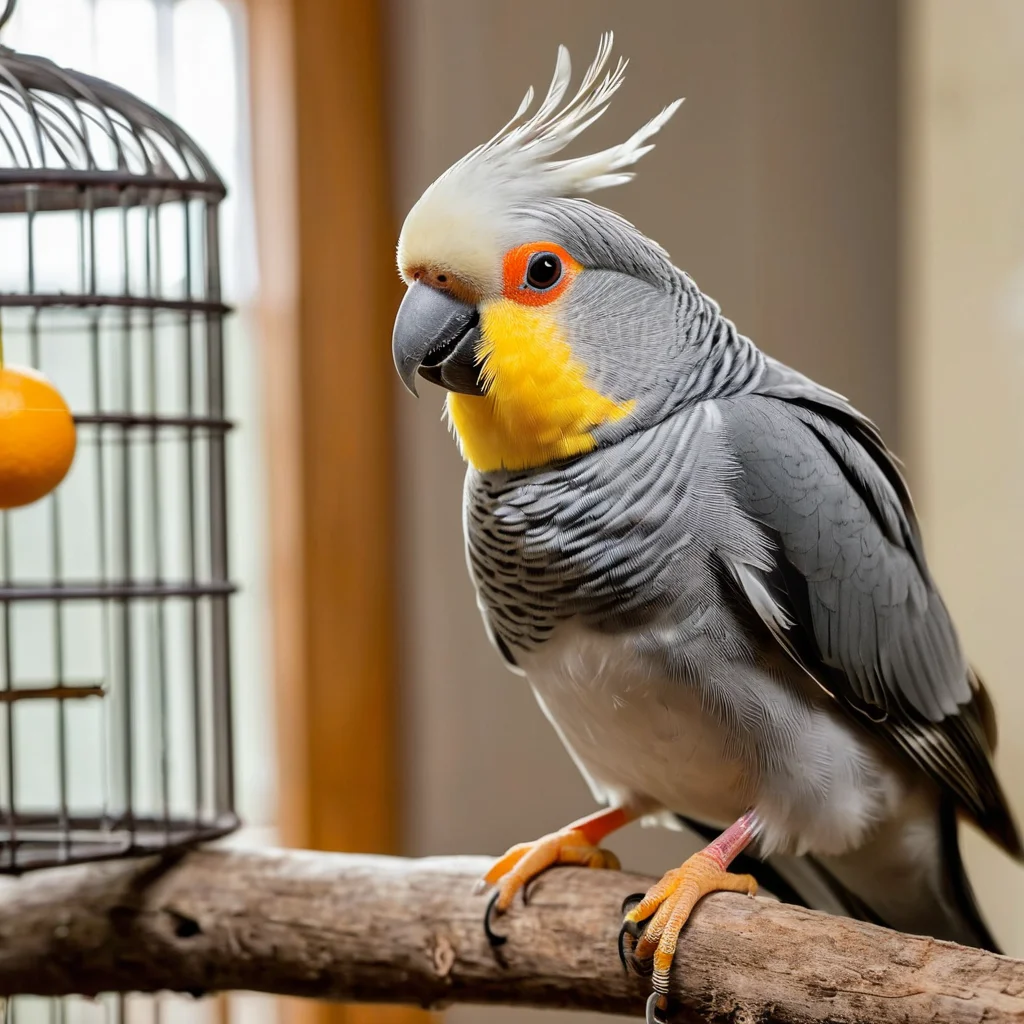

With its expressive crest, orange cheek patches and curious gaze, the cockatiel is a charming companion that settles easily into home life. This medium-sized parrot from Australia is a balanced choice for both beginners and experienced bird lovers: larger than a budgie, yet much easier to care for than the big parrots.
What makes the cockatiel special is the strong bond it forms with people and its talent for whistling. With the right care, this bird can live 15-20 years, which means a long-term friendship. So before you decide, you need to know all of its needs, from cage setup and diet to noise level and health checks.
In this guide, we go step by step through the cockatiel's personality, its cage and space needs, its diet, whistle training and common health problems. For encyclopedic details like origin and color mutations, you can also check out our cockatiel encyclopedia page.
The Cockatiel's Personality: Its Crest Gives Away Its Feelings
The crest on a cockatiel's head is not just a pretty detail; it works almost like a mood gauge. If the crest stands straight up, your bird is curious or excited; if it sits slightly back and relaxed, it is calm and happy. If the crest is pressed flat against the head and the bird is hissing, it is scared or upset. Learning to read this living barometer will greatly strengthen your communication with your bird.
In personality, cockatiels are affectionate, people-focused and social birds. They love sitting on your shoulder, getting head scratches and being right in the middle of family life. Males are usually chattier and whistle more; females tend to have a calmer temperament. This sociability also brings responsibility: a cockatiel left alone for long periods gets bored and may start screaming or plucking its feathers. At least an hour or two of one-on-one attention a day is a basic need for this species.
Choosing a Cage and Space Needs
The cockatiel's long tail is a detail most people overlook when choosing a cage. In a narrow cage, the tail constantly rubs against the bars and the feathers get worn. For a single bird, choose a cage at least 60 cm wide that allows horizontal movement rather than just height; bigger is always better. Bar spacing should be around 1.5-2 cm so the bird cannot get its head stuck.
- Perches: Natural wooden branches of different thicknesses protect foot health. Sandpaper-covered perches irritate the soles of the feet, so do not use them.
- Location: Place the cage in a room where the family spends time but with no drafts, with one side close to a wall. The kitchen is absolutely not suitable; fumes from Teflon cookware can be deadly for birds.
- Light schedule: 10-12 hours of darkness and quiet at night, plus indirect daylight during the day, creates the ideal rhythm.
No matter how big the cage is, it cannot meet the need to fly on its own. At least an hour of free flight a day in a safe room with windows and doors closed is necessary for both muscle health and mental satisfaction.
Diet: Seed Mix Alone Is Not Enough
Cockatiels fed only a seed mix face the risk of fatty liver and vitamin deficiencies over time, because birds pick out the fatty seeds in the bowl, especially sunflower seeds, and leave the rest. A balanced plate should look like this:
- Quality pellet food: This should make up the main part of the daily diet; it offers much more balanced nutrition than seeds.
- Seed mix: Do not cut it out completely, but keep it limited. Save fatty seeds like sunflower seeds as training treats.
- Fresh vegetables: Dark leafy greens, carrots, broccoli, zucchini and peppers can be offered every day in small portions.
- Fruit: Fruits like apples, bananas and strawberries a few times a week, in small amounts, are enough.
- Calcium: A cuttlebone should always be in the cage; it is especially important for females.
Avocado, chocolate, caffeine, alcohol, onion, garlic and fruit pits are toxic to birds; never give them. Refill the water bowl with fresh water every day. One more warning: mistaking the empty husks that pile up in the food bowl for full seeds is a common beginner mistake, so check the bowl every day by blowing the husks off or sifting it.
Whistle and Melody Training
Whistling is where the cockatiel shines. Its vocabulary is not as large as the big parrots', but it is surprisingly good at imitating melodies; males in particular can pick up short tunes in a few weeks.
When should you start?
Training requires a bond of trust first. Once your bird starts stepping onto your hand and feeling at ease around you, you can move on to whistle practice. Young birds usually learn faster, but an adult cockatiel can also learn a melody with the right patience.
Teaching a melody step by step
- Pick a short, simple tune. Long pieces are hard for the bird; a motif of four or five notes is ideal.
- Repeat the same tune the same way in every session. Different versions are confusing.
- Do sessions of five to ten minutes, two or three times a day. Morning and late afternoon are the times when birds naturally vocalize.
- Reward the bird right away when it starts trying; a favorite treat or a head scratch works as reinforcement.
- Be patient. The first clean repeat may take a few weeks, but after that things move much faster.
The Truth About Noise Levels and How They Differ from Budgies
The cockatiel is not a quiet bird; knowing this from the start prevents disappointment. Morning and late afternoon are its natural calling times; your bird is doing a roll call for its flock, which means you. Its noise level is reasonable, nothing like the big parrots, and it does not cause problems in most apartment settings; still, keeping a bird may not be the right choice for someone who expects total silence.
So how is it different from a budgie? Both are beloved cage birds, but their personalities are clearly different:
- Size and lifespan: The cockatiel is both larger and longer-lived; a budgie usually lives 7-10 years, while a cockatiel can reach 15-20 years.
- Talking vs. whistling: Budgies are more talented at imitating words; the cockatiel's strength is melody and whistling.
- Temperament: Cockatiels are usually calmer and more cautious; budgies are more active and chirpy.
- Feather dust: Cockatiels produce a powder-like dust in their feathers; people with allergies should know this ahead of time.
To compare different species and choose a bird that suits your lifestyle, you can also look at the other species in our bird encyclopedia.
Feather Care and Common Health Problems
Cockatiels handle most of their feather care themselves, but there are areas where you need to help. A light misting with lukewarm water a few times a week, or the chance to bathe in a shallow dish, reduces feather dust and keeps feathers healthy. Molting once or twice a year is normal; your bird may get a little grumpy during this time.
A known trait of the species is night fright: in the dark, a sudden sound or change in light can make it panic and thrash around in the cage. Putting a dim night light in the room and covering the cage only partly, not fully, greatly reduces these panic moments.
Signs to watch for: constantly fluffed-up posture, loss of appetite, changes in droppings, wheezy breathing, discharge from the nostrils and feather plucking. Birds instinctively hide illness; by the time you notice symptoms, the problem has usually progressed. So if anything seems off, do not wait; see a vet who treats birds. You can find clinics near you on our vet page. Egg binding in females and liver problems on a diet heavy in fatty seeds are known risks in this species.
Frequently Asked Questions
Can cockatiels talk?
Yes, though only a little. Male cockatiels in particular can imitate a few words or short phrases, but the species' real talent is whistling and melody. If a talking bird is your priority, you will need to adjust your expectations accordingly.
Should you keep one cockatiel or a pair?
If you can set aside plenty of time each day, a single bird will bond more closely with you and tame more easily. If you have a busy life, getting a pair reduces the bird's loneliness stress; however, since pairs focus on each other, they usually pay less attention to people.
Why does my cockatiel thrash around in its cage at night?
This is most likely night fright. A sudden noise, a beam of light or a vibration makes the bird panic. A dim night light, keeping the cage in a calm spot and partly covering the top usually solves the problem. If you notice wounds on the wings after thrashing, consult your vet.
How long does it take to learn to whistle?
It depends on the bird, the length of the tune and your practice routine. A short motif can come within a few weeks of regular practice; some birds need months. Regular repetition, short sessions and rewards are the three main factors that shape the process.









