
Ever since your adopted dog came home, they won't leave the corner, they pull back when you reach out and they jump at the sound of the door. Maybe they had hard days on the street, maybe they grew up without meeting enough people, or maybe they're just shy by nature. Whatever the reason, it is possible to build trust with a shy dog. It just takes time, patience and following their pace.
In this post, we explain the path a shy dog can take in the first weeks, what works and what to avoid.
First, read their language
Frightened dogs don't tell you by barking; they tell you with small signals. Recognizing these signals helps you know when to back off instead of pushing them.
- Tail tucked between the legs
- Ears pinned back, body lowered
- Frequent lip licking, yawning, turning the head away
- The whites of the eyes showing, freezing in place
- Hiding, moving away or trembling
When you see one of these signals, stop what you're doing and give them a little distance. The more the dog notices their signals are being heard, the more they'll trust you.
The first days: give them space, don't set expectations
For a shy dog, a new home means new sounds, new smells and new people. In the first days, don't expect them to show affection, play or climb into your lap. The only goal of this period is for them to feel safe.
- Set up a safe spot: Put their bed in a quiet corner of the home. A sheltered space, like a covered crate or the area under a table, comforts most shy dogs.
- Don't touch that spot: While they're in their safe space, don't try to pet them or pull them out. Let it be their untouchable place.
- Keep the home calm: Put off having guests, loud music and crowded settings for the first weeks.
How to approach: sit next to them, don't lean over them
The ways people show affection can feel like a threat to a shy dog. Direct eye contact, leaning over them, reaching out to pat their head, walking straight toward them. Instead:
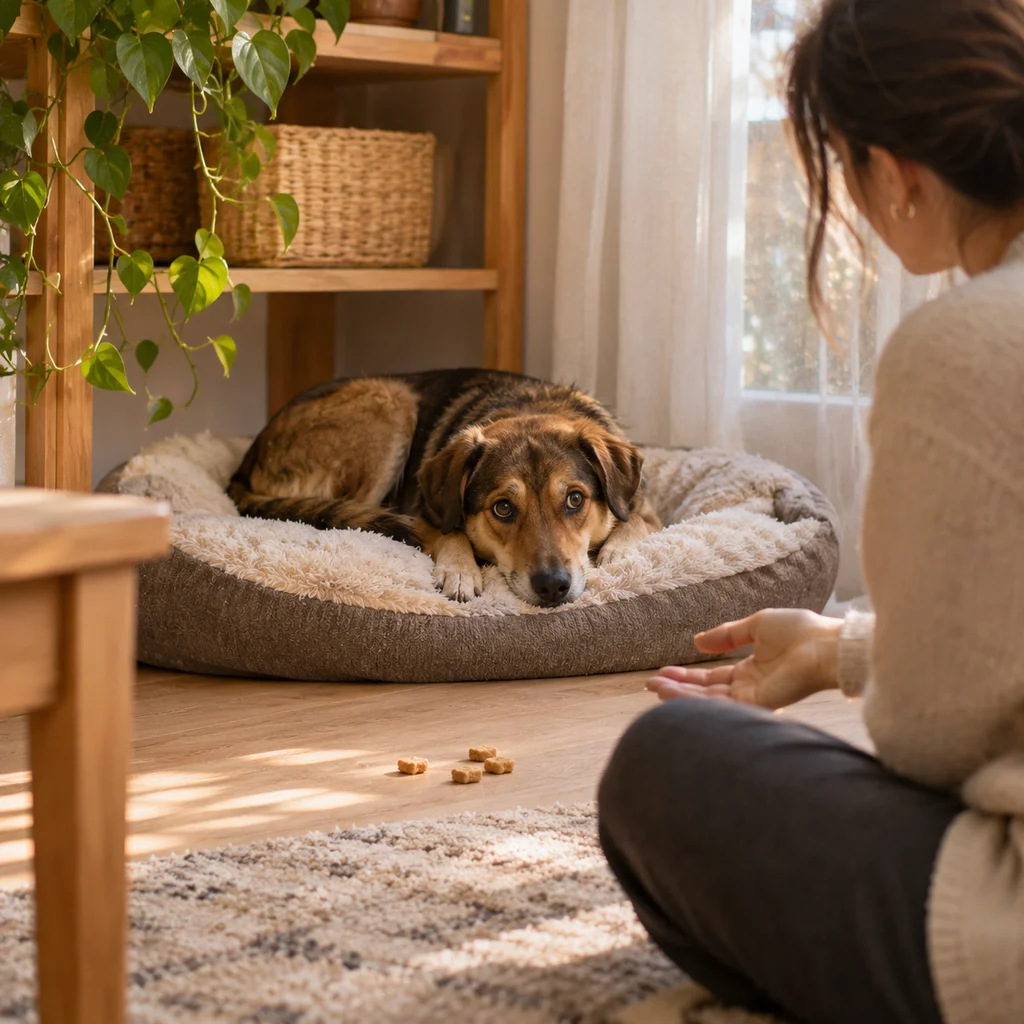
- Sit on the floor in the same room, a little way off, and go about your own business. Read a book, look at your phone.
- Turn your side or your back to them. This posture doesn't put pressure on the dog.
- Speak in a low, calm voice and avoid sudden movements.
- If they come to you on their own, let them sniff your hand slowly, then briefly stroke their chest or shoulder. Stay away from the top of their head in the first days.
When the dog backs away, don't follow. As they learn that contact is their decision, they'll come to you more often on their own.
Make food and treats a tool for trust
Food can be a bridge between you and a shy dog. When you give them their food, set the bowl down and walk away; don't watch them eat. After a few days, start sitting a little way off after you set the bowl down. Over time, shorten the distance.
During the day, as you walk past, drop a treat on the floor without asking for anything and keep walking. That way, you passing by becomes a sign that something good is coming. For treats, you can use pieces of the pet food they're used to. If you want to try a new food, it's a good idea to check with your veterinarian.
Routine is the foundation of trust
For shy dogs, predictability is very comforting. Food at the same times every day, walks at the same times, sleep at the same times. A dog that knows what's going to happen is less afraid that something unexpected will happen. It's also important for everyone in the household to follow the same rules; if one person pushes the dog and another gives them space, the dog gets confused.
Introducing the things that scare them
Take note of what your dog is afraid of: the doorbell, the vacuum cleaner, someone wearing a helmet, a bicycle, a particular sound. It's not always possible to hide these from them completely. But throwing them into the middle of what they fear also makes the fear grow.
A gentler way is to let your dog meet the scary thing from a distance where they can stay relaxed. For example, put the vacuum cleaner in a corner of the room while it's off and give a treat when they walk past it. If the dog is comfortable at this distance, move it a little closer after a few days. Move forward one step at a time without rushing. If you see signs of fear, go back to the previous step.
Going outside: watch out for the risk of escape
It's common for shy dogs to startle at a sound outside, slip out of their collar and get lost. That's why you should double your safety measures on the first walks:
- Use a well-fitting harness that's hard to slip out of.
- Put a collar on along with the harness, and if possible, hold the two with separate attachments.
- Make sure the tag on the collar has a current phone number, and check that the microchip registration is up to date.
- Take the first walks at quiet times, on quiet streets.
Short, enjoyable walks are worth more than long, stressful ones. If your dog shows they want to head back, go along with it.
Your calm matters too
Dogs read people's tone of voice, movements and tension very well. Someone who rushes, speaks loudly or gets upset and flustered about a shy dog's fear sends them the message "something is wrong here" without realizing it. So when you're with them, try to move slowly, breathe deeply and keep your voice low.
When your dog is afraid of something, stay calm instead of reacting strongly, give them room and leave them a way to move away from what scares them. Your steadiness becomes an anchor for them.
If there's a calm dog at home
If you have another confident, calm dog at home, a shy dog can learn a lot from them. The calm dog's relaxed behavior at the doorbell or on walks can help the newcomer relax too. Still, don't rush when introducing the two dogs, and make sure the shy dog always has a space they can retreat to.
Measure progress in small steps
Progress with a shy dog isn't a straight line. Some days you may go one step forward, other days two steps back. Coming to you for the first time and resting their head on your knee, looking instead of hiding when the door opens, lifting their tail a little on a walk: these are small but meaningful signs. Noticing them helps you stay patient.
If the fear isn't easing after weeks, if they have stopped eating, or if fear starts turning into aggression, talk to a veterinarian. Pain or another health problem can sometimes increase fear. If needed, the veterinarian can refer you to a specialist experienced in behavior.
If you're thinking about adopting a shy dog, look carefully at the personality notes in adoption listings and ask the person who posted the listing what the dog is afraid of. A step taken with that knowledge makes for a more peaceful start for both of you.
Frequently Asked Questions
How long does it take a shy dog to settle in?
It depends on the dog and their past. Some open up within a few weeks; for others it can take months. Following their pace works better than trying to speed things up.
Should I hug them to calm them down when they're scared?
Some dogs draw strength from close contact, while others find a hug even more overwhelming. If your dog comes and leans against you on their own, stay calmly beside them. If they want to move away, give them space.
What should I do when guests come over?
Keep guests to a minimum in the first weeks. When guests arrive, let your dog stay in their safe space and ask guests not to try to pet them. If the dog approaches on their own, a guest can drop a treat on the floor.
My shy dog won't go potty outside. What should I do?
Frightened dogs can hold it because they can't relax outside. Pick a quiet spot near home that's always the same, take them there at quiet times and don't rush. When they go, praise them in a calm voice. If they go a long time without going potty, check with your veterinarian.