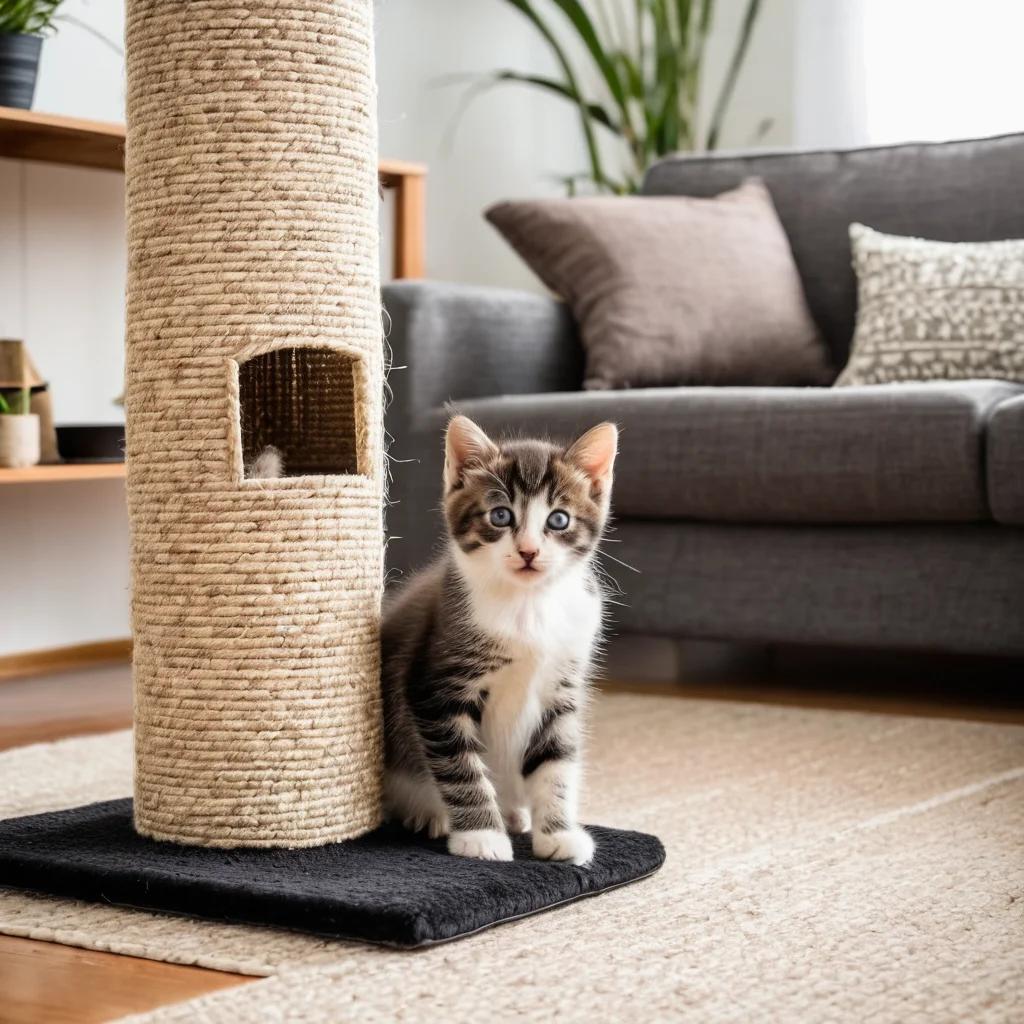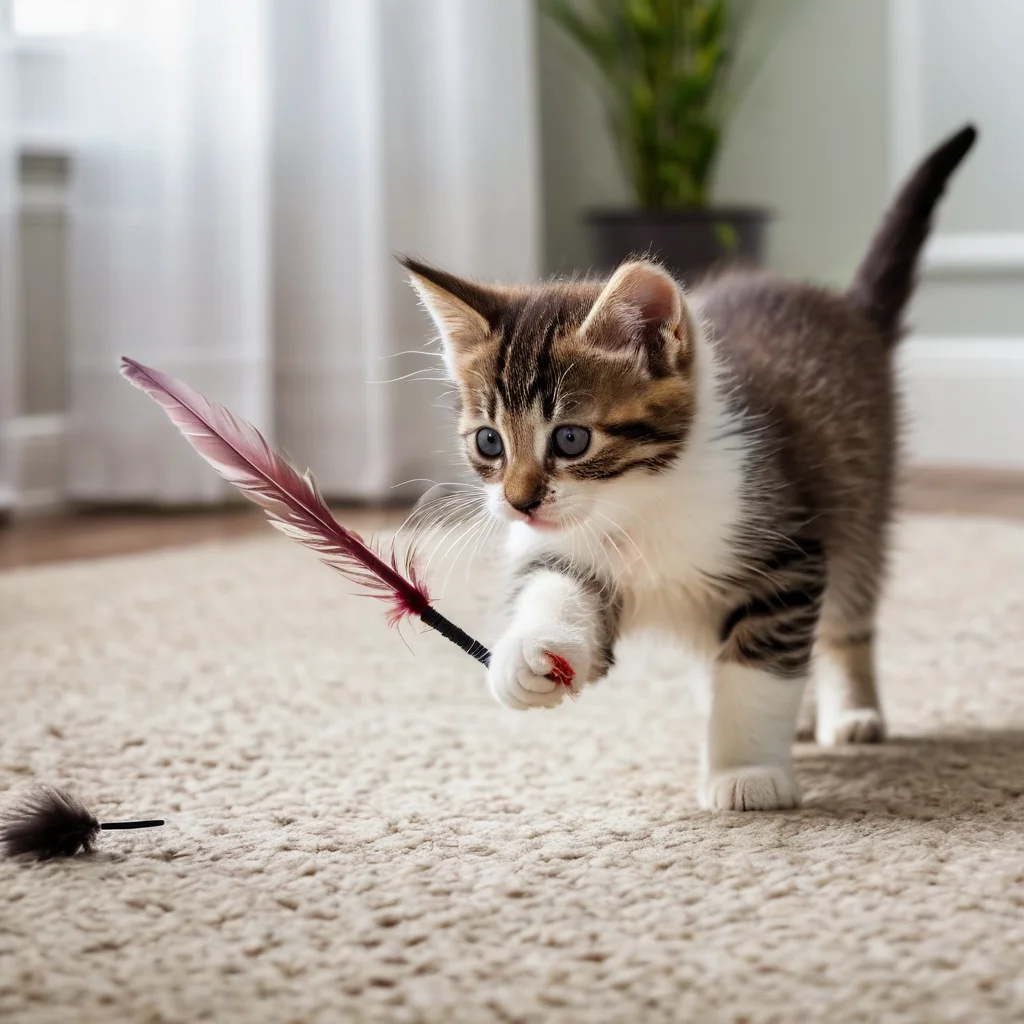

A kitten needs 5-7 play sessions a day, and that's critical for social, physical, and cognitive development. Too little play leads to behavior problems, obesity, and depression in the adult cat. When an owner learns the right way to play, it shapes the kitten's health for life. In this article, we look at a kitten play guide, great toys, and an activity plan.
1. A Kitten's Need for Play
- 5-7 play sessions a day (10-15 min each).
- 1-2 hours of active play in total.
- Satisfying the hunting instinct (the catch-pounce-kill-eat cycle).
- Social skills (with the owner + other animals).
- Physical development (balance, coordination, muscle).
- Mental stimulation.
2. The Hunting Cycle Game
Cat play follows 5 phases in a row, inherited from wild ancestors:
- Spotting/sensing: Tracking a moving object.
- Crouching/stalking: Body low, eyes fixed.
- Pouncing: Leaping + catching.
- Simulated kill: Biting + bunny-kicking.
- Simulated meal: Carrying the toy off + a reward.
Good play = completing all 5 phases.
3. Great Toys for Kittens
- Feather wand (wand toy): The owner stays in control, and it triggers the hunter. If you get just one toy, make it this one.
- Laser: Fun but not satisfying (there's no catch). Add a real toy as a reward at the end.
- Soft plush mice: Independent play.
- Balls + ping pong balls: Chasing along the floor.
- Catnip toys: Work in young cats after 6 months.
- Puzzle feeder: Mental work + hidden food.
- Cardboard box: Hiding + exploring (the cheapest and most loved).
- Tunnel: Hide-and-pounce games.
4. Dangerous Toys (OFF LIMITS)
- String/yarn/fishing-line toys: Intestinal blockage if swallowed.
- Rubber bands: Can be deadly if swallowed.
- Plastic bags: Risk of suffocation.
- Buttons/toys with small parts: Swallowing.
- Laser on its own: No satisfaction of the catch → frustration.
- Never leave a feather wand out for unsupervised play.
5. Daily Play Schedule
- Morning: 15 min of intense play (before a meal).
- Midday: 5-10 min of light play.
- Evening: 15-20 min of intense play (the most active time).
- Before bed: 10-15 min → tired before sleep.
- Independent: Puzzle feeder + cardboard box throughout the day.
6. Social Play (With the Owner + Other Cats)
- Playing with the owner builds a bond.
- A kitten play-attacking another cat is normal: biting + kicking.
- Signs of a real fight: deep growling + fur standing on end + a puffed-up tail.
- Littermates or a second kitten as a playmate = excellent socialization.
- A single kitten depends on its owner for play; don't forget that.
7. Mental Stimulation
- Puzzle feeder: So it has to earn its food.
- Hiding food: Small bits of food tucked into little spots around the home.
- Clicker training: Cats learn (the myth that cats can't be trained is wrong).
- New toy rotation: Swap out 2-3 toys a week.
- Environmental enrichment: Cat shelves, a cat tree, a window perch.
8. Overplay + Exhaustion
- Kittens don't know their limits and overdo it.
- Panting, open-mouth breathing → take a break.
- Access to water.
- Short + frequent sessions instead of long ones.
- An overtired kitten → cranky + bitey.
9. What Happens With Too Little Play
- Destroyed furniture (energy that wasn't burned off).
- Excessive meowing.
- Attacking the owner (demanding play).
- Obesity.
- Depressed behavior.
- A reversed sleep-wake cycle.
10. How Activity Changes With Age
- 2-4 months: Very high energy, short play sessions, often.
- 4-6 months: Hunting play develops, tolerates longer sessions.
- 6-12 months: Adult play behavior, calmer but still 1-2 hours a day.
- 1+ year: For an adult cat, 30-60 min of play a day is enough.
Kitten play + activity: satisfying the hunting cycle 1-2 hours a day shapes a healthy cat for life. The feather wand + puzzle feeder + cardboard box + interaction with you formula is practical. A single cat depends more on its owner; a second cat provides social companionship. In the DoldurKabı app you can find vet clinics experienced in cat behavior on a map.