


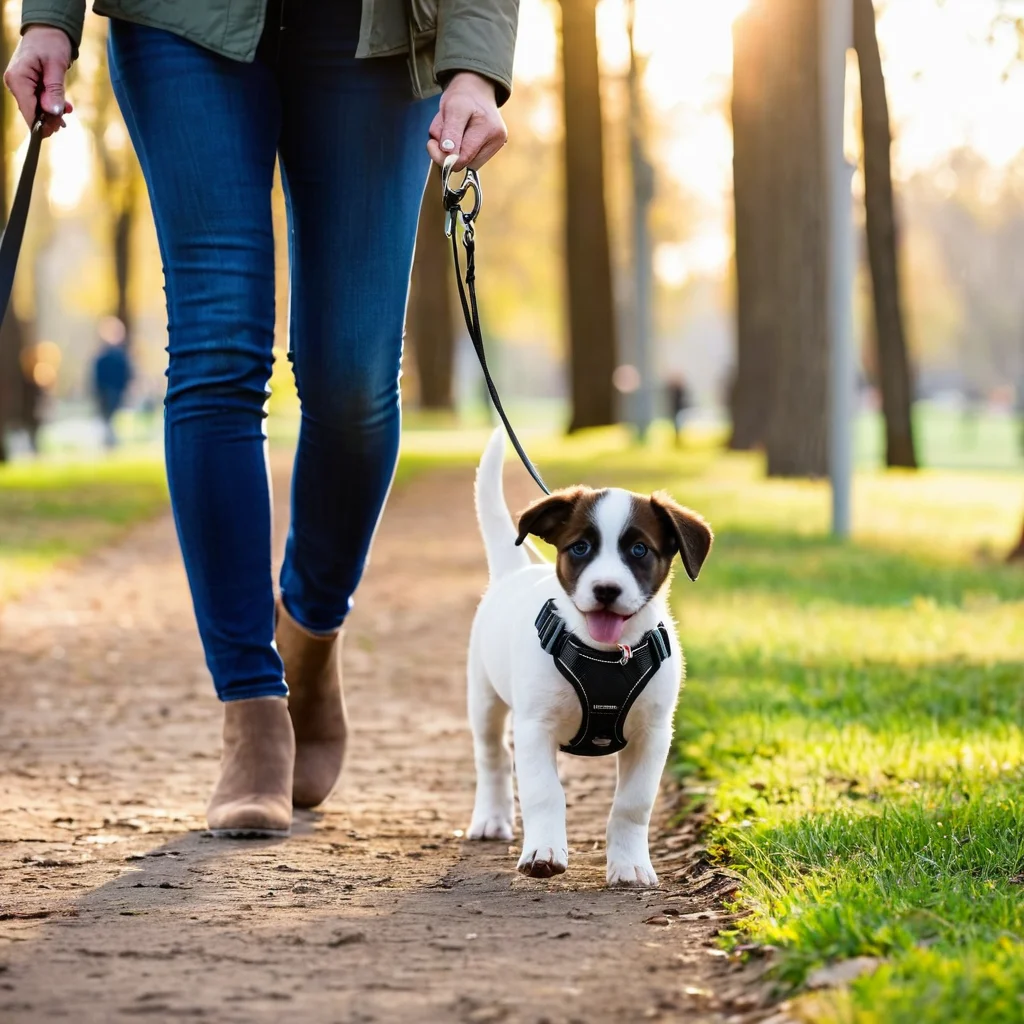

Getting your puppy used to a leash and harness, and those first walks, is a critical stage for socialization and physical development. 12-16 weeks is the ideal time to start (vaccines done + the socialization window). A wrong start can leave a dog afraid of the leash and in the habit of pulling. In this post we take a detailed look at leash and walk training for puppies.
1. When Do Street Walks Start?
- 2 weeks after the final vaccine at week 16: Full immunity.
- Before that, street walks are OFF LIMITS because of the risk of parvovirus and lepto.
- But: Even while vaccines are incomplete, socialization and leash practice can happen at home, in the yard and in your arms.
- Interaction with vaccinated, healthy dogs in a controlled area is OK.
2. Choosing the Right Gear
A harness is preferred for puppies:
- Front-clip harness: The leash attaches at the center of the chest. Reduces pulling.
- Back-clip harness: The leash attaches on the back. No pressure on the neck.
- Neck collar: A puppy's neck and trachea are delicate, so don't use one for walks.
- Size: 2 fingers should fit comfortably underneath.
- Material: Soft nylon with padding underneath.
3. Leash Length
- For training: 1.5-2 meters.
- Large parks: A 3-5 meter long line (after training).
- Retractable leash: Don't use one with puppies, since you lose control.
4. Leash Practice at Home (Week 1)
- Show the harness to your puppy + give a treat (it's not a threat).
- Treat when your puppy sniffs it.
- Gently place the harness on (without putting the legs through) → treat + take it off.
- Put it on for 5-10 minutes + play.
- Once your puppy feels comfortable in the harness → add the leash.
- Let the leash drop to the floor and let your puppy drag it around (supervised).
- After 1 week, hold the leash yourself + walk around the house.
5. Yard Practice (Week 2)
- Leashed walks in the yard.
- If your puppy keeps dragging you along and gets excited, calm them and reward.
- Teach the "heel" position: walking close to you + a treat.
- Breaks + water + play.
- A yard is a traffic-free alternative to the street.
6. The First Street Walk (Weeks 3-4)
- Choose a quiet street (no heavy traffic).
- Keep it short (start with 5-10 minutes).
- Your puppy will want to sniff everything; let them.
- If there are signs of fear, go home and try again later.
- If you meet another dog: positive association with treats + supervision.
- Increase the time gradually.
7. Preventing Pulling (The Most Important Part)
- When your puppy pulls, STOP (don't take another step).
- When your puppy looks at you → treat.
- Keep walking calmly.
- Pulled again → stop again.
- Consistent practice → loose-leash walking in 30 days.
- The message: "pulling = we don't move forward."
8. Street Hazards
- Other unvaccinated dogs: Contagious disease.
- Street dogs: Risk of attack, contact with parasites.
- Salt and de-icing chemicals in winter: Paw burns.
- Hot asphalt in summer: Paw burns.
- Trash and food on the street: Puppies swallow things and can get poisoned.
- Traffic: Puppies get scared and may run off.
9. Puppy Exercise Limits (Bone Development)
- The "5 minutes × age in months" rule:
- 4 months old = 20-minute walk.
- 6 months old = 30 minutes.
- 8 months old = 40 minutes.
- Too much walking can trigger joint dysplasia in large-breed puppies.
- Running, jumping and stairs are OFF LIMITS until 12-18 months (large breeds).
- Soft surfaces are preferred (grass).
10. Rainy and Cold Weather
- Puppies are sensitive to getting wet and cold (especially toy and short-haired breeds).
- A dog coat for rain and cold.
- Paw wax (against de-icing salt damage).
- Dry paws and coat thoroughly when you get home.
Puppy leash and walk training: the formula of gradual practice + the right gear + street safety + exercise limits means a healthy, social adult dog. Walking habits from puppyhood shape behavior for life. In the DoldurKabı app, you can find vet clinics experienced in puppy training on the map.









