


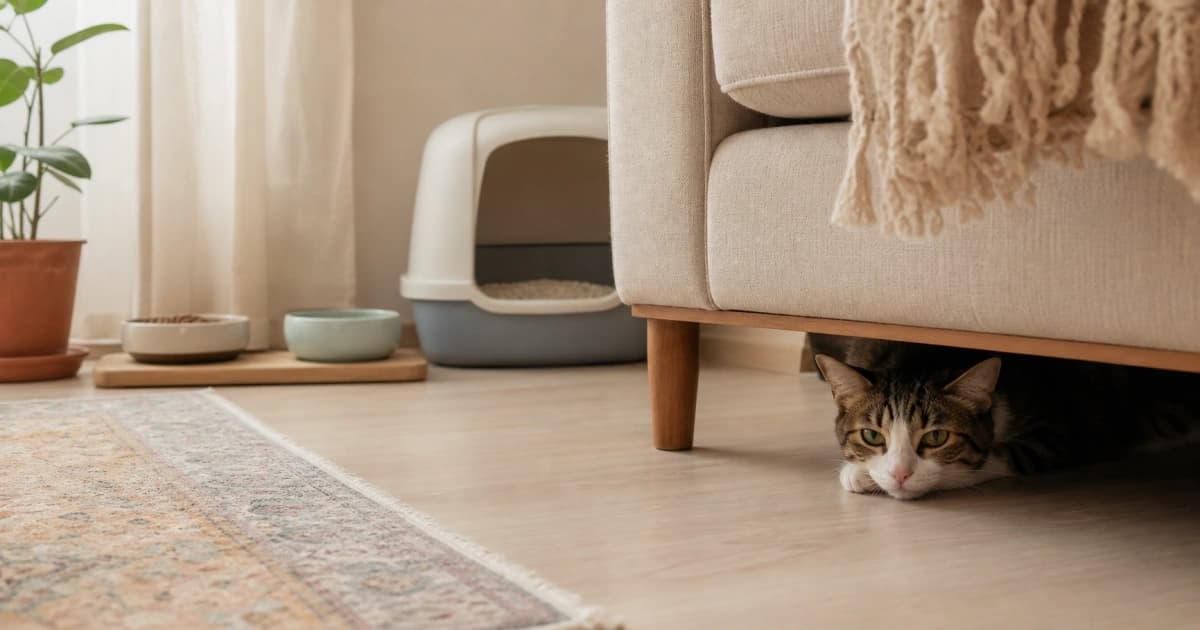

When a new sitter arrives, a cat hiding under the bed or behind a cabinet is a common stress response. But saying "it's hiding, that's normal" and never checking at all is not right either. The goal is to confirm the cat's presence, its basic needs and any unusual signs through indirect clues, without forcing it out.
Instead of explaining from scratch how to get started in this line of work, this article focuses only on one problem: "How do you observe a cat hiding in a new setting?" To build a workable routine, you will first define the scope, then put the record-keeping and communication steps in place. Using the same order of checks with every client reduces improvised decisions that change from person to person.
First, confirm a safe hiding area
Close doors and windows, and check for gaps that would be dangerous to get into. Figure out the cat's approximate location from a distance; do not try to pull furniture away to get it out. If you are not sure the cat is actually in the home, check the hiding spots the owner knows about one by one, calmly.
When applying this step, base your decision on visible information, not on assumptions. Record what was discussed about confirming a safe hiding area in a dated note, make sure the other person understood it, and do not carry on with an old agreement when conditions change. Resolving a small uncertainty before the job starts is safer than making a hasty decision during care.
Read body language from a distance
Write down only what you observe about the direction of the ears, how open the eyes are, how the breathing looks and how tense the body is. Reaching out a hand, staring or using a flash can increase stress. If the cat growls or swats, stop approaching and keep a safe distance.
When applying this step, base your decision on visible information, not on assumptions. Record what was discussed about reading body language from a distance in a dated note, make sure the other person understood it, and do not carry on with an old agreement when conditions change. Resolving a small uncertainty before the job starts is safer than making a hasty decision during care.
Track food, water and litter clues
Compare the amount left from the previous visit in a way that fits the owner's routine. Note litter box use, changes in the water level and unusual signs such as vomit. Do not draw a diagnosis from a single sign; pass several findings on to the owner along with when you saw them.
When applying this step, base your decision on visible information, not on assumptions. Record what was discussed about tracking food, water and litter clues in a dated note, make sure the other person understood it, and do not carry on with an old agreement when conditions change. Resolving a small uncertainty before the job starts is safer than making a hasty decision during care.
Let the cat choose when to make contact
Sit sideways on the floor, speak softly and do not approach directly. You can use a toy or treat the owner has approved while keeping your distance. Cornering the cat, catching it with a blanket or picking it up by force damages trust and creates a risk of injury.
When applying this step, base your decision on visible information, not on assumptions. Record what was discussed about letting the cat choose contact in a dated note, make sure the other person understood it, and do not carry on with an old agreement when conditions change. Resolving a small uncertainty before the job starts is safer than making a hasty decision during care.
When you should not wait
If you suspect a prolonged loss of appetite, or see repeated vomiting, signs that the cat cannot go to the bathroom, a clear change in breathing or unresponsiveness, do not end the visit as usual. Stop, call the owner and direct them to a vet; use the vets page to look for a clinic.
When applying this step, base your decision on visible information, not on assumptions. Record what was discussed about when not to wait in a dated note, make sure the other person understood it, and do not carry on with an old agreement when conditions change. Resolving a small uncertainty before the job starts is safer than making a hasty decision during care.
Keep the report separate from interpretation
Instead of "the cat is upset with me," share concrete information such as "it stayed under the sofa, did not go near the food, and this change was seen in the litter." If a photo is not possible, give a written report without forcing it. For the framework of in-home cat care, see the cat sitter guide.
When applying this step, base your decision on visible information, not on assumptions. Record what was discussed about keeping the report separate from interpretation in a dated note, make sure the other person understood it, and do not carry on with an old agreement when conditions change. Resolving a small uncertainty before the job starts is safer than making a hasty decision during care.
How do you keep a decision record?
Record not only the outcome of the decisions you make on this, but also the information they were based on. The detail the client told you, your own observation, the method you agreed on and any later change should each be visible separately. Instead of scattering messages across different apps, use a single record thread for the service. That way, when the question "did we talk about this?" comes up during care, you do not have to rely on memory.
The language of the record should be short, neutral and limited to what the job needs. Do not add personal opinions, diagnoses, accusatory wording or unnecessary private information. For example, when a problem comes up, write only what was seen and when, who was called and what answer was received. If a photo is needed, take it without getting private areas of the home or personal documents in the frame. When the care is over, also review which information you will keep and for how long.
Do a small trial run before the first job
See whether the routine on paper works in real life with a low-risk trial run. While the owner is present, check that the key opens the door, that the contact numbers are up to date, where the needed equipment is and which channel to report through. This trial run is not a sign of mistrust; it is a practical check that shows both sides understand the same process.
Do not cover up a gap you notice during the trial run with temporary fixes. If it can be fixed before the job starts, confirm the new arrangement in writing; if it cannot be made safe, postpone or decline the service. Do not give in to pressure to move fast, especially if there is a health sign, an escape risk or a problem with access to the home. A calm postponement is a more responsible decision than a promise of care made under unclear conditions.
A short, practical checklist
- Before starting, confirm the scope and critical information in writing.
- Postpone or decline anything that goes beyond your safety or skill limits.
- During care, record only observable information, with the date and time.
- When something changes, get the owner's approval; do not proceed on a verbal assumption.
- When the job is done, close out the handover, the report and any payment record in the same file.
This list alone does not solve every scenario; its purpose is to keep critical steps from being forgotten. Simplify it regularly to fit the way you work, but try not to remove the sections on animal safety, clear communication and records.
Frequently Asked Questions
Do I have to see the cat on every visit?
At a minimum, you need to confirm its safe location and that it is alive and well; do this without forcing contact. Check this answer again against your own service terms and current information, and close any uncertainty in writing before the job starts.
If it is not eating, is it an emergency right away?
How long it has been, the health history and other signs all matter. Do not make a diagnosis; call the owner and direct them to a vet assessment. Check this answer again against your own service terms and current information, and close any uncertainty in writing before the job starts.
Should the cat be taken out of its hiding spot for a photo?
No. Expectations for a report never come before the animal's safety; share your observations in writing. Check this answer again against your own service terms and current information, and close any uncertainty in writing before the job starts.









