


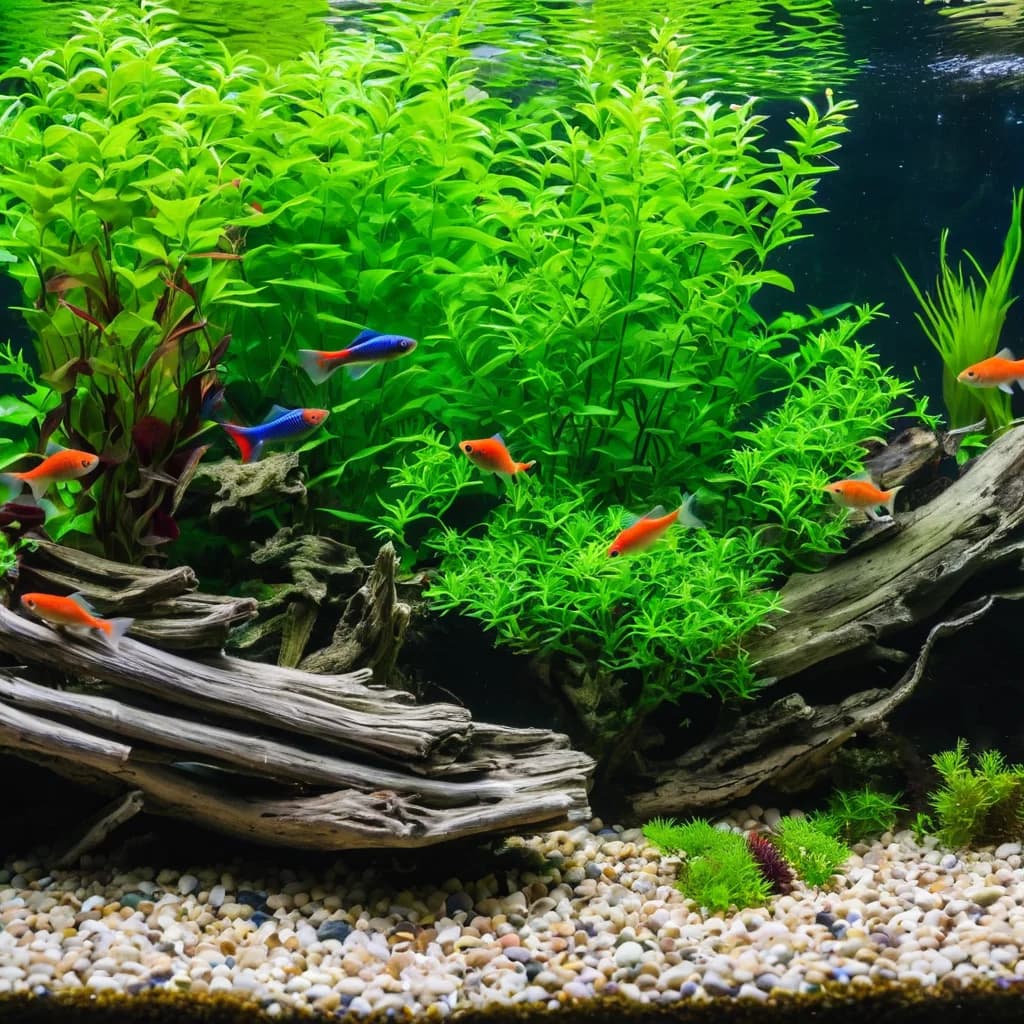

Getting into the aquarium hobby is exciting, but deciding which of the dozens of species at the store is right for you can be confusing. The classic mistake with a first aquarium is starting with a species that looks beautiful but is hard to care for. If you start with the right species, your fish stay healthy and you do not lose interest in the hobby.
In this guide, we go through 12 hardy, compatible and easy-care species for beginners one by one. For each species, you will find the tank size, ideal water temperature, schooling needs and the species it can live with. If you want to dig deeper into species details, you can also check out our fish encyclopedia.
A quick note before we start: whichever species you choose, always cycle the aquarium before adding fish, which means waiting a few weeks for filter bacteria to build up. Also, do not overcrowd the tank. These two rules apply to every species below.
Livebearers: Guppy, Molly, Platy and Swordtail
Livebearers give birth to live young instead of laying eggs, and they are generally tolerant of water conditions. That is why they are a common choice for a first aquarium.
1. Guppy
With its colorful tail and lively nature, the guppy is a staple of beginner aquariums. It does well in a 40-60 liter tank with a water temperature of 22-28 degrees. Keep them in groups of 4-5, not alone; having 2-3 females per male keeps the females from getting worn out. They live happily with platies, mollies, corydoras and rasboras.
2. Molly
The molly is a hardy species known for its black, gold and dalmatian patterns. Because it is a bit larger than the guppy, a 60-80 liter tank is recommended; the ideal temperature is 24-28 degrees. It likes slightly hard, alkaline water. It is happy in groups of 3-4 and gets along with guppies, platies and corydoras.
3. Platy
With its calm character and colors ranging from orange to bluish, the platy is a trouble-free beginner fish. A 60 liter tank is enough, and it tolerates a wide temperature range of 20-26 degrees. It should be kept in small groups. It can share a tank with guppies, mollies, swordtails and neon tetras.
4. Swordtail
Known for the sword-like extension on the male's tail, this species is an active swimmer and is more comfortable in a long 80-100 liter tank. 22-26 degrees is ideal. Males can be competitive with each other, so keeping a single male in the tank keeps the peace. It is a close relative of the platy and molly, and they live together without problems.
Schooling Fish: Neon Tetra, Zebra Danio and Rasbora
Schooling fish only feel safe in a large group. If you get too few, they become stressed, their colors fade and they hide. Pay special attention to group size with these three species.
5. Neon Tetra
With its bright blue and red stripe, the neon tetra is the star of planted aquariums. A 60 liter tank and a temperature of 22-26 degrees suit it; its colors are more vivid in soft, slightly acidic water. It must be kept in schools of 6-8. It gets along well with calm species such as rasboras, corydoras and platies; keep it away from large fish that could swallow it.
6. Zebra Danio
This small zebra-striped fish swims almost nonstop and is very hardy. It needs a tank of 60 liters or more; it tolerates a wide temperature range of 18-25 degrees, so it can even live in unheated indoor aquariums. Do not keep fewer than 6. Because it swims fast, it may nip the fins of long-finned fish (especially bettas); pair it with tetras and corydoras instead.
7. Rasbora
The harlequin rasbora is an elegant schooling fish with a copper-colored body and a black triangle pattern. It does well in a 60 liter tank at 23-27 degrees. It looks much more striking in schools of 8-10. It is extremely peaceful and can live in the same tank as neon tetras, corydoras and even a calm betta.
The Bottom Crew: Corydoras and Ancistrus
Bottom dwellers use the lower part of the tank and clean up leftover food and algae. Because they do not compete for space with species that swim in the middle and upper areas, they fit into almost any community aquarium.
8. Corydoras
Known for its cute facial expression, this small armored catfish constantly scours the bottom and picks up leftover food. A 60 liter tank is enough, and 22-26 degrees is ideal. It is a social species; keep them in groups of 5-6. Choose a sand substrate instead of sharp gravel so their barbels do not get damaged. With its calm nature, it is compatible with every species on this list.
9. Ancistrus
The sucker-mouthed ancistrus is a hardworking species that cleans algae off the glass and decorations. Because of its adult size, an 80-100 liter tank is recommended; 22-27 degrees suits it. It has no need for a group and can live alone; two males in the same tank may fight over territory. Having natural driftwood in the tank is important for its digestion. Because it is peaceful, it lives with almost any species.
Fish with Character: Betta, Gourami and Goldfish
All three of these species are suitable for beginners, but each has its own rules. When you follow those rules, you can enjoy keeping them for many years.
10. Betta
With its magnificent fins, the betta is one of the few species that can be kept alone. It should live not in a small bowl but in a 20-30 liter tank with a filter and a heater; it needs 24-28 degrees. Two male bettas should never be put in the same tank. If it is a calm individual, it can live with corydoras and rasboras in a tank over 60 liters; do not put it with colorful-tailed fish like guppies or with fin-nipping danios.
11. Gourami
Species such as the dwarf gourami and the blue gourami come from the same family as the betta and can breathe air from the water surface thanks to their labyrinth organ. An 80 liter tank and a temperature of 24-28 degrees suit them. It is not a schooling fish; keeping a single male in the tank prevents tension. It gets along well with tetras, rasboras and corydoras; it should not be put in the same tank as a second male gourami or a betta.
12. Goldfish
A common misconception about goldfish is that they can live in small bowls. In reality, they grow large, produce a lot of waste and need strong filtration; even a single fish needs 80-100 liters. It is a coldwater fish and needs 18-22 degrees, so it cannot live in the same tank as tropical species. It should be kept with its own kind or with other goldfish varieties.
Sample Combinations for a First Aquarium
You have met the species one by one; so which ones go together in the same tank? Here are three tried and safe combinations:
- 60 liter livebearer tank: 5 guppies + 4 platies + 6 corydoras. A colorful, lively and hardy start.
- 80 liter planted schooling tank: 8 neon tetras + 8 rasboras + 6 corydoras + 1 ancistrus. A calm and balanced community.
- 30 liter betta tank: 1 male betta + plenty of plants. A simple setup with a single fish, but full of character.
Whichever combination you choose, add the fish in batches a few weeks apart, not all at once. That way the filter bacteria can adjust to the growing load and the water parameters stay stable.
Frequently Asked Questions
When can I add fish to a newly set up aquarium?
After setting up the tank and starting the filter, you need to wait at least 2-4 weeks. During this time, beneficial bacteria that break down harmful ammonia build up. Being impatient and adding fish on the first day is the main reason beginners lose fish.
Is it easier to start with a small aquarium?
Quite the opposite. In small volumes, water parameters go bad very quickly and mistakes are not forgiven. A 60-80 liter tank is enough for most beginner species, and because the water balance is more stable, it is actually easier to maintain.
Can I keep different species in the same aquarium?
Yes, but you should choose species whose temperature needs overlap and whose temperaments are compatible. For example, guppies, platies, neon tetras and corydoras form a trouble-free community, while goldfish need cold water and cannot be combined with tropical species.
What should I do if my fish looks sick?
First test the water parameters and do a partial water change; most problems come from water quality. If signs such as white spots or fin rot continue, move the sick fish to a separate tank and consult a vet who works with exotic animals. Using random medications can upset the balance in the aquarium.









