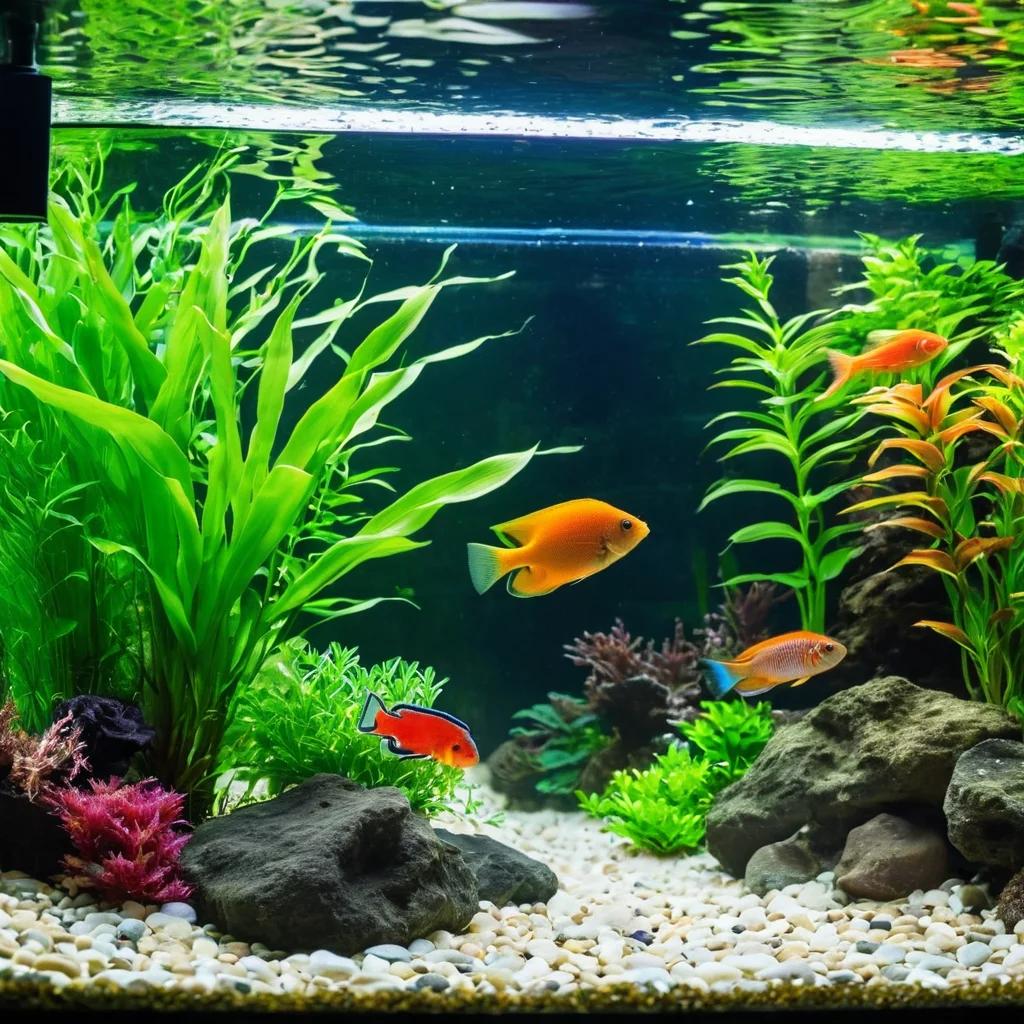

Setting up an aquarium is the exciting part; keeping it clear and healthy for years takes regular care. In an established aquarium, what shapes your fish's quality of life is not expensive equipment but a simple cleaning routine you repeat every week. Steps like water changes, gravel vacuuming and filter checks take about half an hour in total, yet they decide the fate of your tank.
The reason is that an aquarium is a closed ecosystem. Fish waste, leftover food and decaying plant matter constantly produce ammonia in the water. The beneficial bacteria living in your filter convert this ammonia first into nitrite, then into nitrate, which is far less harmful. But the practical way to remove built-up nitrate from the water is a partial water change. When you let the routine slip, pollution builds up without you seeing it; the fish become stressed and vulnerable to disease.
In this post we go through every step of weekly care in order: how much water to change, the right way to vacuum the gravel, cleaning the filter without killing the beneficial bacteria, water testing, and why well-meant overcleaning can crash an aquarium. All of it is practical and easy to start right away.
Weekly Partial Water Changes: How Much and How
In an established, balanced aquarium, the general rule is to change 20 to 30 percent of the total water volume once a week. If you have a lot of fish or nitrate rises quickly, move closer to 30 percent; in a tank with few fish and lots of plants, 20 percent is usually enough. Consistency matters more than quantity: a small change on the same day every week is much healthier than one big change once a month.
Here is the right method, step by step:
- Prepare the new water in advance: Add a dechlorinator (water conditioner) to tap water, or let the water sit in a wide container for 24 hours.
- Match the temperature: The difference between the new water and the tank water should not be more than a degree or two; a sudden temperature change can shock the fish.
- Turn off electrical equipment: When the water level drops, a heater left exposed can break and can even crack the glass.
- Drain water into a bucket with a siphon hose: Vacuum the gravel at the same time to combine the two jobs.
- Add the new water slowly: Pour it over a plate or a decoration to keep the substrate from scattering and the fish from getting startled.
You don't need to take the fish out of the tank during a water change; a partial change is much less stressful for them than being caught with a net.
Gravel Vacuuming: Remove the Dirt You Can't See
The bottom of the aquarium is where leftover food and waste really collect. Gravel that looks clean from above releases its dirt in a brown cloud when you push the siphon in. Press the wide end of the gravel vacuum into the gravel, wait for the dirt to rise into the hose with the water, then move on to the next spot.
- Each week, vacuum a third or half of the bottom rather than all of it; do the rest the following week. This protects the bacterial balance in the substrate.
- Don't vacuum deeply around plant roots; disturbing the roots weakens the plant.
- On sand, keep the siphon close to the surface so the dirt is pulled from the top; don't let sand get sucked into the hose.
Cleaning the Glass and Decorations
For the thin layer of algae that forms on the inside glass, you can use a magnetic glass cleaner or a plastic algae scraper. Do this right before the water change so that the particles stirred into the water leave with the siphon. For the outside glass, just wipe it with a slightly damp cloth, making sure nothing touches the tank water.
Don't wash decorations, rocks and driftwood every week. A light coating of algae on them is natural and part of the ecosystem. If they look visibly dirty, rinse them in the tank water you drained during the water change and put them back. Soap, detergent or bleach must never touch aquarium equipment; even the smallest residue is toxic to fish.
Filter Care: Clean It Without Killing the Bacteria
The filter is like the aquarium's liver. The sponge and biological media inside it are home to the beneficial bacteria that make ammonia harmless. So when cleaning the filter, the goal is not to make it sparkle, only to remove the coarse dirt.
- Timing: Clean the sponge not every week but when the water flow has visibly weakened; in most aquariums that means every three or four weeks.
- Method: Squeeze the sponge a few times in the old tank water you drained during the water change. Most of the dirt comes out and the bacteria stay in place.
- Never use tap water: The chlorine in tap water kills a bacterial colony that took months to mature in just a few minutes.
- Don't replace all the media at once: If you need to replace materials like sponges or ceramic rings, do it piece by piece, a few weeks apart.
One more golden rule: don't squeeze a big water change and a filter cleaning into the same day. If you do both, the bacterial population drops from two directions at once; leaving a few days between them keeps the system in balance.
Water Testing: Your Aquarium's Report Card
Water that looks clear can still have chemical problems. Weekly testing with liquid drop test kits shows whether your routine is really working. These are the key values to track:
- Ammonia: Should always be zero. Measurable ammonia means either overfeeding or a disrupted bacterial balance.
- Nitrite: Should also be zero; a rise shows the cycle has been disrupted.
- Nitrate: Try to keep it low. If it keeps rising, increase how much or how often you change the water.
- pH: Sudden swings are more dangerous than the value itself; it should stay stable within the right range for your species.
Each species has different ideal water values; you can check the needs of the species you keep in our fish encyclopedia. Testing right before a water change gives the clearest picture of the aquarium's real condition.
The Overcleaning Mistake and Feeding Routine
A classic beginner mistake is to overhaul everything on the same day because the aquarium looks dirty. When you change all the water, wash the gravel under the tap and take the filter apart too, you wipe out most of the beneficial bacteria. The system restarts its cycle from scratch as if it were newly set up, ammonia rises and fish start dying. In an aquarium the goal is balance, not sterility; a tank with a little algae but stable values is much healthier than a sparkling one that is out of balance.
The main source of pollution is often overfeeding. Every uneaten piece of food rots on the bottom and turns into ammonia. Set up this routine:
- Feed once or twice a day, only as much as the fish can finish in two or three minutes.
- Siphon out leftovers that sink to the bottom shortly after feeding.
- Skipping food one day a week is fine for most species; it gives the digestive system a rest.
There are differences between species, too: for example, hungry species like the betta fish keep eating whatever is in front of them and are easily overfed. Portion control should be fully in your hands.
Frequently Asked Questions
Is it harmful to change all of the aquarium water?
Yes. In an established aquarium, changing all of the water suddenly changes the water chemistry and upsets the bacterial balance; it is a serious source of shock for the fish. A weekly partial change of 20-30 percent both controls pollution and preserves balance. A full change should only be considered in exceptional cases, such as after a medication treatment.
Can I add tap water directly to the aquarium?
No. The chlorine and chloramine in tap water harm both the fish and the beneficial bacteria. Before adding water, use a dechlorinator or let it sit in a wide container for 24 hours. Don't forget to bring its temperature close to the tank water, too.
When should I replace the filter sponge?
The sponge isn't replaced until it starts falling apart; it is only cleaned by squeezing it in old tank water. When you do need to replace it, keep a piece of the old sponge in the filter alongside the new one for a while; this way the bacterial colony moves onto the new media.
My water is cloudy and my fish are sluggish. What should I do?
Test the water first. If you measure ammonia or nitrite, do a 25-30 percent water change, cut back on feeding for a day or two and check the values daily. If the cloudiness continues, or the fish show signs like spots, clamped fins or rapid gill movement, talk to your vet without delay.