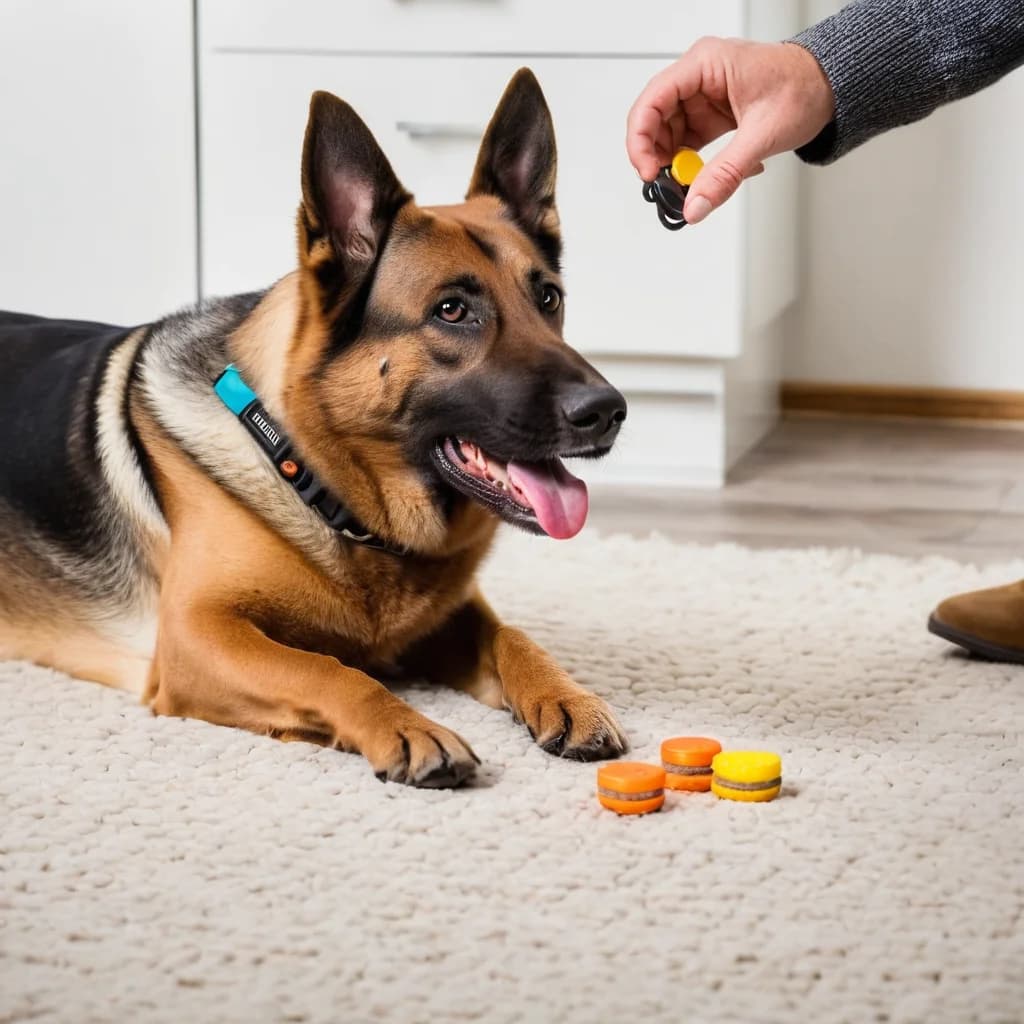

Clicker training is a highly effective, science-based positive reinforcement method. It applies B.F. Skinner's principles of operant conditioning to dog and cat training. The combination of a click and a reward shapes an animal's behavior. Basic commands, complex behaviors, fixing behavior problems: the clicker works in every area. In this article, we look at the science and the practical details of clicker training.
1. What Is a Clicker?
- A small plastic device that makes a "click" sound when you press the metal strip.
- An instant, consistent and clear sound.
- It lets the dog or cat link the sound to a reward.
- A "marker": the desired behavior is marked at that exact moment.
- Sound as a marker + reward = the message "you got it."
2. The Science (Operant Conditioning)
- B.F. Skinner: behavior is shaped by its consequences.
- Positive reinforcement (reward) = the behavior repeats.
- Positive punishment (scolding) = the behavior decreases, BUT with side effects (fear, aggression).
- Modern science: positive reinforcement is a highly effective and ethical method.
- The clicker is a secondary reinforcer, linked to the reward.
3. Charging the Clicker (The First Step)
Explaining the clicker to your dog or cat takes 1-2 days:
- A calm environment.
- Click, then a high-value reward right away.
- At first, no matter what the animal does; you are only building the link.
- 15-20 repetitions per session.
- 2-3 sessions a day, for 1-2 days.
- When the animal hears the click and expects a reward, the link is made.
4. Getting the Timing Right (Critical)
- Click at the MOMENT the desired behavior happens.
- Click, then the reward within 1-3 seconds.
- A late click reinforces the wrong behavior.
- Practice: the clicker in your hand, the reward word in your mouth (the owner needs practice).
- Practice in front of a mirror.
5. Primary vs Secondary Reinforcers
- Primary reinforcer:
- Naturally valuable: food, water, play.
- Something the animal needs biologically.
- Secondary reinforcer:
- Something that builds a link: the clicker, the word "good."
- It becomes valuable by being associated with the primary one.
- The clicker is a very clear and consistent secondary reinforcer.
6. Teaching Basic Commands (With a Clicker)
Example: "Sit"
- Guide the dog with a treat over its head, and it moves into a sitting position on its own.
- Click the MOMENT it sits, then reward.
- 10-15 repetitions.
- Add the word "sit" as you see the position.
- After 20 repetitions, command leads to behavior.
- Click + reward.
- With consistent sessions, it learns in 3-7 days.
7. Shaping
Teaching complex behaviors:
- Break the target behavior into parts.
- Click and reward for the first part.
- Then click for something a bit more advanced.
- Slowly work up to the final behavior.
- Example: "Down": first lowering the head, then stretching out the front legs, then lying down fully.
8. Chaining
Linking several behaviors together:
- Sit, give paw, down, stay, get up.
- At first, click at every stage.
- Later, click at the end of the chain as a whole.
- Fun and complex commands can be taught.
9. The Clicker for Behavior Problems
- LAT (Look at That): Sees the trigger, click, reward.
- Reactivity: Mark calm behavior.
- Resource guarding: Reinforce food-sharing behavior.
- Fear: Mark brave behavior.
- Positive reinforcement resolves fear and aggression.
10. Common Mistakes
- ❌ A late click: the wrong behavior gets reinforced.
- ❌ Not giving a reward after the click: the link weakens.
- ❌ A low-value reward (a dry biscuit): little motivation.
- ❌ Sessions that are too long: the dog gets tired (5-10 minutes is enough).
- ❌ Mixing up the click sound with the command the owner says.
- ❌ Using the click for punishment: never.
Clicker training is a science-based, ethical and extremely effective animal training method. The formula of correct timing, high-value rewards and consistent practice teaches basic and complex behaviors and helps treat problem behaviors. Positive reinforcement = a happy animal and a strong bond with the owner. In the DoldurKabı app, you can find vet clinics experienced in force-free training on a map.