


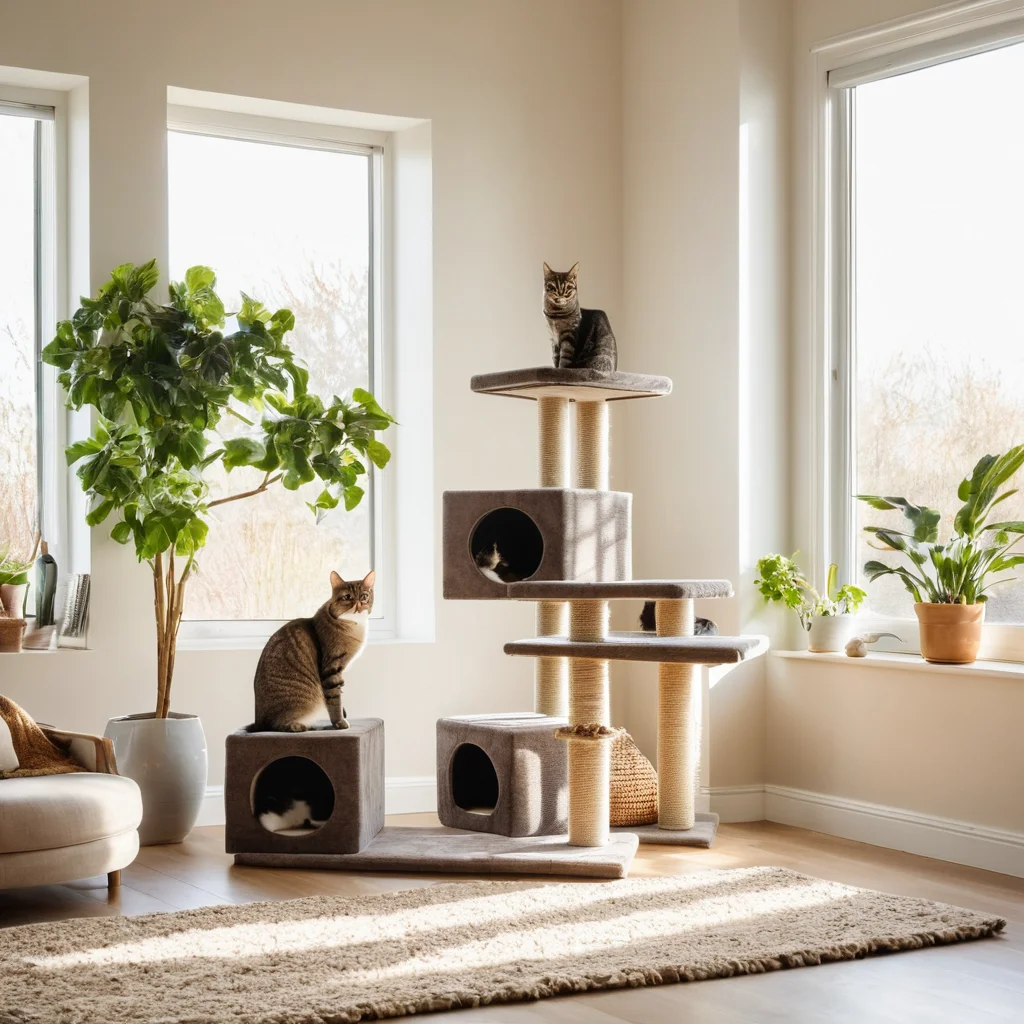

Multi-cat homes can be sweet chaos, or, if they are not planned well, a constant source of stress. Having two, three or five cats live peacefully in one home is a science. The key: eliminate competition for resources and multiply vertical space. Below are proven rules and a practical setup guide for multi-cat homes.
This article covers the core principles of managing a multi-cat home, the "n+1" rule, a protocol for introducing a new cat, planning vertical space and common problems.
1. The Core Principle: Cats Are a "Tolerance Group," Not a "Social Group"
Dogs are pack animals; living together is instinctive for them. Cats, on the other hand, are solitary hunters. Living with other cats is not natural for them; it is built on tolerance. If there are enough resources and space, cats settle into "shared living"; if something is lacking, "competition" begins. Your job as the owner: keep competition to a minimum.
2. The Golden Rule: "n+1"
For each resource, the number of cats + 1:
- Litter box: 2 cats = 3 boxes. 3 cats = 4 boxes. Not in the same room; spread them across different rooms.
- Food bowl: 2 cats = 3 bowls.
- Water bowl: In 2-3 spots.
- Bed/resting area: At least as many as there are cats; favorite spots fill up first, and extras reduce imbalance.
- Scratching post: Both horizontal (mat) and vertical (post).
"One box for two cats" is the most frequent mistake. Cats do not understand the concept of waiting in line.
3. Vertical Space: The Cat's Second Floor
Cats live vertically. In a multi-cat home, vertical space = tension reducer. The "who is blocking whose way" friction you get on horizontal ground does not exist up high:
- Cat shelves: A wall-mounted shelf set spaced 30-40 cm apart.
- Cat trees: Tall ones with several levels.
- Window perch: A spot for watching the outdoors.
- Top shelves / top of cabinets: Some cats use the highest point as a "safe fortress." Don't block it.
Goal: every cat has a "high spot" of its own.
4. Introducing a New Cat: A 2-Week Protocol
Week 1: Separate Room + Scent Swapping
- The new cat stays in a separate room (litter, food, water and bed all there).
- Move the resident cat's blanket to the new cat, and the new cat's blanket to the resident cat.
- Feed them on either side of a closed door (both eat close to the door, creating a "positive association between the other cat and food").
End of Week 1 to Week 2: Visual Contact
- Visual contact through a crate or baby gate; no physical contact.
- Food rewards for as long as both stay calm.
- If there is growling or hissing, increase the distance again.
End of Week 2: Supervised Physical Contact
- First short contacts are supervised, at mealtime.
- If either cat gets tense, separate them; try again.
- Full free contact only after weeks of supervised meetings go well.
A "quick introduction" often creates tension that lasts for years. Patience = long-term peace.
5. Common Problems and Solutions
Peeing Outside the Litter Box
This is the most frequent complaint in multi-cat homes. The cause is often:
- Not enough boxes (not n+1).
- Box location: another cat is "guarding" the path to it.
- Stress (a new animal, rearranged furniture).
- A medical cause (FLUTD), which is an emergency, especially in male cats.
More detail in the Litter Box Science guide.
Food Stealing
One cat eats from the other's bowl. Solutions:
- Feeding in different rooms (door closed).
- A microchip feeder (it only recognizes that cat's chip).
- Separate feeding times.
Fights Over Beds
The favorite bed or spot is always the same one. Solution: several of the same good-quality bed in different rooms.
Constant Growling / Hissing
Usually a newcomer has arrived or the balance at home has been upset. Observe for 4-6 weeks with a Feliway pheromone diffuser, more vertical space and an n+1 check. If it does not improve, see a veterinary behaviorist.
6. Managing Feeding
- Separate bowls in separate rooms.
- Scheduled feeding (not free-feeding): cats eat at set times and the owner supervises.
- If a cat is on a special diet (renal, diabetic, weight loss): a separate feeding room with the door closed.
- Water bowl away from the food bowl: cats naturally prefer this.
7. Supporting Socialization
- Group play sessions: Feather wand, laser; tire out all the cats in one session.
- Positive shared experiences: Eating together, watching the window together.
- Sharing the owner's attention: Always petting the same cat breeds jealousy. Rotate fairly.
8. Health Tracking for Multi-Cat Homes
- A separate card for each cat: vaccines, weight, checkup dates. In DoldurKabı Pet Health Tracking, each cat gets its own profile.
- Group vaccination days (all cats in the same visit).
- Which cat uses which box, so tracking is easy when a problem comes up.
- Yearly blood work; every 6 months for senior cats.
9. Frequently Asked Questions
How many cats is "many cats"?
"Many" is measured less by number and more by whether space and resources are enough. 3 cats can live happily in a 50 m² home, while 2 cats can be tense in a 30 m² home. General rule: at least 5-10 m² of personal space per cat + vertical enrichment.
Is male + male or male + female more peaceful?
As long as they are spayed or neutered, the sex combination is not critical; personality matters more. Cats that grow up together as kittens tend to be more peaceful later in life.
How do I explain the new cat to my current cat?
There is no explaining, just time + the protocol. The behavior owners read as "jealousy" is usually "threat + uncertainty," and the protocol resolves that.
My two cats fight all the time. Which one should I rehome?
That is the last option. First: the protocol, n+1, Feliway, vertical space, a behaviorist. If things do not improve despite 6 months of consistent effort, the cats may simply be incompatible; rather than rehoming one on its own, consider moving it to a "compatible" home.
Is getting a kitten with my senior cat a good idea?
A kitten's urge to play usually stresses a senior cat. Introduce them very slowly, and give the kitten a separate play area. Adult cat + adult cat is usually an easier introduction.
How can I tell there is positive socialization between cats?
Sleeping together, grooming each other (allogrooming), being relaxed in the same room, lightly touching noses as they pass. These develop over time; you cannot force them to "be friends."
Microchip feeders are expensive. Is there an alternative?
A microchip feeder takes an investment, but it is worth its weight in gold for cats on different diets. A cheaper alternative: feeding in separate rooms + owner supervision.
Final Word
A multi-cat home can be peaceful when the conditions are set up right. n+1 + vertical space + patient introductions + owner rotation... Once you know these rules, a comfortable life is possible even with three or four cats.
For each cat's profile, adoption, checkup dates and behavior notes, every cat gets a separate record in DoldurKabı Pet Health Tracking; organization is the foundation of running a multi-pet home.
This guide is for information only; for serious behavior problems, consult a certified cat behaviorist.









