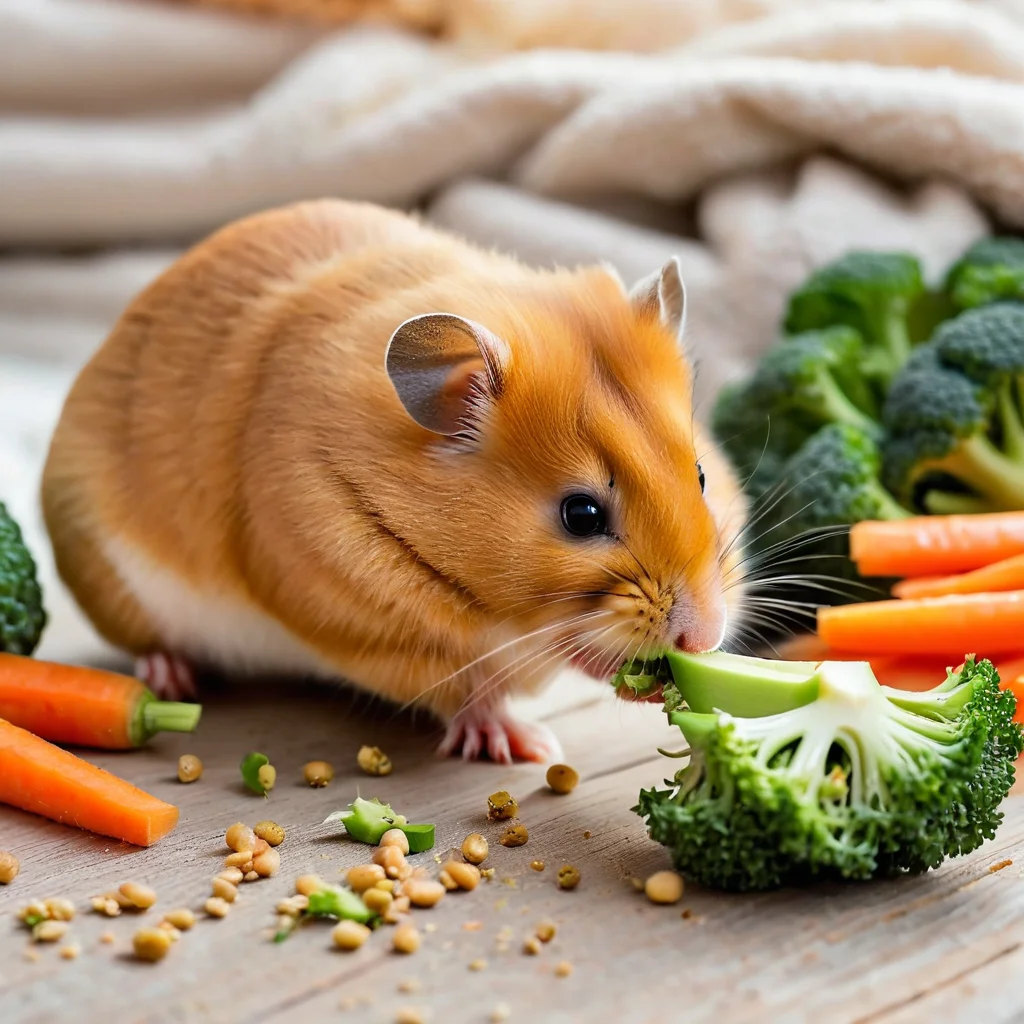

Despite their tiny bodies, hamsters have a fast-running metabolism. Everything you put in their bowl directly affects their health. Poor nutrition is among the common causes of weight problems, diabetes and digestive trouble. On top of that, hamsters are animals that rarely show when they feel unwell; by the time you notice a problem, it has usually progressed quite far.
In the wild, hamsters are omnivores. Seeds, grains, grasses, fresh greens and the occasional insect are a natural part of their menu. In other words, their diet is much more varied than you might think. At home you need to mimic this variety: a good-quality main food, measured amounts of fresh vegetables, an occasional protein boost and clean water at all times.
In this guide we explain step by step how to build your hamster's daily menu, which fresh foods are safe, how cheek pouches and hoarding relate to feeding, and which foods you should never give. If you are curious about the differences between species, take a look at our hamster breeds guide as well.
Main Food: Seed Mix or Pellets?
The foundation of hamster nutrition is the main food. You will see two basic formats on the market: seed and grain mixes, and pellets. Mixes offer variety and support the hamster's natural foraging behavior, but they carry an important risk. Hamsters get picky and eat only the fatty seeds they love (especially sunflower seeds and peanuts), leaving the rest. The result: an unbalanced diet that is too high in fat.
With pellets, every bite has the same nutritional value, so picking and choosing is not possible. The downside is that they are monotonous. The practical solution is to combine the two: adding a measured amount of mix on top of a good-quality pellet base gives you both balance and variety. When choosing a food, go for products without sugar syrup, honey or artificial coloring, with a protein content of about 15 percent for adults.
As a general guide for quantity, about one to two teaspoons of food a day is enough. The larger Syrian hamster eats close to the upper end of this range, while dwarf species get by with less. Do not refill the bowl just because it is empty; most likely the food is not in the bowl but in the stash in the nest.
Safe Fresh Vegetables and Fruits
Fresh foods provide vitamins and make the menu more enjoyable. But the amount is critical: once a day, a piece about the size of your fingernail is enough. Always introduce a new food on its own and in a small amount; watch the droppings for a day or two, and if they get soft, take a break from that food.
Safe vegetables
- Carrots (in moderation because of their sugar)
- Cucumber and zucchini
- Broccoli and cauliflower (small pieces)
- Sweet red pepper
- Greens such as parsley, arugula and purslane (small amounts)
- Plain boiled corn and peas
Safe fruits
- Apple (always with the seeds removed)
- Pear, strawberry, blueberry
- Banana (a very small amount, with care because it is sticky)
Because fruits contain sugar, they should not go beyond one or two small pieces a week. Wash all fresh foods well before serving and give them at room temperature.
Protein Sources
Hamsters are not strict herbivores; in the wild they also eat insects and larvae. At home you can meet this need with a small protein boost once or twice a week. Safe options include:
- Hard-boiled egg white (a small piece)
- Unsalted, unseasoned boiled chicken (the size of a chickpea)
- Dried mealworms (sold as a pet product)
- Plain unsweetened yogurt (a tiny bit on the tip of a teaspoon, rarely)
Pregnant, nursing and growing hamsters need more protein; during these periods you can offer the boost a little more often. Still, keep portions small; too much protein also strains the kidneys.
Cheek Pouches and Hoarding
The hamster gets its name from its cheek pouches: the German word "hamstern" means to hoard. Your hamster stuffs food into its cheek pouches, carries it to the nest and stores it there. This is completely natural behavior; do not panic because the bowl is empty, check the stash in the nest first.
This behavior has two important consequences for feeding. First, if you refill the bowl every time it empties, you end up overfeeding without realizing it. Second, fresh foods go moldy when hoarded. So give vegetables and fruit in the evening and remove any uneaten pieces from the cage the next day. Check the stash during the weekly cleaning; leaving some of the dry food in place lowers your hamster's stress, but always clear out anything perishable.
Cheek pouches are delicate. Sticky foods like caramel and sharp-edged foods like unshelled sunflower seeds can injure the inner lining of the pouch or block it. Also, scattering food around the cage instead of putting it in a bowl (scatter feeding) keeps your hamster's natural foraging behavior alive and is great mental exercise.
Water Needs and the Risk of Sugar
Your hamster should always have clean, fresh water available. The most practical solution is a bottle-style drinker with a ball valve; unlike a bowl, it does not get dirty with bedding and droppings. Change the water every day and check with your finger that the ball is not stuck. Take any sudden increase in water intake seriously; drinking too much can be one of the early signs of diabetes and calls for a talk with your vet.
Sugar is the hidden danger in hamster nutrition. Campbell's dwarf hamsters and hybrid dwarf hamsters in particular are clearly prone to diabetes; for these species fruit should be strictly limited, and honey and molasses should never be given. The colorful treat sticks, honey crackers and yogurt drops sold in stores are often loaded with sugar; however appealing the packaging looks, stay away from them. The Syrian hamster is less prone to diabetes but gains weight easily; sugary snacks are not a good idea for it either.
Foods You Should Never Give
Some foods are not just unhealthy for hamsters, they are outright toxic. Think of the list below as a warning note you could hang near the cage:
- Citrus fruits: Oranges, tangerines, lemons and grapefruit are too acidic and upset the digestive system.
- Chocolate: The theobromine it contains is toxic to small animals.
- Onion, garlic, leek: They damage red blood cells.
- Raw potatoes and potato sprouts: They contain solanine.
- Tomato leaves and stems: The ripe fruit in small amounts is debated, but the green parts are definitely toxic.
- Bitter almonds, apple and cherry seeds: They contain cyanogenic compounds.
- Avocado: Risky because of a substance called persin.
- Raw dried beans and borlotti beans: They are toxic.
- Salty, spicy, fried human food: All processed foods such as chips, sausage and fried snacks.
- Candy, caffeinated drinks and alcohol: Not safe in any amount.
If you are not sure whether a food is safe, the rule is simple: do not give it. If your hamster ate something questionable and you see lethargy, diarrhea or loss of appetite, contact your vet without delay.
Frequently Asked Questions
How much food should I give my hamster each day?
The general guide is one to two teaspoons of dry food a day. Syrian hamsters eat close to the upper end, dwarf species close to the lower end. Do not add more just because the bowl is empty; hamsters hoard their food in the nest. Check the stash first, then top up the daily portion.
Can hamsters eat cheese?
A very small piece of unsalted, low-fat cheese usually causes no problems, but it is not a necessary food. Most hamsters do not digest lactose well. With better options for a protein boost, like boiled egg white or mealworms, there is no need to add cheese to the menu.
How often can I give fruit?
Once or twice a week, a piece about the size of your fingernail is enough. Because dwarf hamsters are prone to diabetes, you should give fruit even less often, and for Campbell's and hybrid dwarfs you should lean entirely on vegetables. Always remove the seeds from any fruit you give.
My hamster won't eat fresh vegetables. What should I do?
Be patient and do not force it. Try offering one type of vegetable at a time, in a very small piece, from your hand. Some hamsters first tuck a new food into their cheek pouch and deal with it in the nest; do not assume it was rejected just because it was not eaten right away. If there is still no interest after a few tries, switch to another vegetable, since tastes vary from animal to animal.