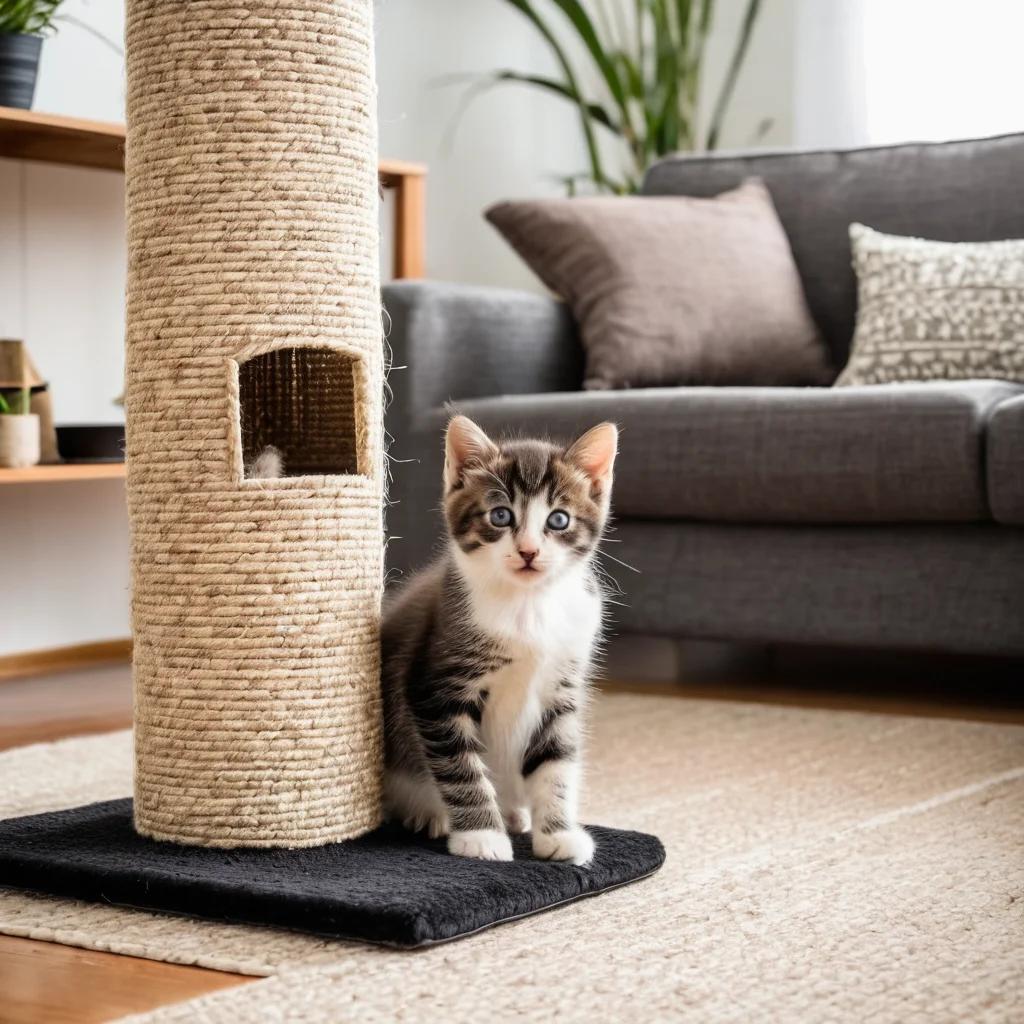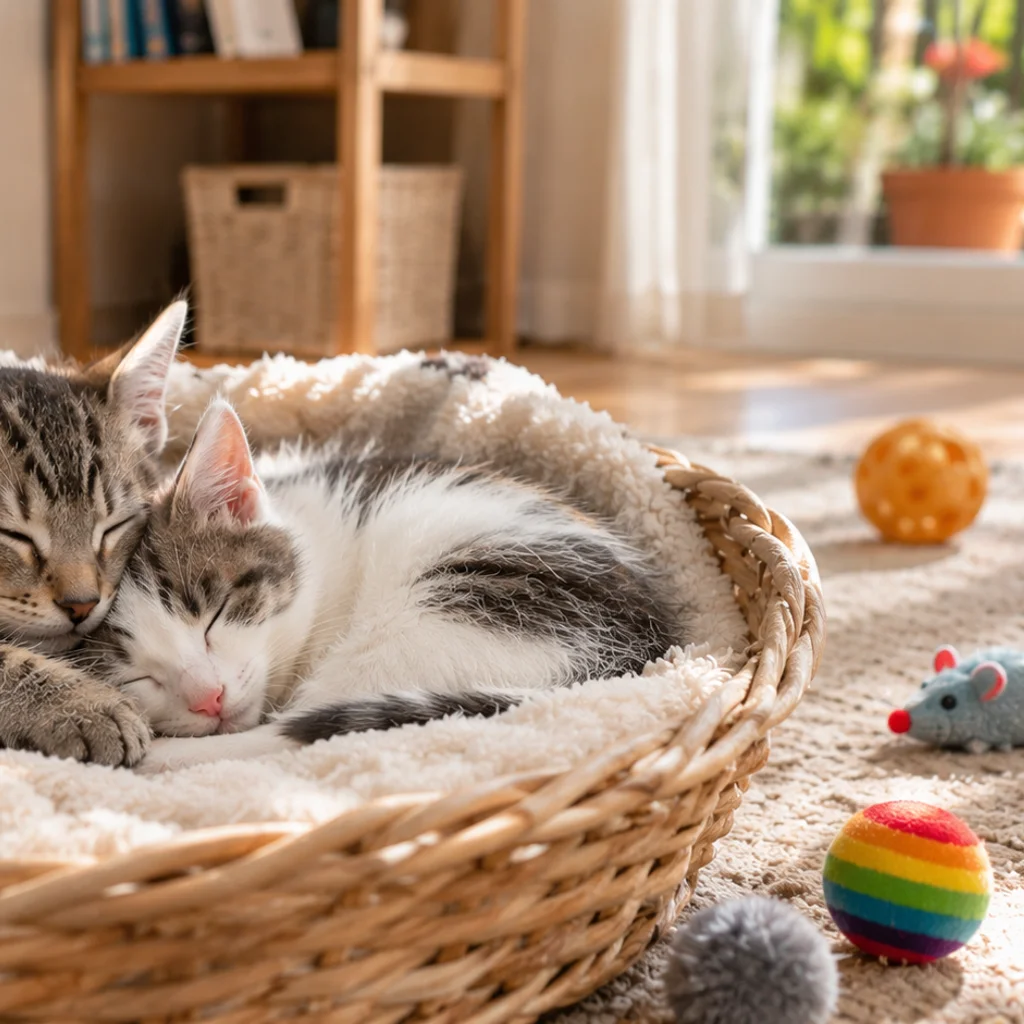

When you browse adoption listings, you often come across the note "siblings will be adopted together." At first this condition might feel intimidating; when you are getting ready for one kitten, the idea of two can seem like a big step. Yet in many cases, two kittens growing up together creates a routine that is easier than expected, both for them and for the household.
In this guide, we look at why adopting two kittens together is so often recommended, when it makes sense and what responsibilities come with it.
Why do some listings want siblings adopted together?
Kittens learn a lot in their first months by playing with their siblings. Games like wrestling, chasing and hide-and-seek support both their physical development and their social skills. Siblings who grow up together form a strong bond, and keeping that bond makes the move to a new home easier for both of them.
Also, two kittens who are used to each other may act less fearful in a new environment than a single kitten would. Having a familiar scent and a companion nearby softens the strangeness of the new home.
The upsides of two kittens
- A playmate: Kittens have a lot of energy. By playing with each other, they burn off much of it, which means a calmer home at night or while you are working.
- Learning bite control: A kitten that plays with its sibling learns that when it bites too hard, the other one stops playing. This can reduce play biting aimed at your hands and feet later on.
- Easier time alone: They keep each other company during the hours you are not home.
- Social learning: By watching each other, kittens may pick up habits like using the litter box and the scratching post more quickly.
- No need for introductions later: If you are thinking about a second cat down the road, two kittens who grow up together remove the challenges of a later introduction process.
The responsibilities double too
Along with the upsides of two kittens, there are burdens you need to think about realistically. Making your decision with these in mind helps you avoid disappointment later.
- Costs: Food, litter, toys, vaccines, parasite treatments and spaying/neutering should all be planned for two cats.
- Litter box: Three litter boxes are usually recommended for two cats; placing them in different spots makes sharing resources easier.
- Health tracking: A contagious illness in one kitten can pass to the other. You need to manage both kittens' vaccine and checkup schedules together.
- Home setup: Two kittens racing around during play call for extra attention to breakable items and open windows.
- Long-term plan: Cats live for many years. You also need to think now about caring for two cats in their senior years.
Do they have to be siblings?
Being siblings is an advantage but not a requirement. Two kittens close in age who have spent some time together in the same environment and are used to each other can get along just as well. Some foster homes or shelters also prefer to place kittens from different mothers who grew up together as a pair.
What matters is that the two kittens get along well right now and are close in age. If the age gap is large, their energy levels and play styles may differ too.
When might a single kitten be a better fit?
Two kittens may not be the right choice for every home. Starting with one kitten may be healthier in these situations:
- If there is already an older cat at home who needs calm
- If your budget does not fit the long-term care of two cats
- If your lease or building rules limit the number of animals
- If you are planning a move or a long trip in the near future
If you already have a cat and are thinking about a second one, it is important to base the decision on your current cat's personality. You can find more detail on running a multi-cat home in our post on managing a multi-cat home.
Questions to ask the person who posted the listing
If you are thinking about adopting sibling kittens together, asking for information about each one separately when you talk with the person who posted the listing makes your decision easier. These questions are a good start:
- What is the kittens' estimated age, and which vaccines and parasite treatments have they had so far?
- What are their personalities like; is one shyer and the other bolder?
- Do they use the litter box and the scratching surface?
- How do they behave when they are apart from each other?
These answers help you predict how the two kittens will settle into your home.
The first days at home
When you bring the two kittens home, settling them first in a quiet room you have prepared, rather than the whole house, makes adjusting easier. Put water and food bowls, litter boxes, a bed and a corner where they can hide in this room.
Because the kittens have each other, they usually start exploring sooner than a single kitten would. Once they are used to the room, you can open up the rest of the home gradually. Taking precautions ahead of time for open balcony doors, gaps in windows, cables and small items they could swallow is important for the safety of two curious kittens.
Schedule the first vet checkup early. The vet will assess both kittens' general health and set up their vaccine and parasite schedule. You can find vets near you in the vet directory.
Tracking each kitten separately
Even though two kittens live together, each one is an individual. That is why health and behavior tracking needs to be done for each one separately.
- Appetite: Make sure both are eating at mealtimes. If one eats faster and goes after the other's food, you can use separate bowls or separate corners.
- Weight: Weighing both every few weeks shows whether their growth is progressing evenly.
- Litter box: If you notice a change in stool or urine habits, try to figure out which kitten it belongs to.
- Individual attention: Short separate play sessions with each one help both bond with you.
The relationship may change as they grow
Siblings who grow up together often stay close into adulthood, but that does not always happen. During adolescence or before spaying/neutering, their play may get rougher, and there may be periods when they keep their distance. This is usually normal. Providing enough resources, vertical space and escape corners helps keep the relationship balanced.
Talk with your veterinarian about the timing of spaying/neutering. Done at the right time, it prevents unwanted pregnancies and also helps reduce some behavior problems.
If you feel ready to adopt sibling kittens together, you can browse cat adoption listings on DoldurKabı and ask the person who posted the listing about the kittens' personalities.
Frequently Asked Questions
Will two kittens bond with me less?
This is a common worry, but it usually does not hold true. Even though kittens play with each other, they form a strong bond with their owners. Spending separate time with each one, with cuddles and play, supports that bond.
Is it a problem to have two kittens of different sexes?
When spaying/neutering is done on time, the difference in sex usually does not cause problems. To prevent an unwanted pregnancy in the period before spaying/neutering, it is important to plan the timing with your veterinarian in advance.
Is it okay to feed two kittens from the same food bowl?
If possible, separate bowls are a better option. That way you can track how much each one eats and reduce possible competition during meals.
If one kitten gets sick, should I separate the other?
It depends on the type of illness. If you suspect something that could be contagious, talk to your veterinarian; if needed, they will guide you on short-term separation and hygiene measures.