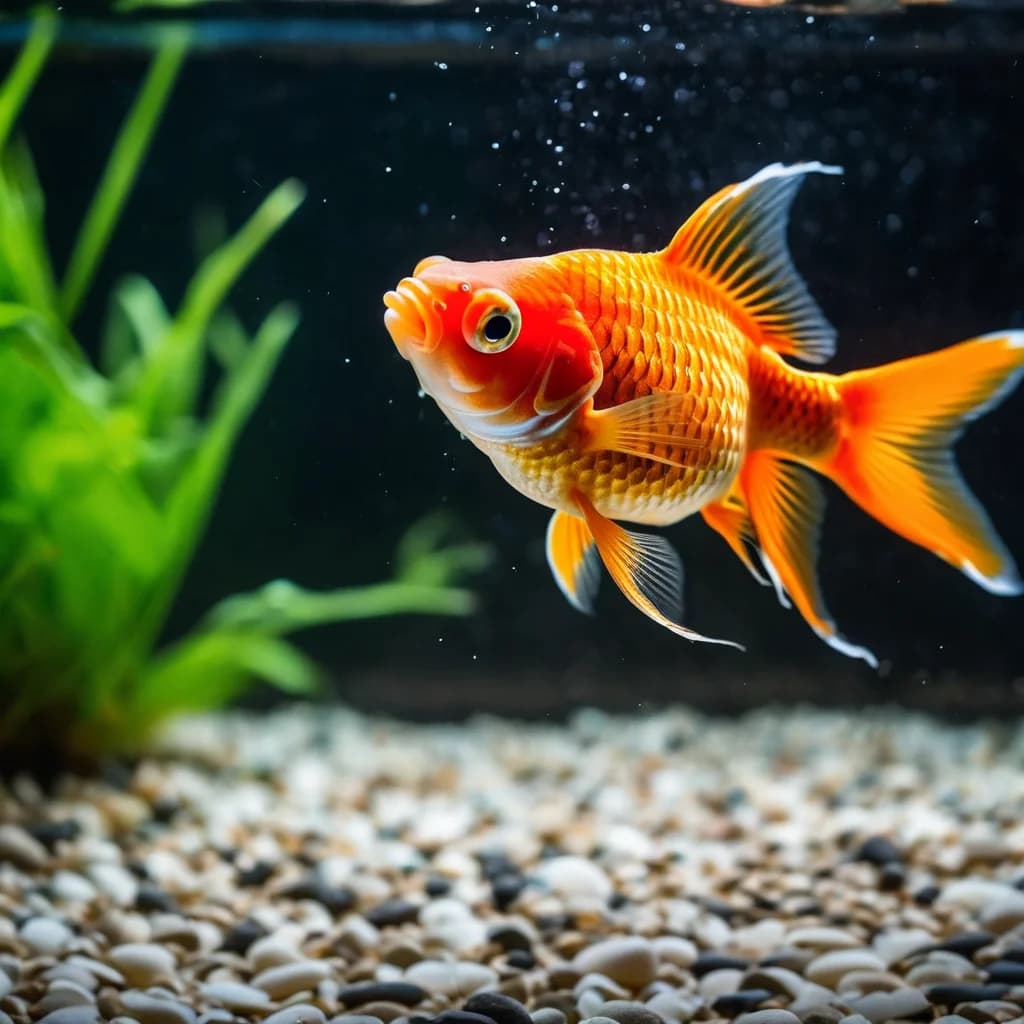

The goldfish is the first fish for many people stepping into the aquarium hobby. It's easy to find, eye-catching and thought to be simple to care for, which is exactly why so many misconceptions surround it. Myths like "it will live happily in a small bowl," "it lives out its life in two or three years" and "it has a three-second memory" have been passed around for years, and sadly they lead to these fish being lost early.
The reality is very different. In the right conditions, a goldfish easily lives past 10 years, and in a pond it can even reach 20, making it a long-term companion. It's also smart: it recognizes its owner, learns feeding time and, over time, becomes social enough to take food from your hand. Reaching that potential depends on correcting care mistakes from day one.
In this article, starting with the bowl myth, we go through the common mistakes around tank size, filtration, water temperature and feeding one by one, and explain the right way for each with concrete tips.
The Bowl Myth: Why Is a Small Container Wrong?
The image of a goldfish swimming in a round glass bowl is etched into all our minds from movies and cartoons. In real life, though, that picture means pretty harsh conditions for a fish. The problems with a bowl can be listed like this:
- The water volume is too small: In a few liters of water, ammonia builds up within hours and slowly poisons the fish.
- The surface area is narrow: Oxygen exchange happens at the water's surface; the bowl's narrowing opening shrinks that area even further, and the fish is constantly short of oxygen.
- There's no room for equipment: Basic equipment like a filter, an air pump and a thermometer won't fit in a bowl.
- It doesn't allow growth: In a cramped space the fish's skeletal growth is stunted while its internal organs keep growing; this seriously shortens its life.
The issue is so clear that some European cities have banned keeping fish in bowls on animal welfare grounds. In short, a bowl isn't a home; at most it's a temporary transport container.
Real Tank Size: How Much Space Is Needed?
A goldfish is not a small fish. One bought as a juvenile quickly reaches 15-20 centimeters in suitable conditions; single-tailed varieties like the comet can exceed 30 centimeters. So the logic of "a small tank while the fish is small" is flawed from the start; changing tanks as the fish grows is both costly and stressful.
- For a single fancy goldfish (such as a fantail, oranda or black telescope): a minimum of 75-100 liters is recommended.
- For each additional fish: add roughly 40-50 liters more.
- For single-tailed varieties like the comet: 150 liters or more is needed; the ideal setting for these fish is a garden pond.
When choosing a tank, focus on the footprint, not the height. Long models with a wide base are far more suitable than tall, narrow ones, both for surface area for oxygen exchange and for swimming distance. For detailed information on goldfish varieties and their physical traits, take a look at our goldfish encyclopedia page.
Filtration: The Invisible Life Insurance
Goldfish are hearty eaters, and as a result they produce far more waste than many aquarium fish of a similar size. That's why a goldfish tank without a filter, even if it looks spotless from the outside, quickly turns into an invisible store of poison.
Understanding the nitrogen cycle is critical here: fish waste first turns into ammonia in the water; beneficial bacteria convert that ammonia first into nitrite and then into relatively harmless nitrate. This bacterial colony takes weeks to form. Instead of adding fish to a newly set up tank right away, running the system for a few weeks and waiting for the cycle to settle is the key to a healthy start.
- The filter should be able to turn over roughly 5-10 times the tank volume per hour.
- Change about 25-30 percent of the total water once a week; vacuum the bottom with a siphon to remove leftover food and waste.
- Don't use tap water directly; remove the chlorine with a water conditioner or let the water sit for a day.
- Never rinse the filter sponge with tap water; squeeze it gently in water taken from the tank so the beneficial bacteria don't die.
The Cold Water Truth: A Heater Isn't Required
Another common mistake is thinking the goldfish is a tropical species and heating the tank, or putting it in with tropical fish. The goldfish is a coldwater fish; it feels comfortable at 18-22 degrees. In most homes in Türkiye, room temperature already falls in that range, so a heater usually isn't needed.
A mixed tank with tropical fish is a problem in two ways: their temperature needs don't match, and the slow-swimming, long-finned goldfish becomes a target for fast, fin-nipping species. Sudden temperature swings also weaken the immune system, so don't place the tank next to a radiator or by a window that gets direct sun.
Feeding: Not Less, but Right
A goldfish eats everything it sees and always acts hungry. That behavior makes overfeeding one of the classic mistakes in the hobby. Extra food causes digestive and swim bladder problems for the fish, and it also rots in the water and raises the ammonia load.
- Feed 1-2 meals a day, only as much as is finished within two minutes each time.
- Choose a quality pellet made for goldfish as the staple food; fish that snap flakes from the surface can swallow air, and soaking pellets for a few seconds before feeding lowers that risk.
- A few times a week, plant-based extras like shelled boiled peas or boiled spinach support digestion.
- Now and then, you can add variety with frozen bloodworms or brine shrimp.
Loss of appetite is an important signal; first check the water parameters, and if there's no improvement, consult your vet.
Other Common Mistakes and the Right Way
- The "three-second memory" myth: False. A goldfish remembers its owner and feeding time for months and can learn simple cues.
- Draining all the water and washing the tank with detergent: This wipes out the beneficial bacteria colony, and detergent residue is toxic. Partial water changes and cleaning with water only are enough.
- Dumping the fish straight from the bag into the tank: This causes temperature shock. Float the bag in the tank water for 15-20 minutes and acclimate the fish by adding tank water into the bag little by little.
- Using gravel small enough to swallow: Goldfish feed by sifting through the bottom; gravel that fits in the mouth can get stuck in the throat. Choose large gravel or fine sand.
- Mistaking an air stone for a filter: An air stone only moves water; it doesn't replace mechanical and biological filtration.
Cared for with the right knowledge, a goldfish is a hardy and delightful companion that will spend years with you. To choose the right species for your space and discover other aquarium residents, you can also browse the other species in our fish encyclopedia.
Frequently Asked Questions
Can a goldfish live in a bowl?
It can survive for a while, but it can't live healthily. In a bowl, the lack of oxygen and volume stunts the fish's growth, the water gets dirty fast and its lifespan drops to a few years. A large tank with a filter is a basic need.
How many years does a goldfish live?
With proper care, it can live 10-15 years in an aquarium; individuals reaching 20 years in garden ponds are known. A short life isn't the species' fate but the result of care conditions.
Does a goldfish tank need a heater?
In most homes it doesn't; room temperature in the 18-22 degree range is enough. In a room that gets very cold in winter, a heater on a low setting can be used to prevent sudden swings.
How many times a day should I feed my goldfish?
1-2 meals a day, as much as is finished in two minutes each time, is ideal. When in doubt, feeding less is safer than feeding more. Remove leftover food from the water with a siphon or a net.