


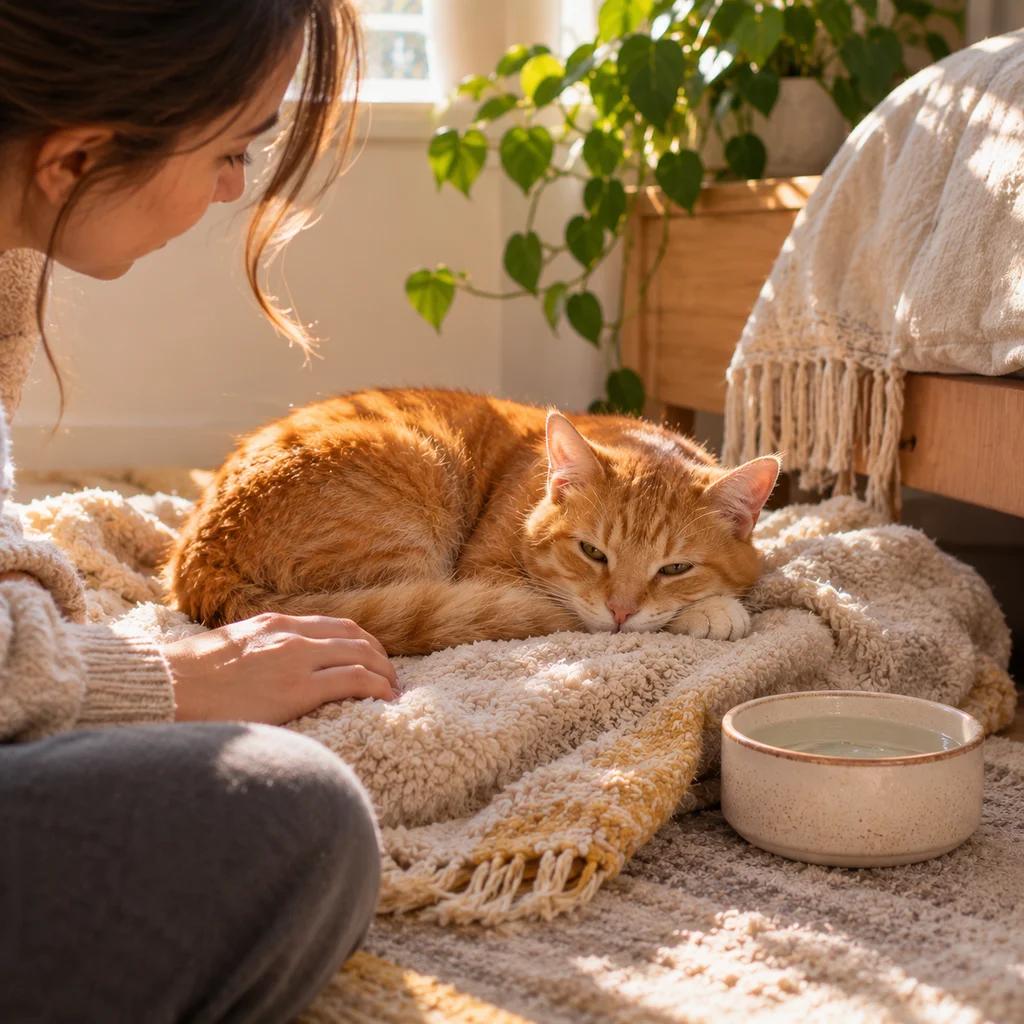

After days of searching, opening the door and seeing them standing there is a relief that's hard to put into words. Your first urge is to scoop them up and not let them out of your sight all day. That's completely natural. But while they were outside, their body and their mood may have changed. Being a little careful in the first days back home keeps this happy ending going smoothly.
In this post, we walk through what to look out for, step by step, in the first days after a lost cat or dog comes back.
The first hours: a calm welcome
You can't know what your pet went through outside. They may be scared, tired or hungry. When they get home, try not to crowd them. If everyone rushes to pet them, hold them and take photos all at once, your pet may feel overwhelmed.
Take them to a quiet room. Set out water, their bed and, for a cat, the litter box. Let them get reacquainted with their own scent and their own things for a while. When they want to come to you, they will.
Gently check their body
Once your pet has calmed down a bit, slowly run your hands over their whole body. Do it like petting, not like an exam. Watch for these:
- Paws and nails: Cracks, cuts, broken nails, or thorns and glass stuck between the pads
- Coat and skin: Bite marks, scabbed wounds, ticks or fleas
- Eyes, ears and nose: Discharge, redness, a bad smell
- Walking: Limping, avoiding using one leg
- Reaction to touch: Flinching or growling when you touch a certain spot can mean there's pain there
Write down everything you see. Taking photos helps too; when you go to the vet, you can explain more clearly what you noticed and when.
Don't put off the vet visit
Even if your pet looks fine on the outside, it's a good idea for any animal that spent a few days outside to get a vet checkup. You can't know what they ate, what they came into contact with or how long they went without water. A veterinarian can assess problems you can't see and guide you on deworming, flea and tick treatment and vaccination status.
Go right away if:
- They are struggling to breathe or breathing with their mouth open
- There is vomiting, diarrhea or blood in the urine
- They aren't drinking water or aren't eating at all
- They are very lethargic or can't stand
- Your cat is male and goes to the litter box but can't pass urine
If it's nighttime, you can look up emergency vet clinics near you.
Cleaning and parasite checks
A pet that has been outside may have a dirty, greasy or matted coat. On the first day, gently wiping the dirty spots with a damp cloth is less stressful than giving a bath. A bath can wait until your pet has calmed down and been checked by the vet. If there is paint, oil or a substance you don't recognize in their fur, don't let them lick it, and ask your veterinarian what to do.
Check between the fur, behind the ears, under the legs and between the toes for ticks and fleas. If you find a tick, don't try to pull it off with your fingers; see your vet so it can be removed the right way. Depending on how long your pet was outside, deworming and flea and tick treatments may need to be renewed. You can also review the vaccination schedule together at this checkup.
Give food and water little by little
A pet that went hungry for a long time may want to finish the food in front of them in one go. That can lead to nausea and vomiting. On the first day, offering their usual food in small portions spread through the day is a gentler start. Always keep water within reach.
If you're unsure how much or how often to feed, ask your veterinarian. Especially for pets that have lost a lot of weight, are older or have a chronic illness, the plan for getting back to normal feeding should be tailored to them.
A pet that takes medication regularly for a chronic illness may have missed doses while outside. Don't decide on your own how to continue the medication; tell your veterinarian how long the doses were missed and follow their guidance.
Reintroducing other pets at home
If there's another cat or dog at home, this may be the surprising part of the return. Two cats that have lived together for years may hiss at each other when one comes back from outside. The reason is usually scent. The returning pet now carries the smell of the street instead of the smell of home, and the other pet doesn't recognize them.
That's why keeping the returning pet in a separate room for a few days makes things easier for both. During this time:
- Swap their beds or blankets to introduce their scents to each other.
- Feed them on either side of the door to help them link each other's presence with something good.
- Hold off on close contact until the vet check and parasite treatments are done.
The tension usually settles within a few days. If they seem calm, you can open the door for short periods and let them meet.
Don't overlook sleep and rest
Days outside mean being on constant alert. Once home, your pet may sleep more than usual and stay in bed for hours. This is usually how the body recovers. Try not to wake them or push them to play or go for walks. Be quiet when you walk past while they sleep, and ask the kids at home to help with this too.
Be patient with behavior changes
Some pets that come back after being lost stick to you more than ever in the first days, while others become shy and jumpy. Some cats hide; some dogs start waiting by the door. These are traces of the stress they went through and usually fade with time.
During this period, bring the routine back to the way it was as much as you can. Keep mealtimes, playtimes and walks on the same schedule. Instead of smothering your pet with affection, let them come to you. If the jumpiness isn't easing after several weeks, or aggression has started, it's a good idea to talk to a veterinarian. Sometimes there is unnoticed pain behind the behavior.
Close your listings and find the escape route
Announce that your pet is back everywhere you posted. Close your lost pet listing, take down the flyers you put up, and let the neighbors and local shops who helped you know. It's a thank-you, and it also means they can now keep an eye out for other lost pets.
Finally, think about how the escape happened. Was it a window left open, a cat waiting for the door to open, or a collar that was loose on a walk? It's hard to relax until that gap is closed. Also check that the number on your pet's ID tag is current and that the contact details in the microchip registration are correct.
Frequently Asked Questions
My pet looks fine. Should I still take them to the vet?
Yes, it's a good idea. Something they ate outside, a bite or parasites may not show symptoms in the first days. A short checkup will put your mind at ease and help you catch any problem early.
Why are my cats hissing at each other?
Because the returning cat carries the smell of the outdoors, the other cat may see them as a stranger. Keeping them in separate rooms for a few days and introducing their scents by swapping beds and blankets usually eases the tension.
They want to eat a lot after coming back. Is that a problem?
Eating a lot all at once can strain the stomach. In the first days, it's safer to give small portions spread through the day. If there is vomiting or diarrhea, ask your veterinarian.
They keep wanting to go outside after coming back. What should I do?
Pets that spent time outside, especially cats, may show more interest in doors and windows. During this period, be extra careful when coming and going, make windows and the balcony safe, and increase playtime at home. The interest usually fades with time.









