


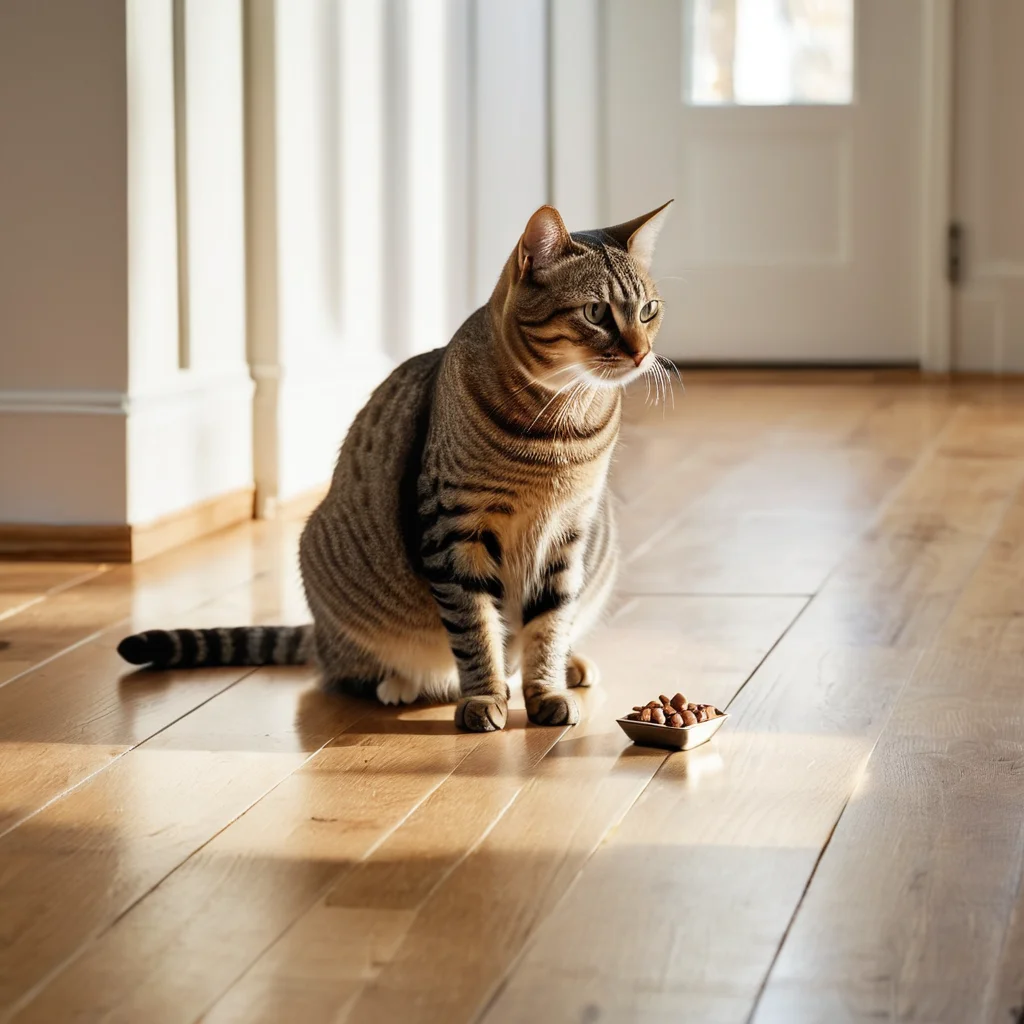

"Cats can't be trained" is a common myth. The truth: cats can be trained, just with a different method than dogs. Dogs are pack animals tied to a group hierarchy, while cats are independent hunters, so their motivation, attention span and reward preferences differ. When you understand your cat and use the right reward, you'll see that it can learn 10+ commands like "sit", "come", "high five" and "step on the scale".
This article covers the basics of cat training, 8 practical commands, how to use a clicker and the most common mistakes.
1. Why Train a Cat?
Training isn't just about "showing off tricks". It improves your cat's everyday quality of life:
- Easier vet visits: A "get in the carrier" command keeps stress to a minimum.
- Emergency recall: A cat that slips out of the apartment can be called back.
- Easier grooming: Nail trimming, giving medication and brushing cause far less conflict with a trained cat.
- Mental stimulation: A bored cat turns to destructive behavior; training is exercise for the mind.
- Bonding: Positive reinforcement training strengthens your cat's trust in you.
2. Training Philosophy: Positive Reinforcement
The only method that works in cat training is positive reinforcement: rewarding the right behavior. Punishment (spraying water, yelling) makes a cat shut down and damages the trust between you.
- Reward timing is critical: The reward comes the moment the behavior happens (within 1-2 seconds at most). A late reward can't build the connection.
- Choosing the reward: Use a "super" reward for your cat: not a piece of dry food, but a small bit of meat, a cream spray or freeze-dried chicken. Ordinary cat food isn't motivating enough.
- Frequency, not repetition: 2-3 sessions a day of 3-5 minutes each. A cat's attention span is shorter than a dog's.
3. Using a Clicker
A clicker is an efficient tool for cat behavior training: the moment your cat does the right thing, it hears a "click" and the reward follows right away. This gives you fast, consistent marking.
Getting Your Cat Used to the Clicker (in 3 days)
- Click the clicker → immediately offer a small reward.
- Repeat 10 times.
- Do 2-3 sessions a day for 3 days.
Once your cat makes the "click = reward" connection, you use the same pattern for every command: command → behavior → click → reward.
4. 8 Basic Commands
1. Name Recognition
Say your cat's name, and the moment it turns its head, click + reward. Repeat daily: at mealtime, at the start of play.
2. Sit
Bring the treat close to your cat's nose, then slowly lift it over its head. It will naturally raise its head and settle into a sitting position. Click + reward.
3. Come
The word is linked to an activity your cat loves (food). Call "Commme" in a soft voice while shaking the bag of dry food. The moment it arrives, click + reward. Gradually, the call alone will be enough.
4. High Five
With your cat in the sit position, hide a treat in your fist. When it paws at your hand, click + reward. With repetition, lifting the paw in the air becomes a "high five".
5. Get in the Carrier
This reduces vet stress. Leave the carrier open at home. Put a treat inside. When your cat goes in and takes it, click + an extra reward. With repetition, your cat learns to see the carrier as something positive, and stress is kept to a minimum on the actual vet day.
6. Scale: For the Vet
Put a kitchen scale on the floor. When your cat steps on it, click + reward. Later, being weighed at the vet exam will be stress-free.
7. Nail Trimming Tolerance
Each day, hold one paw briefly, then reward. Next, gently press one nail on one paw, then reward. With gradual exposure, the real nail trim becomes fear-free.
8. Moving Spots (Targeting)
You use a stick with a dot on the end. When your cat touches the dot with its nose, click + reward. Later you can guide your cat with the stick. It's not a circus trick but something practical (changing rooms, getting down from a chair).
5. The Training Environment
- A quiet room with few distractions.
- A cat that isn't starving but isn't full either: about 2 hours before a main meal is ideal.
- Short sessions: 3-5 minutes. Continuing once your cat is bored backfires.
- A steady tone of voice: always the same word + the same tone for each command.
- Only one command per session: mixing them up gets in the way of learning.
6. Common Mistakes
- Punishment. Don't do it. Ignore the wrong behavior and reward the right one.
- Late rewards. If more than 2 seconds pass, the connection won't form.
- Sessions that run too long. A session longer than 10 minutes goes past your cat's attention limit.
- Inconsistent rewards. Giving them sometimes and not other times confuses your cat, and motivation drops.
- Several commands at once. Let one command become solid first, then start a new one.
- Giving up because "it won't do it". Cats learn at their own pace; sometimes one command takes 2 weeks.
7. 4 Key Differences From Dog Training
- No pack hierarchy: the "alpha" idea doesn't apply to cats.
- Motivation, not repetition. If your cat is bored, "just a few more reps" won't work; give it a break.
- Few non-food rewards. With a dog, "good dog" + affection is often enough, but with a cat the taste of the reward matters more.
- Off days: Some days, cats say "no" to training. Don't force it; try again the next day.
8. Frequently Asked Questions
Can I train my adult cat?
Yes, cats keep learning throughout their lives. It takes a bit more patience than with a kitten, and strong rewards provide the motivation.
Can I train without a clicker?
Yes, but a clicker makes consistency easier. Alternatives: a spoken "yes!" or a short clicking sound (a pen click, a tongue click). What matters is marking for your cat exactly what earned the reward.
How do I train if I have more than one cat?
One at a time, in separate sessions, with the other cats out of the room. Training them together both breaks focus and creates competition over resources.
Will training treats make my cat fat?
There is a risk, so treats should be very small pieces (about the size of a grain of rice) and shouldn't exceed 10% of daily calories. On training days, cut 5-10 g from the main meal.
Are leashed outdoor walks suitable for cats?
Some cats accept them, some don't. Cats introduced to a leash as kittens can walk outdoors; forcing it at an older age causes stress. Go slowly, in this order: apartment hallway → balcony → yard.
Does training conflict with having a dog in the same home?
No. If you keep sessions separate, a trained cat actually lives more peacefully with the dog (there is less competition over resources).
Can I use a clicker with an unsocialized street cat?
Slowly, and trust has to come first. Only after weeks of tossing treats and sitting nearby do you move on to the clicker.
Final Word
Training your cat isn't about making it "obey"; it's a bonding tool that helps it communicate with you. With 5-minute daily sessions, in a few weeks the "spoiled" cat is replaced by a cat that really talks with you.
If you log your training notes, and which command improved on which day, in DoldurKabı Pet Health Tracking, you'll see your progress clearly and stay motivated.
This guide is for information only; for serious behavior problems, consult a cat behavior specialist.









