


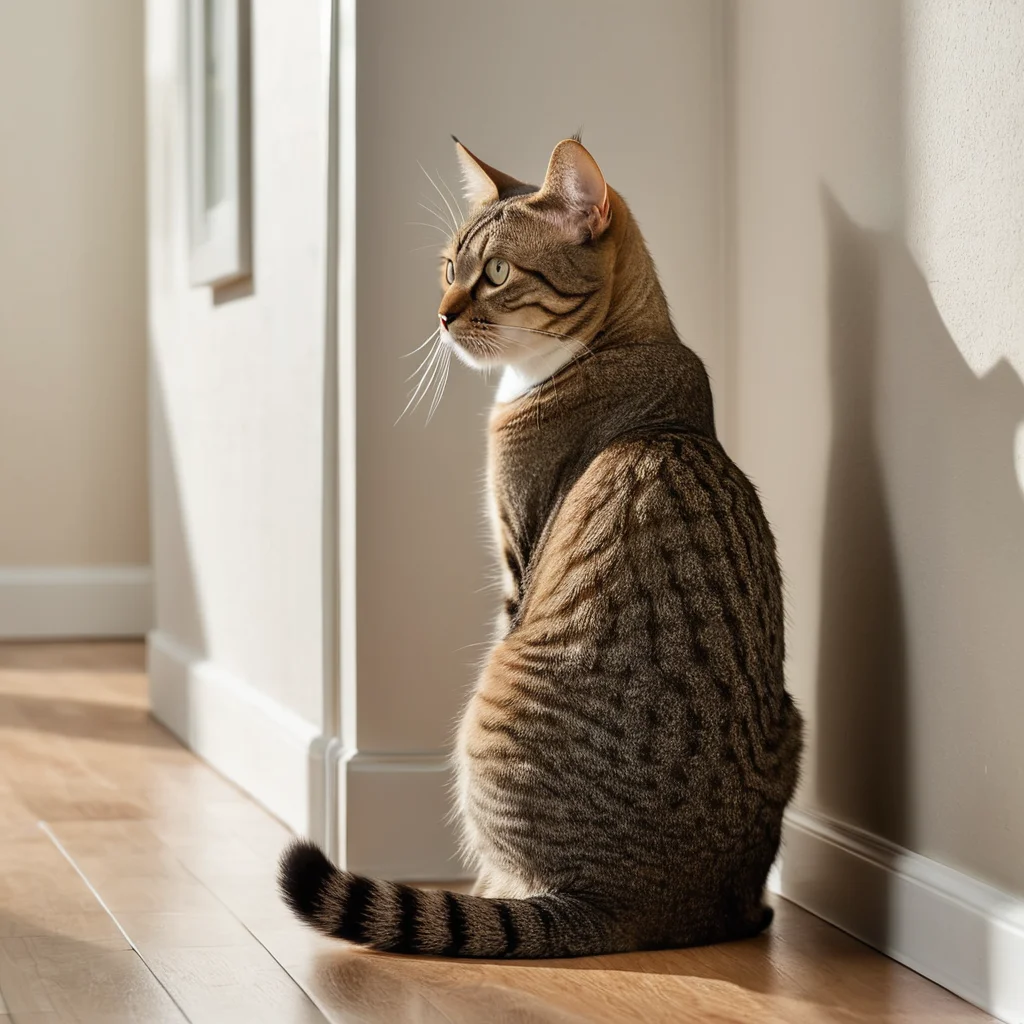

You come home to a strange, bad-smelling mark on the wall and by the door, or you watch your cat quiver its tail and pee on a vertical surface right in front of you. This is not "peeing outside the litter box." It is spraying (territorial marking): a completely different behavior with a different cause and a different solution. In most cases it is solved with spaying/neutering, stress management and a cleaning protocol. This post covers how to recognize spraying, what causes it and how to solve it step by step.
1. What Is Spraying? How It Differs from Peeing
| Spraying | Litter Box Refusal |
|---|---|
| On vertical surfaces (walls, doors, furniture edges) | On horizontal surfaces (rugs, beds) |
| Tail quivers, urine is sprayed | Squats, pees normally |
| Small amounts, repeated often | Large amounts |
| Specific spots (doors, windows, new items) | Various places |
| Usually in cats that are not spayed/neutered | Stress, health or a litter box problem |
Diagnosis comes first: is this spraying or a urinary tract disease? If you are not sure, a vet is your first stop.
2. Causes
Hormonal (Primary Cause)
- Male cats that are not neutered (especially during puberty, between 8 and 12 months).
- Female cats that are not spayed (during heat).
- After spaying/neutering, 90% of males and 95% of females stop spraying (if it is done early).
Stress and Environment
- A new pet coming into the home.
- Moving house.
- Changes in the family (a new baby, a partner).
- Changes in furniture.
- Seeing another cat or dog through the window.
- Territorial rivalry (multiple cats).
Medical
- Urinary tract disease (FLUTD).
- Urinary stones.
- Age-related cognitive decline.
- Diabetes or kidney disease (frequent urination).
3. A Step-by-Step Solution Protocol
Step 1: Rule Out Medical Causes
Spraying that starts suddenly always calls for a vet exam. A urinary tract problem can be an emergency.
Step 2: Spaying/Neutering
- Males: 5 to 7 months is ideal (before the spraying behavior becomes a habit).
- Females: 5 to 6 months.
- Even in older cats, spraying drops noticeably after spaying/neutering.
Step 3: Identify the Trigger
Spraying spots:
- Near doors or windows: Seeing or hearing another animal outside.
- New furniture or items: A territorial "this is mine" mark.
- Areas where guests have been: The scent of unfamiliar people.
- The other cat's area in multi-cat homes: Territorial rivalry.
Step 4: Manage the Trigger
- Window film: So your cat cannot see the cat outside.
- Animal repellent (granules) for the yard or balcony.
- Introduce new furniture to your cat slowly, starting with its scent.
- With multiple cats: the n+1 rule, vertical space and Feliway.
Step 5: Cleaning (Enzyme-Based)
- Vinegar and ammonia cleaners are OFF-LIMITS: they mimic the smell of urine to your cat and trigger spraying again.
- Enzyme-based cleaners (Nature's Miracle, Simple Solution): They break down urine proteins.
- If the sprayed area is not cleaned completely, your cat will come back to it.
- Deep cleaning for rugs and fabric.
Step 6: Feliway Pheromone
Feliway Classic spray and diffuser provide a calming pheromone for cats. Continuous use for 4 to 6 weeks reduces spraying noticeably. Spraying it directly on the marked spots labels them as "safe."
Step 7: Behavior Medication (in Severe Cases)
In severe, stubborn cases, SSRI medications such as fluoxetine, prescribed by a vet, can support the behavior protocol. Not on their own, but together with the protocol.
4. Multi-Cat Homes and Spraying
Territorial rivalry is the main cause:
- One litter box per cat plus one (in different rooms).
- A separate food and water bowl for each cat.
- Vertical space (cat shelves, cat trees): cats live vertically, and more space means less stress.
- Hiding places.
- A two-week reintroduction protocol to resolve conflict.
For more detail, see our guide to multi-cat homes.
5. Grief and Stress Spraying
Some cats start spraying when their owner is away or the family changes:
- Keep a regular routine.
- Mental stimulation while the owner is away (food puzzles, a window bed).
- Feliway.
- Gradual introductions for any new "stressful" situation.
6. Prevention
- Early spaying/neutering: the most effective precaution.
- Before bringing a new animal home, a two-week introduction protocol.
- Plenty of resources: always follow the number of cats plus one rule.
- Reduce stress triggers: window film, noise control.
- A Feliway diffuser during stressful periods.
7. Frequently Asked Questions
My cat started spraying at 10 years old. Why?
Medical causes and cognitive decline are considered. Hyperthyroidism, kidney disease, dementia and stress at home. Have a vet exam and look for the cause.
My cat is still spraying after spaying/neutering.
The behavior has become a habit, and it takes 2 to 6 weeks after spaying/neutering to decrease. Stress management, the cleaning protocol and Feliway help complete the picture. In severe cases, medication from a vet.
Other cats outside are triggering the spraying.
Limit your cat's line of sight with window film or sheer curtains. Use animal repellent granules in the yard or on the balcony. Clean the windows regularly to reduce the scent.
How do I get rid of spray marks completely?
Use an enzyme-based cleaner (Nature's Miracle, Simple Solution), which breaks down the proteins. Vinegar or bleach is OFF-LIMITS; your cat will come back. For rugs, deep cleaning or a professional.
Does a cat spray to spite its owner?
Not at the owner directly; it is a "my owner's territory" mark. Anger and punishment reinforce this behavior, so approach the solution calmly.
Does spraying that starts young last forever?
With early spaying/neutering (5 to 7 months in males), spraying may never start. If spaying/neutering happens late and the behavior is established, treatment takes 6 to 12 months.
Does punishing a cat that sprays work?
No. It causes stress, damages trust and reinforces spraying. The positive approach: solve the cause and adjust the environment.
Final Word
Spraying does not mean a "bad cat"; it is a message about stress, hormones, territory or health. The right diagnosis, a step-by-step protocol and patience lead to a solution. Early spaying/neutering prevents most cases.
Keep behavior notes and vet checkups for your cat in DoldurKabı Pet Health Tracking.
This guide is for informational purposes; spraying that starts suddenly calls for a medical exam.









