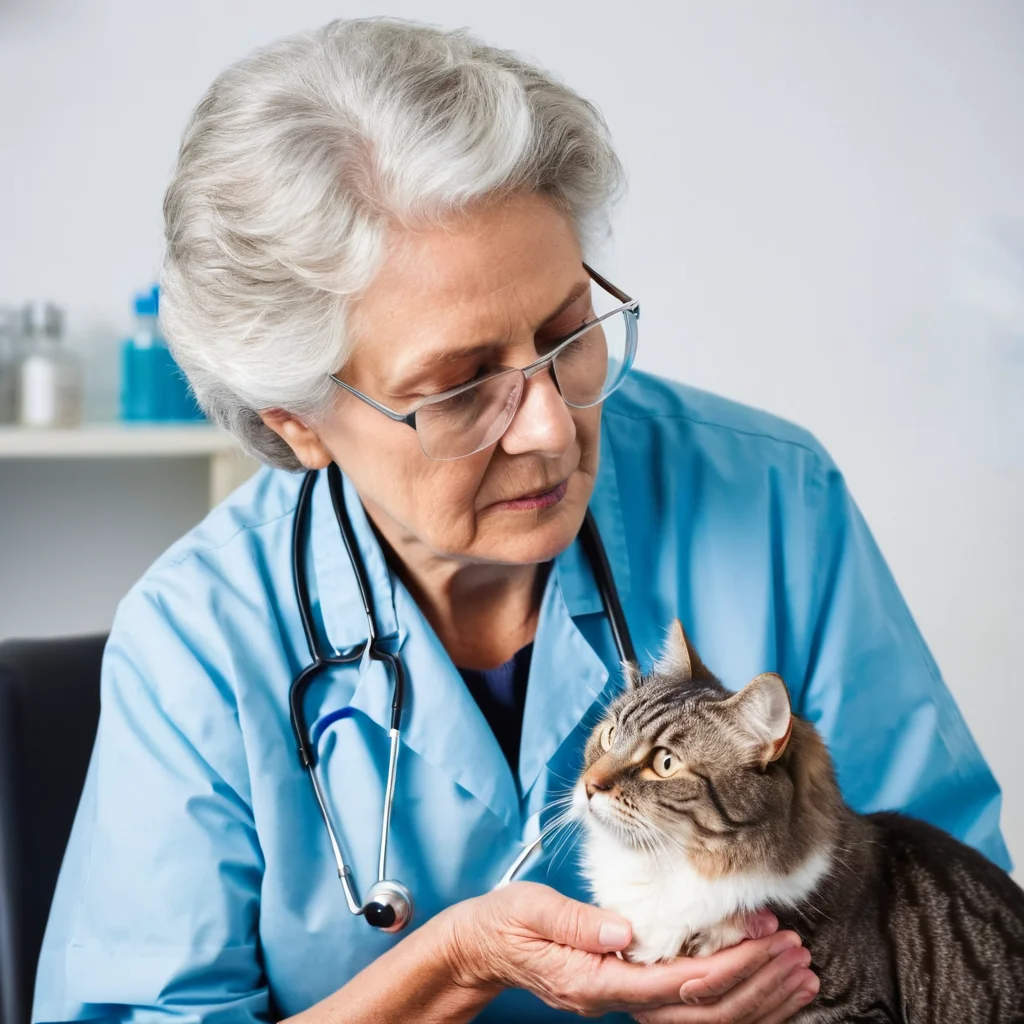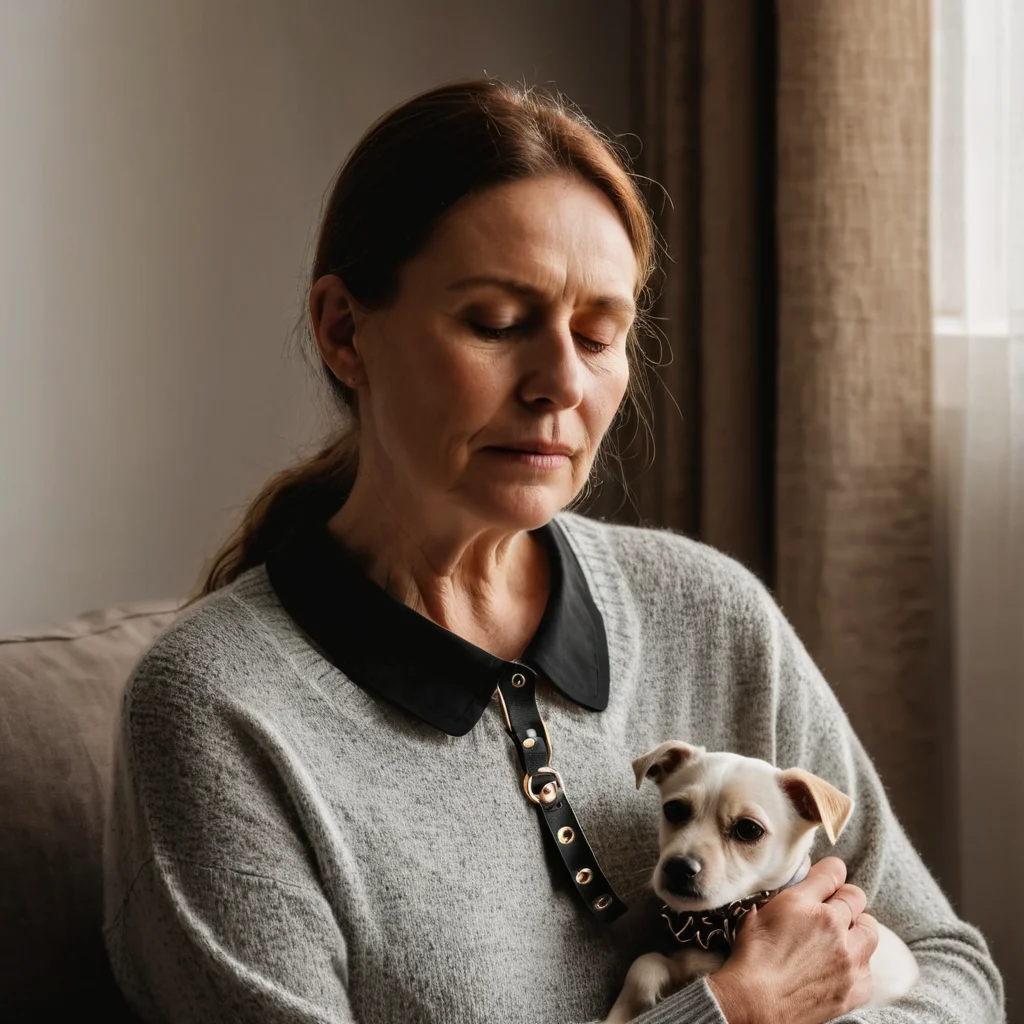

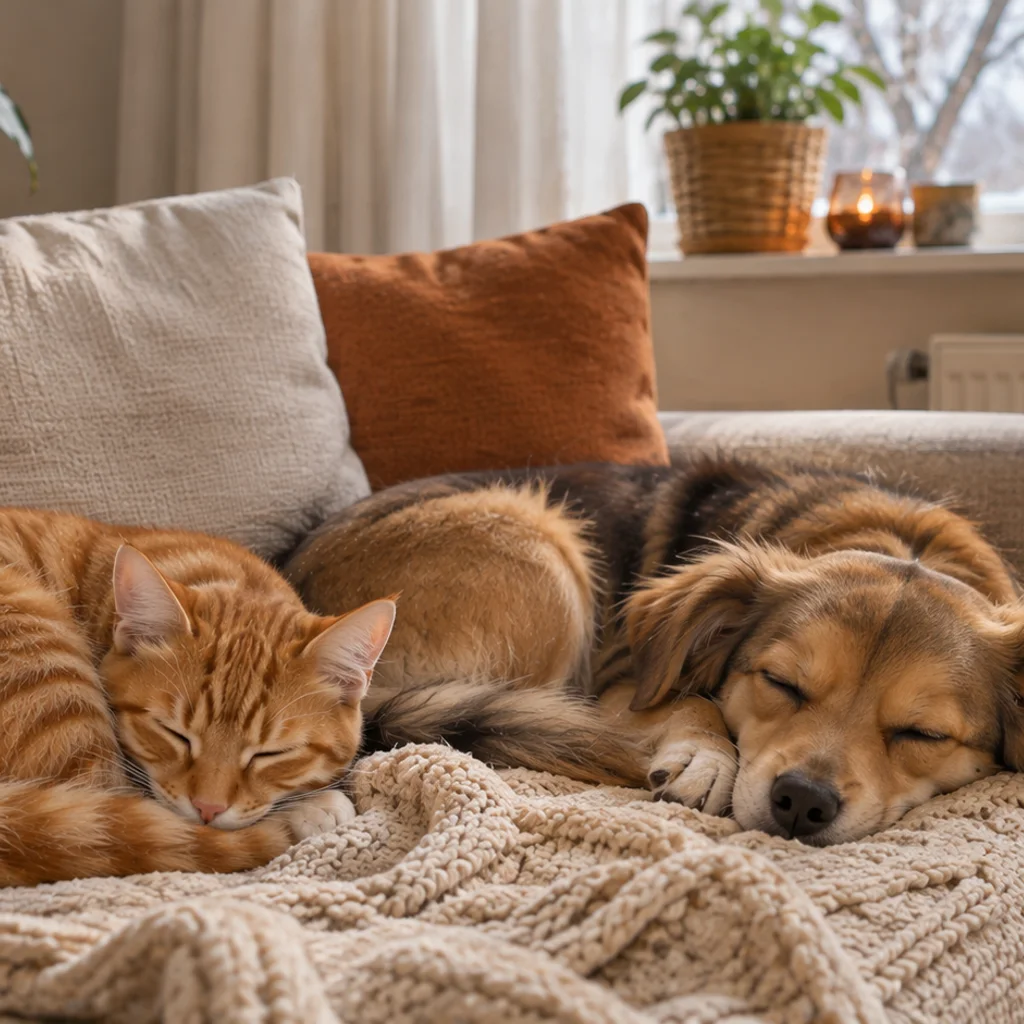

When winter arrives, many homes share the same scene: the cat curled up in front of the radiator, the dog sound asleep in its blanket even at midday. Morning walks start reluctantly, and evening playtime is short. Most of the time, this is a natural reflection of the season. But sometimes more sleep can also be the first sign of a health problem.
In this article, we explain why sleep patterns change in the winter months, what counts as normal, and which signs mean it's time to talk to your veterinarian.
Why do pets sleep more in winter?
Cats and dogs naturally spend much of the day resting. Cats in particular drift into short naps many times a day. In the winter months, this tendency can become more noticeable for a few reasons.
- Short days: Less daylight affects the internal clock of many living things. Animals tend to rest more during dark hours.
- Less stimulation: Windows stay closed, there are fewer sounds and less movement outside, and walks get shorter. On a day with less going on, sleep fills the gap.
- Warm, cozy spots: Radiators, stoves, and thick blankets make sleeping tempting.
- Saving energy: Keeping the body warm in cold weather takes energy. Animals may conserve it by moving less.
When these factors add up, it's not surprising that a cat or dog sleeps a bit more than in summer.
What does normal winter sleepiness look like?
In a typical seasonal slump, the animal's overall condition is good. Even though it sleeps more, it acts like itself when it wakes up.
- It wakes up and shows interest when you call it or when mealtime comes.
- Its appetite and water intake are at their usual levels.
- It joins in play, even if only briefly.
- Its potty or litter habits haven't changed.
- Its coat is shiny, its eyes are bright, and it keeps grooming itself.
In short, if your pet is sleeping longer but its personality and responses are intact, it's most likely adjusting to the season.
When does lethargy need attention?
If there are other changes along with the extra sleep, don't just blame the cold. The following signs may mean you should consult your veterinarian:
- It stays uninterested, unresponsive, or very slow even when woken up
- Its appetite has dropped noticeably or stopped completely
- Its water intake has suddenly gone up or down
- There's vomiting, diarrhea, coughing, sneezing, or a runny nose
- It struggles to move, limps, or shows signs of pain when touched
- Your cat has stopped grooming itself or is hiding
- Its breathing has sped up or looks labored
These signs can point to many causes, from a cold to pain, digestive problems, or other illnesses. An exam is needed for a diagnosis. For respiratory symptoms common in winter, you can read our article on sneezing and coughing pets.
Extra care for senior pets
Senior cats and dogs already sleep more. In winter, the cold can increase joint stiffness, and the animal may choose to rest instead of moving. In that case, the extra sleep may actually be caused by pain. If you notice your senior friend struggling to climb stairs, get up from bed, or jump onto the couch, talk to your veterinarian about it.
What can you do to balance the winter slump?
Make use of daylight
Keep the curtains open during the day and let your pet spend time by a sunny window. For cats, putting a cushion on the windowsill offers both a place to sunbathe and a view of the outside.
Short but regular activity
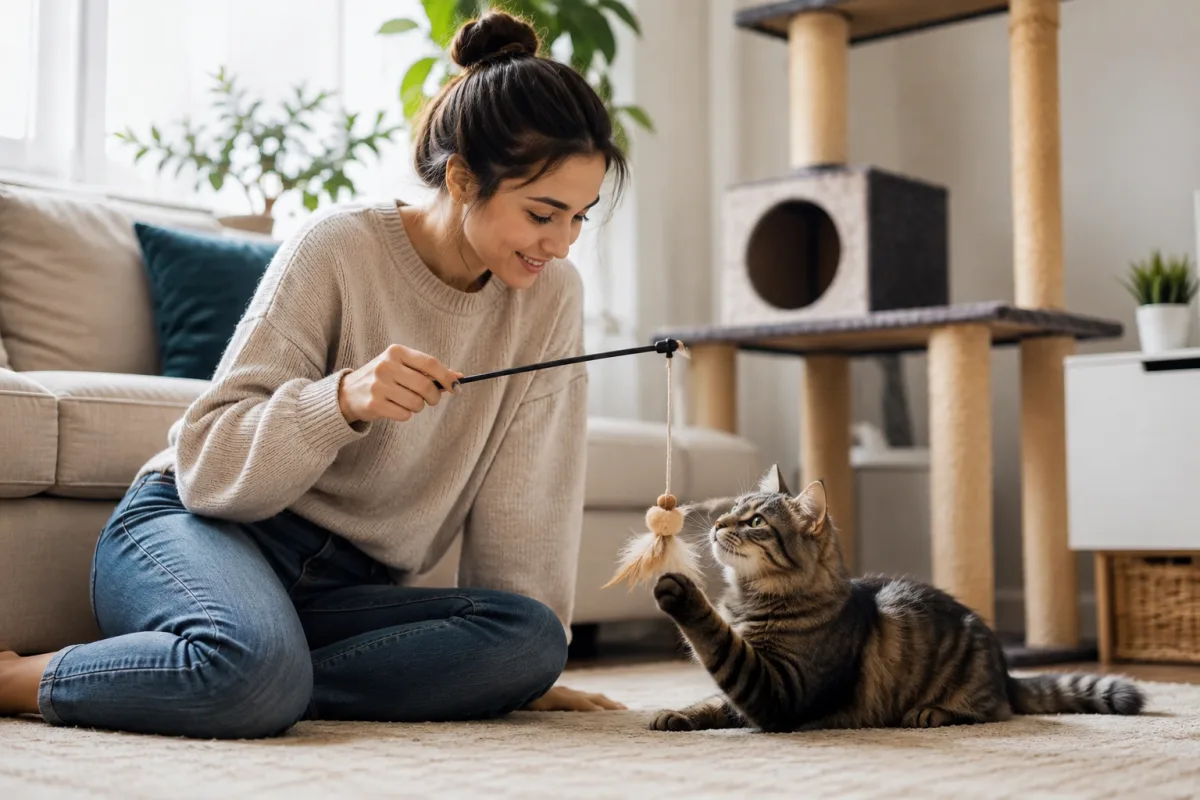
Long walks can get harder in winter, but short bursts of activity spread through the day work well. For dogs, sniffing games, hide-and-seek at home, or short training refreshers; for cats, hunting games with a wand toy and climbing spaces help balance their energy. If you need ideas, check out our mental game suggestions.
Vary the stimulation at home
Days spent at home in winter start to look alike, and this sameness can stretch out sleep time. Rotating toys is a simple but effective method. Putting a few toys away for a week and then bringing them back makes them seem new to your pet. A cardboard box, a few pieces of kibble hidden inside, or even a new scent can be enough to spark curiosity.
For dogs, changing the walking route has the same effect. Even a short walk means a new street, new smells, and new sounds. For cats, rearranging things now and then, turning a shelf into a climbing spot, or positioning a perch so they can see a bird feeder from the window adds color to their days. The goal isn't to tire your pet out, but to make its waking hours fuller.
These small bits of stimulation spread through the day also help create a calmer sleep routine in the evenings. A pet with an active day rests more deeply at night and is less likely to wake you up early in the morning.
Adjust food to activity
A pet that moves less burns less energy. Sticking with the same portion all winter can lead to weight gain without you noticing. Our article on food portions and weight tracking will guide you on adjusting portions. For exact amounts, get your veterinarian's recommendation.
A warm but safe resting spot
The place where your pet rests should be warm but not right next to a heat source. A pet sleeping too close to a stove or electric heater can burn its fur or skin without noticing. Place the bed a little away from the heat source, in a corner free of drafts.
Tracking sleep patterns
The way to tell how far a pet has strayed from normal is to know what its normal is. Roughly noting sleep, appetite, and activity for a few days at the start of winter makes it easier to spot changes in the weeks that follow. When you do notice a change, your notes will also be very helpful when you describe the situation to your veterinarian.
The daily tracking and health records in the DoldurKabı app help you keep these notes in one place. You can log your observations about sleep and appetite, weight measurements, and exam notes on your furry friend's profile.
Frequently Asked Questions
My cat sleeps most of the day. Is that normal?
Cats naturally spend most of the day sleeping or resting, and this time can get a bit longer in winter. If your cat is engaged, has a good appetite, and is open to play when awake, there's usually nothing to worry about.
My dog doesn't want to go for walks and just sleeps. What should I do?
Reluctance in cold, wet weather is common. Short, frequent outings, a suitable coat, and indoor games help. If the reluctance started suddenly or comes with limping, pain, or loss of appetite, consult your veterinarian.
Is hibernation a real thing in pets?
Cats and dogs are not animals that hibernate. The extra sleep seen in winter isn't true hibernation but an adjustment to short days and reduced activity. Some turtle species are different, though; for them, the winter period requires a separate care plan.
How much extra sleep is too much?
It's hard to give an exact limit, because every animal's normal is different. What really matters is whether the extra sleep comes with changes in appetite, behavior, or potty habits. If you're not sure, consulting your veterinarian is always a sound step.